CE Certified Box Facial Tissue Machinery & Converting Lines
Selecting an industrial-grade facial tissue machine requires evaluated balance between web tension control, rotary vacuum interfolding accuracy, kinematic cartoning synchronization, and European Conformity (CE) safety compliance. Below are engineered equipment configurations manufactured to process virgin, recycled, or non-wood bamboo paper substrates into commercially packaged facial tissue and napkin products.
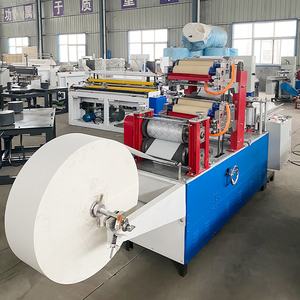
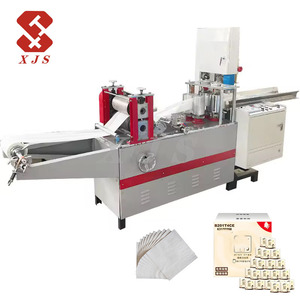
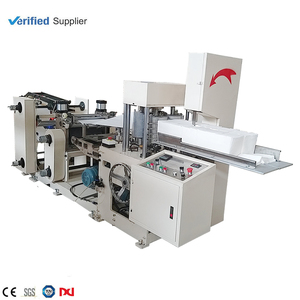
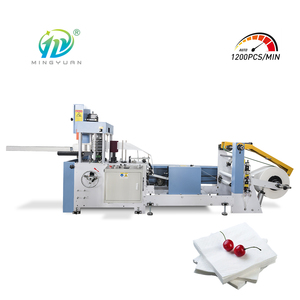

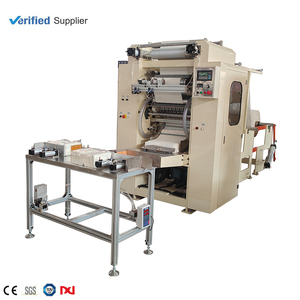
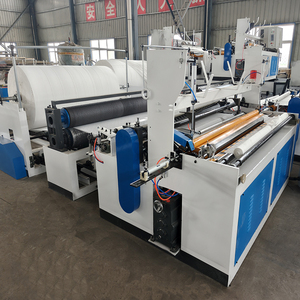
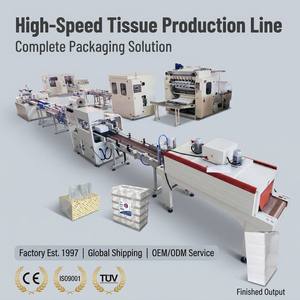
Enterprise Manufacturing Infrastructure & Engineering Authority
As a specialized machinery manufacturer for tissue paper and hygiene converting since 2011, EuroFlow Tissue Machinery Co., Ltd. (Euro Tissue Machine) operates an integrated 20,000 m² industrial facility equipped with heavy-duty CNC machining centers, dynamic balancing rigs, and dedicated assembly bays. With over 80 mechanical and software patents, our engineering focus targets the elimination of web-break bottlenecks, reduction of changeover downtime, and strict adherence to international safety standardizations.
Information Gain Insight: Unlike conventional mechanical-linkage tissue converting equipment, modern CE-compliant box facial tissue production lines utilize multi-axis motion control architectures (Schneider/Siemens PLC via EtherCAT). This decouples paper feeding, V-fold interfolding, log cutting, and box cartoning, eliminating mechanical gear wear and reducing job changeover timing from 4 hours down to under 25 minutes.
Every machine export project undergoes Factory Acceptance Testing (FAT) using the buyer’s specific parent roll grammage (ranging from 12.5 gsm 2-ply up to 18 gsm 3-ply non-wood pulps). Our mechanical designs meet European Machinery Directive 2006/42/EC, Low Voltage Directive 2014/35/EU, and Electromagnetic Compatibility (EMC) Directive 2014/30/EU, backed by third-party CE verification from accredited notified bodies.
Technical Engineering Breakdown: V-Fold Interfolding & Automatic Cartoning
A high-performance automatic box facial tissue production line comprises three essential mechanical sub-systems: the Unwinding & Embossing Unit, the Vacuum Rotary Interfolding Head, and the Synchronized Box Cartoning Module. Understanding the operational physics of each stage is vital for plant managers aiming to maximize Overall Equipment Effectiveness (OEE).
- 1. Constant-Tension Unwinding: Employs pneumatic flat belts driven by independent AC variable-frequency motors. Closed-loop tension sensing arms maintain web tension within ±1.5 N/m during rapid speed ramps up to 1,200 sheets/min.
- 2. Steel-to-Steel / Steel-to-Rubber Embossing: Hardened alloy steel engraving rollers (HCR 60-62 hardness) with micro-pneumatic gap regulation ensure uniform embossing depth without degrading paper burst strength.
- 3. Vacuum Rotary Interfolding (V-Fold): Dual interfolding cylinders feature spiral helical slitting blades and internal vacuum distribution chambers. Alternating suction ports grip tissue edges to form an accurate, continuous V-fold (interfolded) web stream.
- 4. Servo Log Transfer & Slitting: Servo-driven band-saw cut-off machinery ensures clean-edge cuts across paper logs without collapsing tissue structure, operating at up to 120 cuts per minute per lane.
Kinematic Comparison: Traditional Linkage vs. Fully Servo-Driven Box Facial Tissue Lines
| Performance Metric | Legacy Mechanical Linkage Line | EuroFlow Servo-Driven CE Line | Operational Impact |
|---|---|---|---|
| Maximum Line Speed | 500 – 700 sheets/min/lane | 1,000 – 1,400 sheets/min/lane | +100% throughput expansion per shift |
| Interfolding Accuracy | ±2.0 mm (mechanical slip) | ±0.5 mm (laser photo-sensor tracked) | Eliminates misfolds in pop-up box dispensing |
| Box Format Changeover | 3 to 5 Hours (Manual gearing) | 15 to 30 Minutes (HMI recipe selection) | Enables short-run customized OEM orders |
| Substrate Compatibility | Virgin Wood Pulp only | Virgin, Recycled, Bamboo, Bagasse | Allows low-cost eco-friendly material sourcing |
| CE Safety Integration | Basic mechanical guards | SIL2/Category 3 Safety PLC & Light Curtains | Guarantees compliance for EU/North America import |
Global Sourcing & Future Procurement Trends (2025–2030)
As personal hygiene consumption increases across emerging markets and retail sectors demand sustainable packaging formats, tissue converting plants are undergoing structural technological shifts. Procurement directors must align capital expenditure (CapEx) strategies with the following dominant market vectors:
Environmental legislation across the EU (Single-Use Plastics Directive) and North American municipalities is driving paper converters toward 100% recyclable cardboard boxes. Modern cartoning modules must handle plastic-free film windows or run paper-based window films without jamming box-feed hoppers.
With virgin tree pulp prices fluctuating, converters are pivoting to short-fiber agricultural residues. Bamboo pulp features higher tensile stiffness but lower tear resistance. Converting lines require soft-touch vacuum suction timing and low-friction chrome folding rollers to prevent fiber dust buildup.
Industrial Internet of Things (IIoT) protocols (OPC-UA, MQTT) are now natively integrated into machine PLCs. Operations teams can monitor bearing vibration, heating element temperature curves on box hot-melt glue units, and vacuum pump efficiency in real time, preventing unscheduled line stoppages.
Freight costs and industrial real estate prices favor high-density line designs. Modular cartoning and bundling units that integrate directly with existing log saws reduce total installation footprint by up to 35%, allowing regional tissue manufacturers to scale capacity within brownfield sites.
CE Certification Standards for Box Facial Tissue Machinery
Importing industrial paper converting machinery into European, Middle Eastern, or Latin American jurisdictions demands verifiable compliance with safety and electrical codes. A genuine CE marking on a box facial tissue machine represents far more than a decorative badge; it signifies rigorous engineering design according to harmonized European standards:
1. Safety of Machinery (EN ISO 12100 & EN ISO 13849-1)
Requires full risk assessment of pinch points between interfolding cylinders, high-speed rotary slitting knives, and cartoning pusher arms. Safe Torque Off (STO) servo drives and safety interlocked access doors instantly isolate main power upon opening.
2. Electrical Equipment of Machines (EN 60204-1)
Mandates structured panel wiring, color-coded conductor identification, IP54 industrial enclosure ratings, short-circuit protection, and proper earthing systems designed to withstand voltage spikes in 380V–480V 50/60Hz industrial environments.
3. Electromagnetic Compatibility (EMC Directive 2014/30/EU)
Incorporates line reactors, shielded motor cables, and ferrite cores on high-frequency VFDs to ensure servo drives do not emit electromagnetic interference that disrupts factory sensors or external communication networks.
Purchasing & Engineering FAQ: Facial Tissue Machinery Sourcing
Below are technical answers to common procurement, electrical, mechanical, and operational questions asked by tissue converting plant managers and global machinery buyers:
- Electrical: 3-Phase 380V/415V/480V, 50/60 Hz, total installed power approx. 25 kW to 45 kW depending on heating and drying units.
- Compressed Air: 0.6 – 0.8 MPa dry compressed air supply with a volumetric flow rate of 0.8 to 1.2 m³/min.
- Vacuum System: Built-in root vacuum blower or centralized plant vacuum connection generating -0.06 to -0.08 MPa for web folding suction.
- Daily: Dust blowout around rotary cutting knives and optical sensors using compressed air.
- Weekly: Inspection and automatic lubrication check on main drive chains, linear guide rails, and cartoning pusher bearings.
- Monthly: Checking vacuum hose integrity, inspecting tungsten steel slitting blade sharpness, and verifying emergency stop safety loop circuits.
Total Cost of Ownership (TCO) & Return on Investment (ROI)
When evaluating facial tissue machine suppliers, procurement teams must analyze initial capital expenditure (CapEx) against long-term operational expenditure (OpEx). Investing in a high-speed CE-certified servo-driven line yields significant unit-cost savings across raw material consumption, electrical power draw, and labor requirements.
A manual folding and semi-automatic box packing workflow requires 6 to 8 operators per line shift. A fully automatic EuroFlow line—from unwinding through log saw, cartoning, and outer poly bundling—requires only 2 supervisory operators per shift.
Precision servo tension control keeps edge-trim waste under 1.2% compared to 3.5%–5.0% waste rates common on older mechanical linkage machines, saving dozens of tons of parent roll pulp annually.
By utilizing IE3 premium efficiency motors and regenerative VFD braking systems, total electrical power consumption per metric ton of converted tissue drops by up to 18%.
For a plant operating 2 shifts/day producing 15,000 facial tissue boxes daily, the capital cost differential for a fully automatic CE-certified line is typically fully amortized within 10 to 14 months of continuous operation.
Transform Your Tissue Converting Efficiency Today
Ready to upgrade your facial tissue production line with CE-certified high-speed interfolding and automatic cartoning technology? Contact our engineering team for customized factory layouts, product testing, and instant equipment quotations.