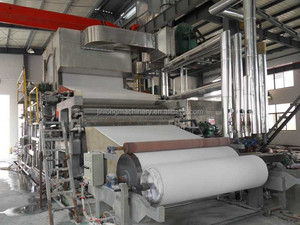
Direct Manufacturing Lineup
High-Efficiency Tissue Machinery Solutions
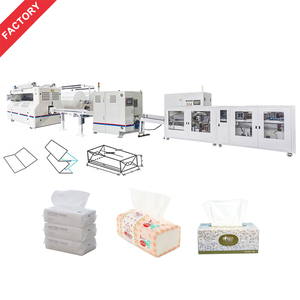
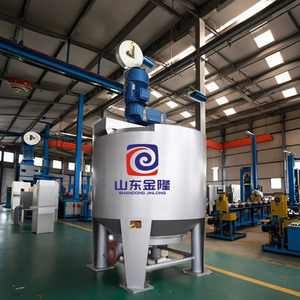
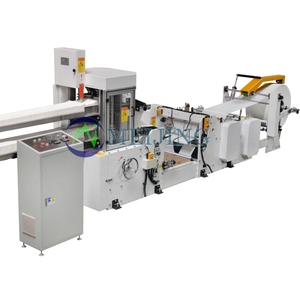
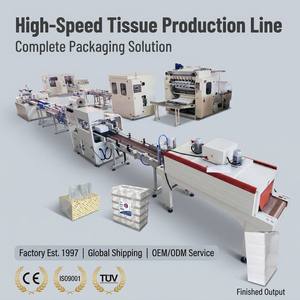
Explore our flagship interfolding, converting, pulping, and packaging systems engineered for maximum overall equipment effectiveness (OEE).
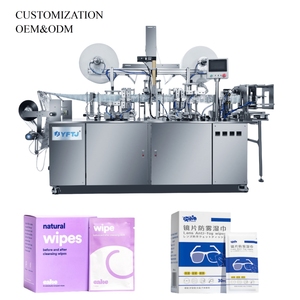
Technical Whitepaper
Engineering Standards of High-Speed Facial Tissue Interfolding
A comprehensive analysis of kinematics, vacuum dynamics, tension stability, and compliance guidelines for global tissue paper converters.
1. Mechanical vs. Vacuum Interfolding: Kinematic Dynamics
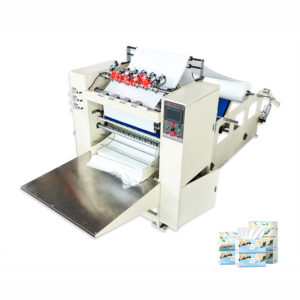
Facial tissue interfolding equipment serves as the operational backbone of modern tissue converting facilities. The primary objective is to take continuous tissue paper webs from jumbo parent rolls, slit them into precise lane widths, fold them into alternating sheets (V-Fold, Z-Fold, or W-Fold geometries), and stack them seamlessly so that pulling one sheet automatically draws the next sheet out of the dispenser box.
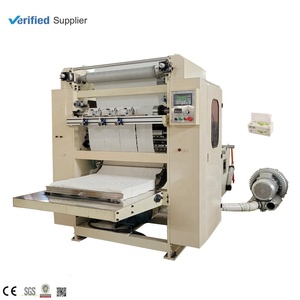
Two dominant interfolding technologies control the market: mechanical jaw folding and vacuum suction folding. Vacuum interfolding machinery utilizes high-flow suction rollers (powered by Nash-type liquid ring vacuum pumps or centrifugal blowers) to hold paper plies securely against rotating folding cylinders. This approach drastically minimizes mechanical contact wear, allowing for operating speeds exceeding 200 meters per minute (up to 1,000 log cuts per minute depending on lane count).
Information Gain Insights: Vacuum-assisted interfolding reduces tissue dust emissions by up to 34% compared to legacy mechanical finger systems, maintaining web tension integrity across low-GSM virgin and recycled tissue stocks (13–20 gsm per ply).
2. Web Tension Control, Embossing, and Slitting Technology
High-capacity tissue lines require multi-stage closed-loop tension regulation. The jumbo roll unwinding station incorporates vector frequency inverter drives combined with pneumatic dancing rollers and ultrasonic diameter sensors. As the parent roll diameter decreases from 1500 mm down to the core, servo feedback loops auto-adjust brake torque to prevent web snapping or stretching.
Downstream embossing modules can be customized based on private label client specifications. Steel-to-steel embossing units provide high-definition border or full-surface decorative patterns, enhancing bulk density by up to 25%. Alternatively, steel-to-rubber or point-to-point micro-embossing rollers maximize tactile softness while maintaining ply-bonding cohesion without excessive adhesive usage.
| Technical Parameter | Standard Convertible Line | High-Speed Servo Interfolding Line |
|---|---|---|
| Web Width Range | 1400 mm – 1800 mm | 2100 mm – 2800 mm (Multi-Lane) |
| Design Speed | 120 – 160 m/min | 180 – 250 m/min |
| Interfolding Geometries | V-Fold (Single Interleaved) | V-Fold, Z-Fold, W-Fold (Customizable) |
| Control System | PLC with HMI Touchpanel | Multi-Axis Motion Controller & Servo Architecture |
| Applicable Raw Material | 13-22 gsm (1-3 plies) Virgin/Recycled | 11-20 gsm High-Soft Virgin Bamboo/Wood Pulp |
| CE & ISO Compliance | Certified (2006/42/EC Safety Standards) | Certified with Enclosed Guarding & Light Curtains |
3. Fully Integrated Downstream Cartoning & Soft-Pack Wrapping
Standalone interfolding machines often suffer from bottlenecks at the manual transferring station. Modern enterprise-grade converting operations integrate fully automated log saws, transfer pushers, and high-speed flow-wrapping or cartoning units. Servo-driven log saws feature orbital tungsten-carbide rotating knives with automatic grindstone sharpening systems, guaranteeing clean, burr-free cuts across every tissue stack.
Once cut, stacks move directly into soft-pack wrapping machines (using PE, CPP, or biodegradable barrier films) or box cartoning units. Integrated optic eye sensors detect misaligned stacks or incomplete sheet counts, automatically rejecting defective packs before final bundle wrapping or robotic palletizing.
Strategic Procurement Horizons
Facial Tissue Machinery Procurement Trends (2025–2030)
Stay competitive by understanding shift drivers in paper raw materials, energy management, smart factory integration, and eco-packaging trends.
1. Non-Wood Fiber Processing
With rising pulp costs, global converters are switching to 100% unbleached bamboo pulp, bagasse, and wheat straw fibers. Machinery must feature adaptive tension control to handle varying tensile strengths and shorter fiber lengths without web tear.
2. Carbon-Neutral Energy Efficiency
Energy consumption accounts for a major portion of operational expenditure. Modern interfolding lines implement regenerative braking servo systems and high-efficiency variable-frequency vacuum blowers, cutting power consumption by 18-25% per ton of finished paper.
3. Industry 4.0 Telemetry & Diagnostics
Procurement teams increasingly favor equipment equipped with IoT edge gateways. Remote PLC diagnostics, predictive vibration analysis on bearing blocks, and real-time cloud production telemetry allow engineering teams to prevent unplanned downtime.
Manufacturing Authority
Why Partner with EuroFlow Tissue Machinery Co., Ltd.?
Combining 14+ years of specialized converting machine design, rigorous quality control, and dependable international post-sales support.
Founded in 2011, EuroFlow Tissue Machinery Co., Ltd. operates a 20,000 square meter standardized production facility equipped with high-precision CNC machining centers, dynamic balancing test beds, and dedicated assembly bays. With over 80 national machine patents, our engineering team focuses strictly on tissue paper converting and automated hygienic paper packaging lines.
We serve tissue converting clients across 100+ countries—spanning North America, Europe, South America, the Middle East, Southeast Asia, and Africa. By sourcing electrical components from globally trusted brands (including Siemens, Schneider, Omron, and Festo), we ensure local component replacement availability regardless of factory location.
Turnkey Project SLA: Every interfolding machine undergoes a continuous 72-hour trial run using customer-supplied jumbo paper rolls prior to factory acceptance testing (FAT) and sea-freight packing.
Global Supply Capabilities
- Factory direct pricing with custom OEM configurations
- 20-day delivery for standard stocked models
- 60 to 90 days for full integrated high-speed lines
- On-site engineer commissioning & operator training
- 24/7 remote video technical troubleshooting support
Clear Answers for Buyers
Frequently Asked Questions (FAQ)
Expert engineering answers to common technical, commercial, and operational questions regarding facial tissue interfolding equipment.
What is the key technical difference between V-Fold and Z-Fold interfolding machines?
V-Fold machines fold sheets in half (single interleave) so that each tissue sheet has one fold and draws out the next. Z-Fold machines fold paper into three equal sections (double interleave), providing a smaller folded footprint suited for compact box dimensions while delivering higher absorption density per sheet.
Can a single interfolding machine process both virgin pulp and recycled paper?
Yes. Our interfolding machines are equipped with adjustable vacuum suction manifolds and variable unwind tension controllers. Operators can adjust web tension parameters via the HMI touchscreen to seamlessly switch between 13-15 gsm virgin wood/bamboo pulp and 16-22 gsm recycled tissue stock without causing sheet tears or line jams.
What electrical specifications and voltages can be customized for my country?
We configure all motor drives, heating elements, and PLC control cabinets to your destination country's exact grid voltage—such as 380V 3-Phase 50Hz, 220V 3-Phase 60Hz, 415V 50Hz, or 480V 60Hz. Electrical drawings and terminal labeling are fully standardized in English.
How do you ensure embossing roller patterns match our private label brand requirements?
Our in-house laser engraving facility crafts custom embossing rollers based on your vector artwork or physical tissue samples. We offer micro-embossing, border embossing, and point-to-point logo embossing with hardened steel rolls treated with chrome plating to ensure long operational lifespan.
What is the expected lead time and shipping process for a complete converting line?
Standard single-lane or standalone machines held in stock ship within approximately 20 days. Customized multi-lane interfolding lines with integrated automatic cartoners or soft-pack bundlers typically take 60 to 90 days for complete manufacturing, testing, and export packing in moisture-proof vacuum-sealed wooden cases.
What post-warranty support and spare parts SLA do you provide?
We supply a comprehensive 2-year wearable spare parts package (including slitting blades, suction belts, vacuum seals, and heating strips) with every machine. Post-warranty, spare parts ship via express air courier within 48 hours, supported by remote AR video assistance or on-site field engineer dispatch upon request.
Request a Customized Facial Tissue Machine Quote Today
Send us your tissue product specs, pack dimensions, target output, and factory layout requirements. Our engineering specialists will send you a detailed technical proposal and factory-direct price quotation within 24 hours.
Get a Quote