CE Certified Napkin & Tissue Converting Machinery
Explore our high-speed automatic paper napkin machinery, wet wipe production lines, facial tissue folders, and paper roll converting plants tested to rigorous European safety standards.
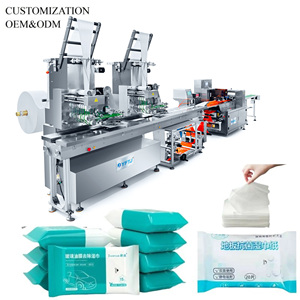
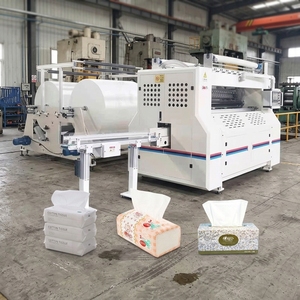
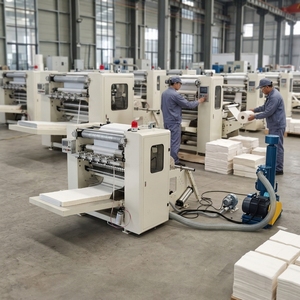
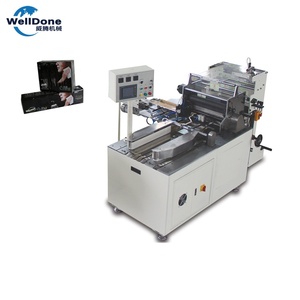
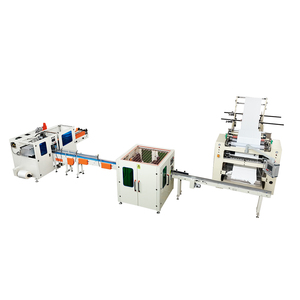
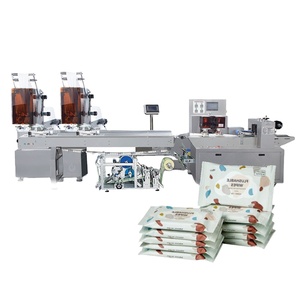
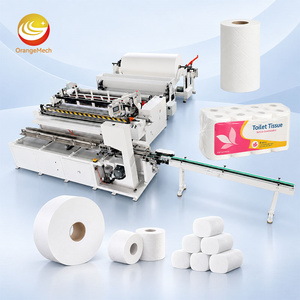
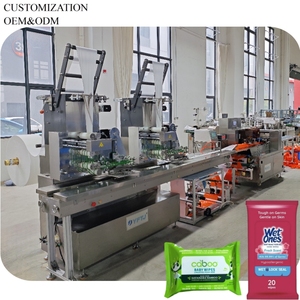
Engineering Excellence in Automatic Napkin Machinery Manufacturing
A comprehensive whitepaper on mechanical folding geometry, tension synchronization, flexographic ink transfer, and European safety compliance for tissue paper converters.
The global demand for high-speed, hygienic, and aesthetically tailored paper serviettes has transformed napkin converting from basic mechanical folding into a high-precision, servo-driven industrial discipline. As leading CE Certified Napkin Folding Machine Suppliers & Exporters, EuroFlow Tissue Machinery engineers automated systems that seamlessly bridge raw jumbo roll unwinding with final flow-wrapped presentation. Modern commercial paper napkin converting lines must process a wide spectrum of tissue basis weights—ranging from lightweight 13 gsm double-ply facial stock to dense 28 gsm single-ply recycled kraft stock—without compromising web integrity, embossing definition, or operational speed.
1. Mechanical Principles of High-Speed Napkin Folding
Paper napkin production equipment relies on exact pneumatic or mechanical folding jaws synchronized with dynamic slitting blades. Understanding the kinematic behavior of paper webs under high acceleration is paramount to maintaining folding precision at speeds exceeding 600 to 1,000 pieces per minute.
- Jumbo Roll Unwinding & Constant Tension Control: The raw tissue roll is loaded via a pneumatic lifting cradle. Independent vector-motor unwinding belts, coupled with dynamic dancer arm tension sensors, ensure that web tension remains uniform regardless of changing jumbo roll diameter. This prevents web snapping and fold misalignment.
- Flexographic Printing Units: Integrated inline 1-color to 4-color flexographic printing modules utilize ceramic anilox rollers and doctor blade chambers. Water-based eco-friendly inks are applied to the moving tissue web, followed by high-velocity infrared (IR) or hot-air drying tunnels to eliminate ink smudging prior to embossing.
- Steel-to-Steel or Steel-to-Rubber Embossing: Tissue bulk, tactile softness, and ply bonding are dictated by the embossing station. Micro-embossing rollers, machined via high-precision CNC laser engraving, interlock the paper plies. Custom engraving options range from border-only patterns to full-surface damask textures.
- Rotary Slitting & Transverse Folding: High-hardness tungsten carbide rotary knives shear the continuous web along longitudinal axes. The slit strips pass over a triangular former board (for 1/4 quarter folding) or interfolding vacuum drums (for N-fold, V-fold, and Z-fold serviettes) before transverse cutting blades shear the napkins to exact length.
Vacuum-Assisted Folding
Utilizes high-pressure Siemens blower systems to gently pull paper sheets onto folding cylinders, eliminating static friction and enabling flawless 1/4 and 1/8 book folds at continuous speeds up to 1,000 sheets/min.
Quick-Change Embossing
Cassette-style roll mountings allow operators to switch embossing rollers within 30 minutes, giving tissue factories maximum flexibility for promotional logo embossing or private-label client runs.
Automated Count Stacking
Optical sensor counters interface with pneumatic pushers to separate tissue stacks into precise 50, 100, or 200-piece bundles, feeding directly into automatic flow-wrappers or cartoning units.
2. Technical Specification Matrix: Napkin Folding Machine Models
Selecting the appropriate napkin making equipment requires matching finished product dimensions, target output, and printing complexity. The matrix below outlines engineered parameters for core industrial napkin converting machines exported by our facilities:
| Machine Specification | High-Speed 400x400mm Napkin Line | Standard Small Business Line | Interfolded Facial & Napkin Folder | Automatic Wet Wipe / Tissue Line |
|---|---|---|---|---|
| Unfolded Napkin Size | 400 x 400 mm (Customizable) | 230 x 230 mm to 300 x 300 mm | 190 x 200 mm (V/N Fold) | Variable (150-220 mm width) |
| Folded Formats | 1/4 Fold, 1/8 Book Fold | 1/4 Quarter Fold | V-Fold Interfolded Softpack | Multi-piece flat pack (5-30 pcs) |
| Operating Speed | 500 - 800 pcs/min | 230 - 350 pcs/min | 800 - 1,200 pcs/min | 300 - 600 cuts/min |
| Raw Material GSM | 13 - 28 g/m² (1 or 2 ply) | 14 - 22 g/m² (1 or 2 ply) | 13 - 18 g/m² (2 or 3 ply) | 35 - 80 g/m² Spunlace Nonwoven |
| In-Line Printing | 1 to 4 Color Flexographic | Optional 1-Color Flexo | Optional Edge Logo Flexo | Liquid Dosing System Integrated |
| Total Installed Power | 7.5 kW - 15 kW | 4.5 kW - 6.0 kW | 18 kW - 22 kW | 12 kW - 28 kW |
| Drive Control System | Multi-axis Servo & PLC | Frequency Inverter & PLC | Full Motion Servo Architecture | PLC with Touchscreen HMI |
CE Certification Framework for Global Paper Machinery Buyers
Why CE marking is essential for importing converting equipment into the EU, North America, and regulated international markets.
Essential CE Directives Applied
All machinery exported by EuroFlow Tissue Machinery complies with mandatory European Union harmonized standards:
- Machinery Directive 2006/42/EC: Guarantees mechanical hazard prevention, emergency stop system integration (EN ISO 13850), and physical safety guarding across all moving shear blades and nip rollers.
- Low Voltage Directive (LVD) 2014/35/EU: Ensures electrical enclosures, wiring conduits, and control panels adhere to EN 60204-1 safety of industrial machinery standards.
- Electromagnetic Compatibility (EMC) 2014/30/EU: Prevents electrical frequency interference with adjacent factory automation systems.
E-E-A-T Quality Assurance & Risk Mitigation
Purchasing CE-certified napkin folding equipment mitigates operational risk for plant managers and purchasing directors:
- Operator Safety: Dual-channel safety interlocks halt machine operation instantaneously if acrylic doors or safety covers are opened during production.
- Noise Level Compliance: Precision acoustic dampening keeps operational noise levels below 78 dB(A) under full mechanical load, satisfying OSHA and EU workplace health standards.
- Streamlined Customs Clearance: Complete Technical Construction Files (TCF), Declaration of Conformity (DoC), and CE nameplates prevent customs holds at major European and American ports.
Product & Sourcing Trends in Tissue Converting Automation (2025–2030)
Emerging technology vectors shaping how tissue napkin manufacturers invest in long-term production assets.
Sustainable & Virgin-Alternative Fibers
Global tissue brands are rapidly shifting from 100% bleached wood pulp toward eco-friendly bamboo pulp, unbleached kraft, and non-wood bagasse agricultural residues. Sourcing machines with adaptive web tension controls ensures smooth processing of lower-tensile sustainable fibers without web breaks.
IoT Diagnostics & Remote Telemetry
Next-generation napkin machinery incorporates OPC-UA protocols, allowing real-time Overall Equipment Effectiveness (OEE) tracking, predictive maintenance alerts on bearing wear, and remote software troubleshooting by factory engineers via secure cloud gateways.
Fully Integrated End-of-Line Packaging
Standalone napkin folders are being replaced by unified converting-to-packaging lines. Folder discharge systems now link directly to automatic flow wrappers, bundlers, and robotic palletizers, removing manual labor costs and preventing human contact for maximum hygiene.
Why Partner With EuroFlow Tissue Machinery?
A trusted global OEM/ODM manufacturer delivering advanced tissue converting and packaging automation since 2011.
20,000 m² Modern Production & Machining Center
Our state-of-the-art manufacturing facility in Shantou, Guangdong features high-precision CNC machining centers, dynamic balancing rigs for folding cylinders, and dedicated assembly bays for complete napkin, wet wipe, and paper roll converting lines. With over 100 skilled engineers and technicians, we maintain full control over quality and mechanical tolerances.
Global Installation Footprint & Local After-Sales
Having supplied over 1,000 machine units to tissue converters across 100+ countries—including the United States, Brazil, South Africa, Vietnam, Yemen, and Germany—we understand international electrical standards, export packaging requirements, and rapid spare parts dispatching. We offer both remote video guidance and on-site engineer commissioning.
Frequently Asked Questions (FAQ) for Machine Buyers
Expert engineering answers to common technical and commercial queries regarding paper napkin machine procurement.
What is the production capacity and linear speed of your automatic napkin folding machines?
Can one napkin machine handle multiple napkin sizes and folding styles?
How does the flexographic printing unit handle water-based inks without tearing lightweight tissue paper?
What electrical specifications and pneumatic requirements are needed for overseas installation?
What is the typical lead time from contract signing to factory shipment?
How are the machines packaged to prevent corrosion during ocean freight transport?
What after-sales service and operator training do you provide for foreign clients?
Ready to Upgrade Your Tissue Converting Line?
Contact our engineering specialists today to receive a detailed machine proposal, custom embossing sample evaluation, and factory-direct quotation.