Featured Industrial Tissue & Hygiene Machinery
High-efficiency converting systems engineered for high-volume tissue paper mills, napkin processors, and personal care packing facilities.
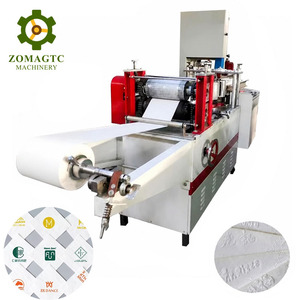
Automatic Serviette Napkin Folding Machine with Two-Color Printing
- Function: Printing, Embossing & Folding
- Speed: 1200 - 1600 sheets/min
- Application: Hotel, Cafe, Restaurant Napkins
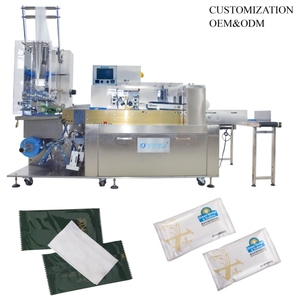
YFTJ Automatic Single Pack Wet Wipes Manufacturing Line
- Operation: Folding, Dosing, Sealing
- Output: 120 - 200 sachets/min
- Substrate: Non-woven, Airlaid paper
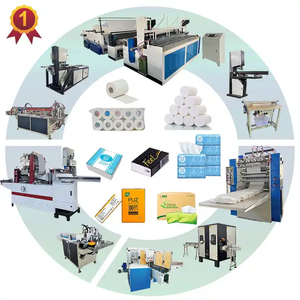
Facial Tissue & Toilet Paper Semi-Automatic Integrated Converting Line
- Format: Box Facial & Toilet Rolls
- Control: PLC Touchscreen Interface
- Ideal For: Flexible Medium-Scale Factories
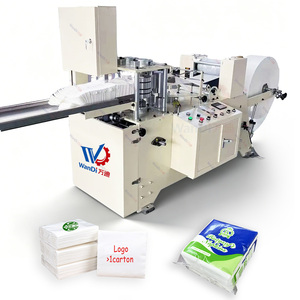
Small Size Full Automatic Napkin Tissue Machine for Commercial Startups
- Unwind Diameter: Max 1200 mm
- Fold Type: 1/4, 1/8 Custom Fold
- Low Energy: 4.5 kW Main Drive
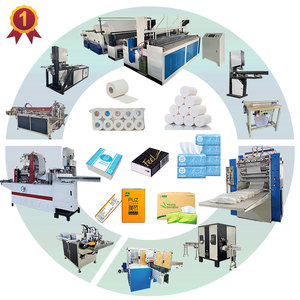
Full-Line Automatic Tissue, Napkin & Toilet Paper Production Plant
- Integration: Slitting, Rewinding, Packaging
- Automation: Fully Synchronized Servos
- Target Market: Commercial Mill Operators
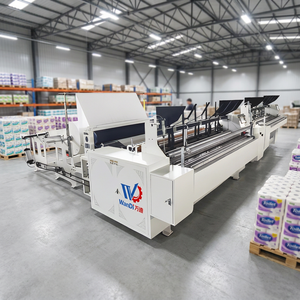
High-Speed Automatic Core & Coreless Toilet Tissue Rewinding Machine
- Function: Perforating, Embossing, Rewinding
- Finished Roll Dia: 90 - 150 mm
- Log Saw Interface: Fully Automated
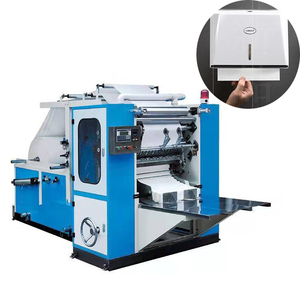
Automatic V-Fold Laminated Hand Towel & Facial Tissue Interfolding Line
- Technology: Point-to-Point Glue Lamination
- Speed: Up to 180 m/min web speed
- Vacuum Folding: Heavy-duty blower unit
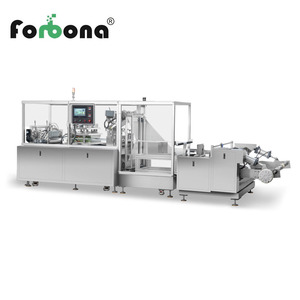
Forbona FBN-100AP Fully Automatic Single Sachet Wet Wipe Packaging System
- Liquid Dosing Precision: ±0.05 ml
- Packing Film: Foil / PE / PET laminates
- Efficiency: Fully automatic continuous sealing
1. Technical Engineering Evolution in China's Tissue Converting Machinery
Over the past two decades, China’s industrial tissue converting equipment sector has undergone a profound shift. Moving away from legacy gear-driven mechanical setups, tier-one original equipment manufacturers (OEMs) now produce high-precision, servo-synchronized modular machinery. Modern global paper converting mills demand extreme operational speed, minimal material giveaway, low energy consumption per ton, and rapid changeover capabilities between distinct GSM paper grades (ranging from ultra-lightweight 11 gsm virgin tissue up to 45 gsm textured hand towels or non-woven substrates).
1.1 Kinematic Servo Synchronization & Tension Control Architecture
High-speed paper converting relies heavily on delicate web tension management. Tissue paper possesses extremely low wet and dry tensile strength. Any vibration, mechanical backlash, or slight speed variance between the unwinding stand, embossing unit, slitting module, and folding jaws leads to web breaks, machine stoppage, and high scrap rates.
Leading Chinese tissue machine factories have integrated multi-axis motion control platforms (utilizing EtherCAT or PROFINET high-speed industrial buses) coupled with absolute encoder direct-drive servo motors (such as Siemens S120 or Schneider Lexium series). By replacing mechanical gear trains with electronic motion profiles, modern machines achieve:
Zero-Backlash Registering
Electronic camming allows instantaneous phase adjustments for 2-color flexographic printing and embossing registration without stopping the line.
Closed-Loop Tension Control
PID-driven load cells dynamically adjust parent roll brake torque or surface unwinding motor speed as the reel diameter decreases, preventing web stretch or snapping.
Flexible SKU Changeovers
Operators switch sheet cut lengths, fold counts, and log rewind counts via HMI recipe selection in under 5 minutes without manual gear swaps.
1.2 Embossing Roll Metallurgy & Surface Treatment Standards
Embossing serves a dual role: enhancing hand-feel softness and bonding multi-ply sheets together (bulk generation). Top-tier Chinese manufacturers employ precision CNC engraving technology alongside advanced metallurgical heat treatments:
| Embossing Type | Roll Metallurgy / Coating | Pattern Depth Range | Primary Finished Product Target |
|---|---|---|---|
| Steel-to-Steel (Nested / Derl) | 42CrMo Alloy Forging + Hard Chrome Plating (60-65 HRC) | 0.35 mm - 1.20 mm | Commercial Hand Towels, Industrial Wipes |
| Steel-to-Rubber | Laser Engraved Steel / High-Durometer Synthetic Rubber (70-85 Shore A) | 0.20 mm - 0.80 mm | Facial Tissue, Serviette Napkins, Toilet Paper |
| Point-to-Point Lamination | Micro-Engraved Alloy Roller + Anox Stainless Steel Anilox Cylinder | Micro-patterns < 0.30 mm | Ultra-Soft Kitchen Towel, Luxury 3-Ply Toilet Tissue |
2. Future Procurement Trends in Industrial Paper Converting (2025–2030)
Global procurement teams are re-evaluating their capital expenditure (CAPEX) strategies for tissue making and converting machinery. Sourcing managers are no longer prioritizing initial purchase price alone; instead, they focus on overall Life Cycle Cost (LCC), Overall Equipment Effectiveness (OEE), and environmental compliance. Here are three key macro-trends defining future tissue machine purchases:
2.1 Smart Edge Computing & Predictive Condition Monitoring
Unplanned downtime in a continuous paper mill can cost thousands of dollars per hour. Next-generation converting lines built in China now incorporate vibration sensors on main bearing housings, temperature sensors on calendering rolls, and current draw monitoring on vacuum exhaust turbines. These IoT edge devices stream telemetry data directly to cloud platforms or plant SCADA systems, alerting maintenance crews to bearing wear or lubrication degradation long before catastrophic mechanical failure occurs.
2.2 Sustainability: Energy Reduction & Plastic-Free Banding
Energy consumption during rewinding and vacuum-assisted folding represents a major operational expense (OPEX). Modern machines feature high-efficiency IE4/IE5 permanent magnet synchronous motors (PMSM) paired with regenerative variable frequency drives (VFDs) that feed excess deceleration braking energy back into the plant power grid. Furthermore, to comply with strict European and North American plastic reduction mandates, packaging modules are transitioning from traditional Polyethylene (PE) heat-shrink film to recyclable paper wrapping and bio-degradable adhesive sealing.
2.3 Turn-Key Line Integration (From Parent Roll to Robot Palletizing)
Procuring isolated equipment from multiple suppliers introduces significant system integration risks, communication protocol conflicts, and finger-pointing during warranty disputes. The industry trend heavily favors sourcing complete turn-key lines from unified Chinese manufacturing hubs. A single contract covers the parent roll unwinder, slitter rewinder, embossing unit, log saw cutter, automatic bundling/wrapping machine, and end-of-line robotic palletizing cell.
3. Strategic Sourcing Guide: How to Audit & Evaluate Chinese Manufacturers
When selecting a Chinese manufacturing partner for tissue paper machines, overseas buyers must implement a disciplined verification framework beyond supplier marketing materials. Use the following structured criteria during factory site visits or third-party audits (e.g., SGS, TÜV, Bureau Veritas):
In-House Machining Precision
Verify whether the factory owns heavy-duty 5-axis gantry CNC milling centers and dynamic balancing machines for long rollers (exceeding 2500 mm length).
Electrical Sourcing Sourcing
Ensure safety switchgear, PLCs, and VFDs are sourced from globally recognized brands (Siemens, Schneider, ABB, Omron) to guarantee local spare parts availability.
Safety & Electrical Standards
Check for full conformity with EU Machinery Directive 2006/42/EC, Low Voltage Directive 2014/35/EU, interlocked safety guards, and light curtains.
Total Cost of Ownership (TCO) Model Example
A standard high-speed napkin paper production machine comparison between a European baseline and a top-tier Chinese engineered line:
| Evaluation Parameter | European Tier-1 Baseline | Top-Tier Chinese OEM Solution | Strategic Sourcing Impact |
|---|---|---|---|
| Initial Capital Expenditure (CAPEX) | $450,000 - $650,000 USD | $120,000 - $180,000 USD | 60-70% CAPEX Reduction |
| Spare Parts & Format Tooling Cost | High (Proprietary Lock-in) | Moderate (Standardized ISO Components) | Lower long-term maintenance overhead |
| Delivery Lead Time | 8 - 12 Months | 60 - 90 Days | Faster market launch & cash flow realization |
| Design Operating Speed | 1800 sheets/min | 1500 - 1600 sheets/min | Negligible throughput difference for ROI balance |
Why Global Paper Converters Partner With Our Factory
Combining advanced mechanical engineering expertise, rigorous quality control protocols, and comprehensive overseas after-sales support to deliver unmatched value in paper converting machinery.
20,000+ m² Production Base
State-of-the-art assembly bays equipped with high-precision CNC machining centers, dynamic roll balancing setups, and dedicated testing areas.
80+ National Patents
Continuous R&D investments yield innovative tissue folding mechanics, glue-less tail sealing systems, and rapid format-changeover designs.
Pre-Shipment Trial Runs
Every line undergoes rigorous continuous testing using the client’s exact paper GSM samples and packaging film prior to factory acceptance testing (FAT).
24/7 Global Technical Dispatch
Remote PLC diagnostic support coupled with experienced commissioning engineers available for on-site installation and operator training worldwide.
Frequently Asked Questions (FAQ)
Detailed answers to technical, operational, and commercial questions raised by international procurement managers.
To provide an exact engineering proposal and commercial offer, our engineers require:
- Target Product Type: Facial tissue, toilet paper roll, serviette napkin, kitchen towel, or wet wipe.
- Raw Material Specs: Parent roll width (mm), maximum unwind diameter (mm), GSM basis weight (e.g., 2-ply 13.5 gsm or 1-ply 18 gsm), and fiber type (virgin pulp vs. recycled paper).
- Finished Product Dimensions: Unfolded and folded sheet size, roll diameter, or sachet dimensions.
- Desired Output Capacity: Target sheets/minute, rolls/minute, or metric tons per 8-hour shift.
- Power Supply Requirements: Local industrial voltage, phase, and frequency (e.g., 380V/50Hz/3Phase, 415V/50Hz, or 220V/60Hz).
Yes. Our servo-driven folding and rewinding machines feature wide operational flexibility. Sheet cut lengths can be adjusted digitally via the PLC touch screen. Width variations are handled by adjusting the slitting blade positions across the expandable air shaft. For drastic folding pattern changes (e.g., switching from 1/4 fold to 1/8 fold napkin), modular folding boards can be swapped within 30 to 45 minutes.
Web tearing is eliminated through three core engineering mechanisms: (1) Independent surface-driven unwind belts powered by vector servos that track main machine speed seamlessly; (2) Pneumatic dancer rollers equipped with ultra-sensitive low-friction cylinders and load cells that buffer sudden tension spikes during acceleration/deceleration; and (3) Precision dynamic balancing of all aluminum guide rollers to eliminate high-speed vibration.
Standard standalone machines (such as single-color napkin folders or basic toilet roll rewinders) typically carry a production time of 30 to 45 days. Customized high-speed lines, two-color flexo printing integrated plants, or fully automated turn-key converting-to-packaging lines require 60 to 90 days. Expedited production schedules can be arranged upon commercial agreement.
We offer flexible commissioning options: (1) On-Site Installation: We dispatch experienced field engineers to your plant to supervise physical placement, electrical wiring, mechanical alignment, FAT verification, and staff training. (2) Remote Smart Support: For standard machines, we provide step-by-step video installation guides, annotated CAD layout drawings, and real-time remote augmented reality (AR) support via online video session.
All machinery comes with a standard 12-month warranty covering structural components, shafts, gears, and electronic systems starting from the date of port clearance or site commissioning. Wear-and-tear items (e.g., circular slitting knives, perforation blades, timing belts, Teflon heater strips) are shipped as a complimentary startup kit with the machine. Long-term replacement parts are dispatched via DHL/FedEx door-to-door express within 48 hours of request.