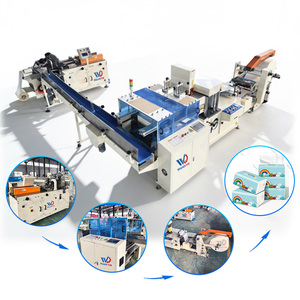
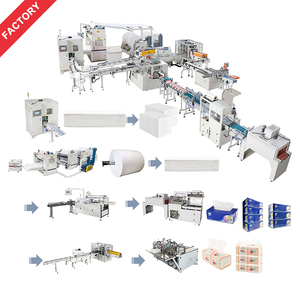
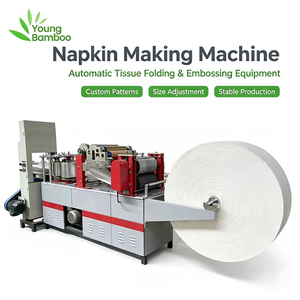
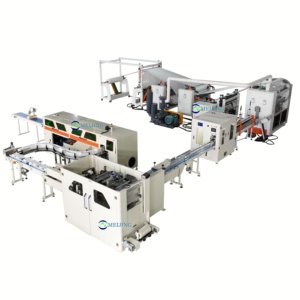
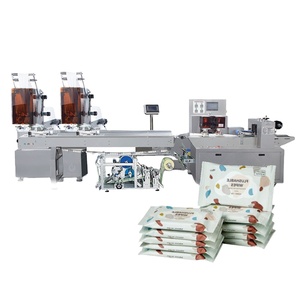
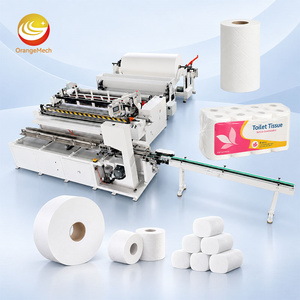
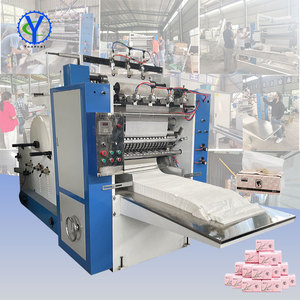
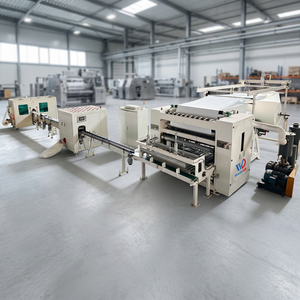
1. Technical Architecture of Industrial Flexographic Printed Napkin Machines
In modern paper converting, the demand for custom-printed, multi-ply, and ergonomically folded paper napkins across HoReCa (Hotel, Restaurant, Catering), quick-service chains, and retail institutional sectors has surged globally. To meet rigorous production standards, modern printed napkin machines engineered in China combine high-precision flexographic printing, micro-embossing, dynamic web tension control, high-speed rotary slitting, and synchronized vacuum folding.
Unlike standard unprinted tissue folding machinery, flexographic napkin printing machinery integrates a specialized liquid ink transfer unit operating under precise doctor blade and ceramic anilox roller metering systems. This mechanical arrangement ensures vivid graphic reproduction—from basic single-color brand logos to intricate 4-color or 6-color full-bleed decorative designs—without compromising paper strength or inducing web breakages during continuous high-speed converting.
Technical Information Gain: Flexographic napkin machinery engineered with high-precision ceramic anilox rollers (200 LPI to 600 LPI) and chambered doctor blade systems delivers ultra-consistent ink film transfer at speeds exceeding 800–1200 napkins per minute, maintaining tight color registration tolerances within ±0.15 mm.
Mechanical Subsystems of Advanced Printed Napkin Production Equipment:
Flexographic Printing Engine
Utilizes water-based eco-friendly inks, chambered doctor blades, and quick-change rubber/photopolymer sleeve cylinders for fast graphic setup and precise ink doctoring.
Precision Embossing Unit
Offers Steel-to-Rubber, Steel-to-Steel, or Steel-to-Paper roller combinations. Features optional heating elements and pneumatic nip loading for distinct ply bonding and enhanced sheet bulk.
Vacuum & Mechanical Folding Drum
Configured with heavy-duty air distribution valves and adjustable vacuum folding jaws to execute precise 1/4 (quarter fold), 1/8 (cocktail fold), or 1/6 (dispenser fold) geometry without surface scuffing.
Full-Servo Tension Master
Multi-axis Siemens or Mitsubishi PLC motion controllers continuously sync web unwinding, printing registration, embossing, slitting, and stack counting through high-resolution encoders.
2. Engineering Matrix: Technical Specifications Across Machine Classes
Selecting the optimal printed napkin manufacturing equipment depends on targeted sheet formats (e.g., 230x230mm cocktail napkins, 300x300mm lunch napkins, 400x400mm dinner napkins), output velocity, and degree of downstream packaging automation. Below is an engineering comparison matrix detailing standard operational parameters across major machine categories engineered by leading Chinese exporters:
| Machine Category | Parent Roll Width | Folding Speed (Pcs/Min) | Printing Capability | Power Rating (kW) | Ideal Target Application |
|---|---|---|---|---|---|
| Compact 30x30 Napkin Line | Up to 300 mm | 600 – 800 | 1 or 2-Color Flexo | 4.5 – 7.5 kW | Small-scale producers, targeted commercial SKUs |
| High-Speed 4-Line Printed Napkin Machine | 1200 mm (Multi-lane) | 2,400 – 3,200 | 1 to 4-Color Flexo | 18 – 25 kW | Large-scale industrial napkin converters & exporters |
| Full-Servo Interfolded Napkin Line | 600 – 900 mm | 1,200 – 1,800 | Up to 6-Color High-Def | 22 – 35 kW | Premium branded dispenser napkins, HoReCa chains |
| Integrated Printing-Folding-Packing Plant | Custom (up to 1500 mm) | Line Speed Sync | Inline Flexo + Drying | 45 – 75 kW | Turnkey paper mill converting setups (e.g., ORME Series) |
3. Global Sourcing & Tech Trends in Printed Napkin Machinery (2025–2030)
As tissue paper converters upgrade production infrastructure to comply with environmental regulations and optimize unit operational costs, Chinese machinery manufacturers are driving key innovations. Sourcing managers and plant directors should evaluate five overarching technical trends when specifying napkin production lines:
A. Transition to Water-Based Eco-Inks and Infrared (IR) Drying Systems
Global sustainability directives require zero-VOC (Volatile Organic Compound) manufacturing environments, especially for food-contact paper napkins. Next-generation Chinese napkin machines incorporate closed-loop water-based ink circulation units paired with intelligent hot-air or Infrared (IR) flash drying hoods. This configuration guarantees rapid ink setting at 300 m/min web speeds while preventing ink bleeding or residual odomers on food-contact surfaces.
B. Shaftless Servo Drives & Digital Color Registration
Traditional mechanical gear-driven napkin machines suffer from cumulative gear backlash over extended operational hours, resulting in registration drift between printing, embossing, and cutting units. Modern high-tier lines utilize independent servo motors for each functional axis—unwind, printing plate cylinder, anilox roller, embossing nip, and folding drum. Fiber-optic mark sensor feedback allows real-time automated registration adjustment within fractions of a millimeter.
C. High-Definition Point-to-Point Micro-Embossing
Consumer preferences have shifted toward softer, bulkier napkins that simulate woven textile linens. Advanced converting lines integrate double-embossing units with point-to-flat or point-to-point micro-engraved steel rollers. By laminating plies using minimal water-soluble glue at the embossing peaks, converters increase product volume by up to 25% while maintaining tactile softness and absorption capacity.
D. Automated Downstream Bundling, Cartoning, and Robot Palletizing
The manual handling of folded napkin stacks at high machine speeds creates a bottleneck and introduces hygienic risk. Industrial lines now connect napkin folding outputs directly to automatic flow-wrapping machines, banding units, high-speed cartoners, and collaborative robotic palletizers (such as the RP-10 series). This full end-of-line integration reduces operational headcount and maximizes Overall Equipment Effectiveness (OEE).
4. Total Cost of Ownership (TCO) & Operational ROI Model
Evaluating an investment in a Chinese printed napkin machine requires analyzing the Total Cost of Ownership (TCO) over a 10-year mechanical lifecycle. Plant managers must calculate capital expenditure (CapEx), raw material yield, electricity consumption, ink cost, routine wear-and-tear components, and labor cost savings.
ROI Calculation Baseline: Replacing two semi-automatic unprinted folding units with a single 4-line full-servo flexographic printed napkin machine typically reduces direct labor costs by 60%, cuts paper trim waste from 4.5% to under 1.2%, and yields payback within 11 to 14 months based on standard two-shift operations.
Key operational metrics to incorporate into procurement financial models include:
- Paper Web Utilization Yield: High-precision tension control systems keep side-trim scrap rates below 1.5%.
- Flexographic Plate Longevity: High-grade photopolymer sleeve plates provide over 2,000,000 impressions per set.
- Energy Efficiency Index: Variable frequency drives (VFDs) and regenerative servo braking cut specific power consumption per ton of paper converted by 15-22%.
- Format Quick-Changeover Time: Modular plate cylinders and magnetic die units reduce product size changeovers (e.g., from 30x30cm to 33x33cm) from 4 hours down to under 45 minutes.
5. Enterprise Advantages & Manufacturing Capability Moat
As an industry-leading exporter and manufacturer in China, our production facility in Shantou, Guangdong spans over 20,000 square meters of state-of-the-art CNC machining, laser cutting, dynamic roller balancing, and assembly workshops. Since our founding in 2011, our engineering team has focused exclusively on converting and packaging automation for household paper and personal hygiene products.
Key pillars of our OEM/ODM manufacturing capability include:
- Documented Certification: Full compliance with European CE Directives and ISO 9001:2015 Quality Management Systems.
- Proprietary IP & R&D: Portfolio of over 80 mechanical and software patents covering vacuum folding geometry, tension stabilization, and high-speed web tracking.
- Global Service Footprint: Machinery installed across 100+ countries, supported by remote PLC diagnostic interfaces and on-site engineering commissioning teams.
- Brand-Name Component Standardization: All electrical, pneumatic, and motion control systems utilize internationally supported components (Siemens, Schneider, SMC, Sick, Omron) ensuring seamless spare-part sourcing globally.
6. Frequently Asked Questions (Technical Sourcing Guide)
What tissue paper GSM range is suitable for flexographic printed napkin machines?
How does the machine maintain accurate color registration at high speeds?
Can one napkin machine produce multiple product sizes (e.g., 23cm, 30cm, and 40cm)?
What printing ink formulation is recommended for food-grade paper napkins?
What is the expected production lead time and export packaging standard?
Consult Our Paper Machinery Application Engineers
Send us your paper napkin dimensions, target speed, embossing pattern, or logo artwork. Our technical team will generate a comprehensive machinery configuration, layout drawing, and ROI analysis tailored to your factory.
Send an Inquiry