Industrial Converting Machinery Fleet
Explore our flagship automated tissue paper rewinding, interfolding, cutting, and packaging line modules.
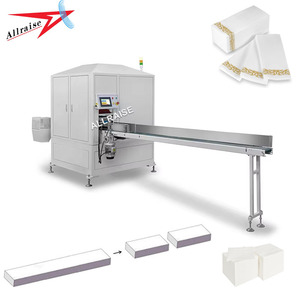
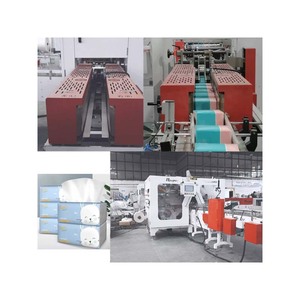
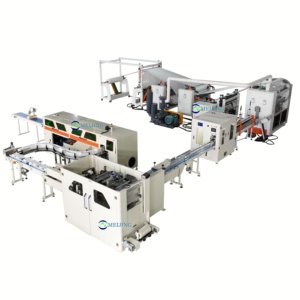
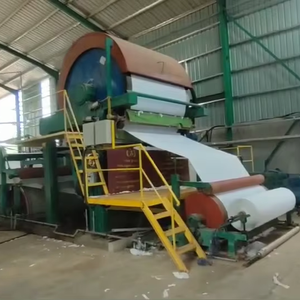
1. B2B Sourcing Overview: Sourcing China Wholesale Facial Tissue Converting Lines
The global tissue paper manufacturing sector is undergoing an unprecedented structural transition. Modern tissue converting entities, FMCG brand owners, and commercial paper wholesalers are actively seeking high-efficiency, fully automatic tissue converting systems that balance high capital expenditure (CAPEX) ROI with minimal operational expenditure (OPEX). Sourcing complete converting lines from leading China original equipment manufacturers (OEMs) has shifted from a cost-saving alternative to a core competitive strategy for market leaders across Europe, the Americas, the Middle East, and Southeast Asia.
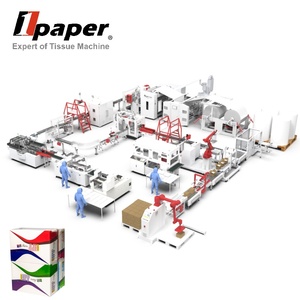
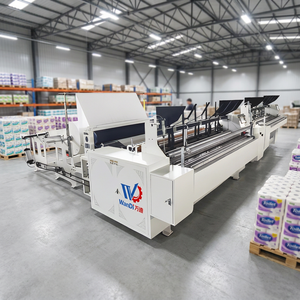
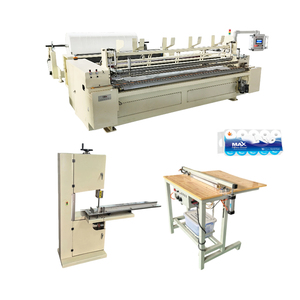
A full-scale facial tissue production system integrates raw parent roll jumbo unwinders, embossing rollers, interfolding jaws, continuous log saw cutting units, individual soft-pack or cartoning packaging modules, and end-of-line bundle wrapping or case packing setups. Achieving operational harmony across these mechanical and electrical stages requires advanced multi-axis motion control, pneumatic tension control, and real-time sensor feedback.
When evaluating wholesale suppliers in China, enterprise buyers must look beyond basic mechanical assembly speeds. Deep-level technical evaluations should encompass parent roll unwinding tension controls, static elimination modules, vacuum suction efficiency during high-speed V-fold or Z-fold interfolding, knife edge longevity on orbital log saws, and energy consumption metrics per metric ton of processed paper pulp.
2. Core Architectural Components of High-Speed Converting Lines
A high-performance facial tissue production line comprises several precise engineering subsystems. Understanding these mechanical modules allows procurement teams to specify exact technical requirements during RFQ negotiations.
Pneumatic Jumbo Roll Unwinding
Equipped with independent variable-frequency belt drives, automatic web-guiding edge alignment (EPC), and pneumatic paper loading ramps supporting parent rolls up to 1500mm diameter.
Precision Steel-to-Rubber Embossing
Custom laser-engraved micro and macro embossing patterns with pneumatic pressure control to enhance paper bulkiness, hand-feel softness, and structural plies bonding.
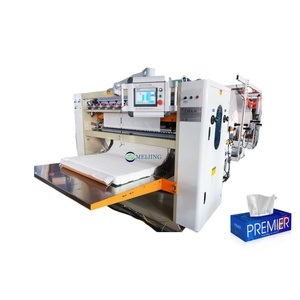
Vacuum-Assisted Interfolding System
High-efficiency roots vacuum blower system securing consistent V-fold, Z-fold, or W-fold configurations at linear web speeds reaching up to 200 meters per minute.
Orbital Dual-Blade Log Saw
Servomotor driven circular blade with automated continuous diamond wheel grinding, web clamping jaws, and precise feed control maintaining cutting tolerances within ±0.5mm.
High-Speed Soft-Pack Flow Wrapper
Integrated film tensioning, optical registration sensor for printed poly-films, thermal sealing bars, and side flap tucking units yielding up to 120 soft packs per minute.
Automatic Case Packing & Bundling
Downstream robotic collating, layer stacking, side-loading cartoning, or outer PE bundle shrink-wrapping ensuring complete untouched hands-free production from jumbo roll to pallet.
Technical Specification Matrix across Conversion Capacities
To assist technical procurement officers in sizing equipment according to prospective factory floor space and utility availability, the matrix below details key engineering benchmarks across standard multi-line facial tissue converting configurations:
| Line Configuration | Working Width (mm) | Design Speed (m/min) | Folding Type | Total Connected Power | Air Consumption |
|---|---|---|---|---|---|
| 4-Line Standard | 840 - 1050 | 120 - 160 | V-Fold (Interfolded) | 22 kW - 35 kW | 0.8 m³/min (0.6 MPa) |
| 6-Line High-Output | 1260 - 1400 | 150 - 180 | V-Fold / Z-Fold | 45 kW - 60 kW | 1.2 m³/min (0.6 MPa) |
| 8-Line Industrial | 1680 - 1750 | 160 - 200 | V-Fold / Z-Fold / W-Fold | 75 kW - 95 kW | 1.5 m³/min (0.8 MPa) |
| 10-Line Ultra-Speed | 2100 - 2200 | 180 - 220 | Z-Fold / Custom Towels | 110 kW - 140 kW | 2.0 m³/min (0.8 MPa) |
3. Future Procurement Trends in Tissue Machinery (2025–2030)
Global tissue paper procurement strategies are pivoting rapidly in response to environmental regulatory mandates, raw material price fluctuations, and evolving consumer packaging preferences. Modern paper mills and third-party converting facilities must align their capital equipment acquisitions with several long-term macro trends:
A. Adaptability to Alternative Fiber and Bamboo Pulp Substrates
With virgin wood pulp prices fluctuating globally and strict deforestation policies taking effect (such as the EU Deforestation Regulation - EUDR), tissue manufacturers are transitioning to virgin bamboo pulp, bagasse (sugarcane residue), and high-percentage recycled fiber formulations. Bamboo pulp, while eco-friendly and tensile-strong, possesses distinct fiber length characteristics that require precise web tension adjustment and modified slitters. Next-generation China converting lines integrate dynamic torque compensation algorithms to prevent web breaks when running 100% bamboo tissue base stock at speeds exceeding 180 meters per minute.
B. Transition from Rigid Box Cartons to Plastic-Reduced Eco-Soft-Packs
Consumer market demand is shifting decisively away from traditional rigid cardboard tissue boxes toward flexible film soft-packs. Soft-packs drastically lower package shipping volume, cut outer packaging material costs by up to 60%, and reduce total logistics emissions. Furthermore, converting lines now incorporate heat-sealable biodegradable films (such as PLA and paper-laminated films), requiring ultra-precise digital temperature control loops on packaging sealing jaws to prevent film burn-through.
C. Smart Factory Integration, IIoT, and Industry 4.0
Procurement departments are prioritizing machinery equipped with Industrial Internet of Things (IIoT) edge devices. Modern tissue converting lines feature remote telemetry units enabling factory engineers to monitor real-time Overall Equipment Effectiveness (OEE), track motor vibration frequencies for predictive bearing maintenance, analyze power consumption per pack, and execute remote software diagnostics directly from the machine manufacturer's R&D hub in China.
D. Fully Modular and Flexible Line Scalability
Instead of single-purpose isolated machines, global buyers favor modular converting architectures. A converting framework designed for 4-line output should ideally allow plug-and-play addition of extra unwinding stands, calendering rolls, or automated cartoning units as regional product demand grows, protecting the initial capital investment.
4. Technological Innovations Shaping Modern Facial Tissue Production Lines
The technological benchmark for industrial machinery manufactured in China has risen substantially over the past decade. Through continuous engineering iterations and joint developments with international automation leaders, state-of-the-art tissue lines incorporate critical technical innovations:
- Automatic Web Splicing Technology: High-speed converting lines now feature zero-speed or flying-splice unwinding stations. When a primary jumbo roll reaches depletion, the secondary roll is automatically spliced onto the running web without stopping the machine, boosting shift production efficiency by up to 15%.
- Vision-Guided Quality Control Inspection: High-resolution optical sensors monitor tissue web width, defect presence, spot contamination, and embossing alignment in real-time. Defective tissue cuts are automatically flagged and rejected via pneumatic pushers at the log saw outlet before reaching the packaging module.
- Servo-Controlled Multi-Stage Tension Control: Load cells positioned before and after the embossing station continuously measure paper web tension. The central PLC adjusts individual servo motor speed ratios in milliseconds, eliminating sheet stretching or wrinkling across low-GSM soft tissue products.
- Eco-Smarter Energy Recovery Motors: Regenerative servo drive systems capture kinetic energy during log saw deceleration and feed electricity back into the factory's power grid, yielding up to 12% net power savings over multi-shift continuous operations.
5. Enterprise Advantages & Quality Assurance Standards
Partnering with an established Chinese OEM for tissue converting lines provides B2B buyers with comprehensive end-to-end manufacturing security. Our engineering division enforces strict quality protocols through every phase of machine fabrication, assembly, and testing.
Certified European Safety Standards
All machinery structural frames, electrical cabinets, laser safety light curtains, and emergency shut-off circuits are fully compliant with European Union CE Directives and ISO 9001:2015 Quality Management Frameworks.
Precision CNC In-House Machining
Key mechanical components—including interfolding cylinders, log saw drive arms, and embossing roll cores—are machined in-house using 5-axis CNC machining centers to ensure micrometric geometric tolerances.
Full Factory Acceptance Testing (FAT)
Prior to ocean dispatch, every converting line undergoes rigorous 72-hour continuous test runs using the client's actual jumbo roll paper samples to verify target operational speed, fold accuracy, and package seal integrity.
Global Field Service & Turnkey Support
Our multilingual field service engineers provide turnkey installation, electrical wiring, PLC parameter tuning, and operator training on-site anywhere in the world, backed by guaranteed spare parts availability within 48 hours.
6. Frequently Asked Questions (FAQ) for B2B Sourcing Managers
Here are detailed, engineer-backed answers to the most common questions raised by overseas procurement managers, tissue factory owners, and engineering consultants during line specification processes.
Accelerate Your Tissue Manufacturing Capacity Today
Connect directly with our senior mechanical application engineers to request custom line engineering layouts, detailed technical proposals, or direct factory wholesale quotations.