Factory Direct Machinery
Featured Tissue & Hygiene Packaging Equipment
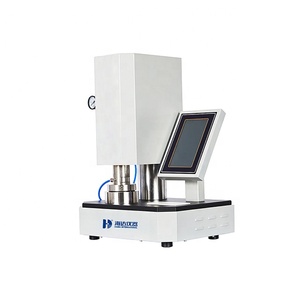
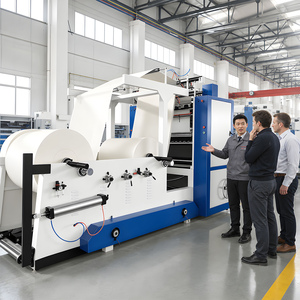
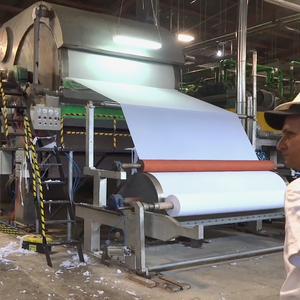
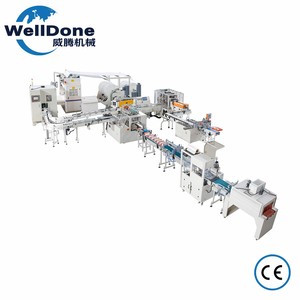
Explore our core portfolio of tissue converted paper machinery, single and multi-roll wrappers, flow pack equipment, and quality control systems manufactured under strict ISO9001 and CE directives.
Engineering Whitepaper
Understanding Next-Generation Horizontal Flow Wrapping (HFFS) Technology
A technical guide to selecting, integration, and maximizing OEE (Overall Equipment Effectiveness) for high-speed tissue flow packaging lines.
Full Multi-Axis Servo Control
Modern tissue flow pack machines utilize independent servo motors (up to 7-10 axes) driven by motion controllers from Siemens or Omron. This eliminates mechanical gear linkages, reduces maintenance downtime, and provides precise electronic camming for soft facial tissue stacks and dense kitchen paper rolls.
Rotary vs. Box-Motion Sealing
Rotary jaw sealers offer blistering speeds up to 250–350 packs per minute for thin, single-roll toilet paper or standard facial tissue packs. Box-motion D-cam sealers provide extended dwell times for thick multi-laminate barrier films, airtight wet wipe packaging, and oversized kitchen towel bundles.
Zero-Defect Tensioning & Splicing
Integrated automatic dual-spindle film reel unwinds with auto-splicing enable continuous operation without stopping the upstream interfolder or log saw. Photoelectric eye tracking aligns printed film artwork to within ±0.5mm precision across varying line speeds.
| Machine Category | Target Product | Max Mechanical Speed | Film Material Compatibility | PLC & Drive System |
|---|---|---|---|---|
| HFFS High-Speed Soft Pack Wrapper | Facial Tissues, Pocket Tissues | 150 - 250 packs/min | CPP, PE, BOPP, Paper-Poly Laminates | Multi-axis Servo (Siemens S7-1500) |
| Single Roll Flow Packaging Machine | Toilet Paper Rolls, Kitchen Towels | 180 - 220 packs/min | BOPP, CPP, Single-layer PE | Omron NJ Motion Controller |
| Airtight Wet Wipe Flow Pack Line | Wet Tissues, Cotton Facial Wipes | 60 - 120 packs/min | PET/AL/PE, PET/PE Multilayer Film | Box-Motion Servo Seal Mechanism |
| Multi-Pack Bundling & Bagging Machine | Toilet Roll Bundles, Napkins | 25 - 40 bundles/min | Thick PE, Recyclable Monomaterial Film | Schneider Electric / Delta Servo |
Strategic Procurement Analysis
Future Procurement Trends in Tissue Flow Pack Machinery
How global shifts toward sustainability, smart manufacturing, and total cost of ownership (TCO) are transforming packaging machinery procurement for B2B buyers.
1. Monomaterial & Sustainable Film Transition
Global regulations are mandating a transition from non-recyclable multi-layer films to recyclable 100% Monomaterial PE, PP, and barrier Kraft paper. Advanced flow pack machines must feature precise, multi-zone temperature controls and ultrasonic sealing options to handle narrow sealing thermal windows without film burnout.
2. IoT Integration & OPC-UA Connectivity
Modern tissue plants demand end-to-end telemetry. Next-generation flow wrappers come standard with OPC-UA protocols, allowing real-time OEE tracking, cloud-based predictive maintenance alerts on servo bearing loads, and instant remote debugging via secure VPN channels.
3. Toolless Quick-Changeover Formatting
As SKU diversity increases (from single travel soft packs to 10-pack family bundles), converters can no longer afford 4-hour format changeovers. Machine engineering now prioritizes digital position indicators, quick-release forming boxes, and recipe memory via 15-inch HMI touchscreens for changeovers under 15 minutes.
Why Partner With Us
China's Premier Tissue Packaging Machine OEM Factory
Combining over 14 years of specialized engineering experience with ISO & CE certified manufacturing rigor to serve over 1,000 tissue convertors worldwide.
20,000m²
CNC Machining & Assembly Factory
80+
Patented Packaging Technologies
100+
Export Nations Worldwide
14+
Years Industry Innovation
International Certification Standards
Every tissue flow wrapper, diaper packaging unit, and napkin interfolder complies strictly with European CE safety standards (LVD/EMC directives) and ISO9001:2015 quality control systems. Complete compliance documentation is supplied with each export shipment.
Rigorous Factory FAT Acceptance
Prior to dispatch, machines undergo continuous 72-hour Factory Acceptance Testing (FAT) using customer-supplied tissue master rolls, target packaging film, and exact carton dimensions to guarantee turn-key performance upon factory arrival.
Global On-Site Commissioning & SLA Support
Our senior mechanical and electrical engineers provide on-site commissioning, operator training, and workflow optimization worldwide. Critical spare parts are stocked globally for rapid replacement within 24–48 hours.
Procurement Guidance
Frequently Asked Questions for Tissue Flow Pack Machinery Buyers
Get instant answers to technical, operational, and commercial questions commonly raised during OEM tissue packaging machinery sourcing.
What essential parameters are required to generate an accurate flow pack machine quotation?
To provide an engineer-verified machine configuration and pricing structure, our technical team requires:
1. Product Dimensions: Minimum and maximum length, width, and height of the tissue pack or paper roll stack (e.g., L 100–300mm x W 90–200mm x H 30–100mm).
2. Target Production Output: Desired packs per minute (PPM) to match upstream interfolder or log saw capacity.
3. Packaging Film Specification: Material type (CPP, PE, BOPP, paper laminates), film thickness (microns), and whether roll film is printed or plain.
4. Infeed Method: Fully automatic synchronized conveyor connection or semi-automatic manual loading.
5. Electrical Requirements: Local power supply (e.g., 380V/50Hz/3Phase, 220V/60Hz/3Phase).
Can a single flow wrap machine handle both single soft-pack facial tissues and multi-pack bundles?
While single-pack wrapping and outer bundling share horizontal flow-wrap operating principles, the dimension envelope and film tensioning requirements differ significantly. High-speed single soft-pack wrapping requires compact forming boxes and fast rotary end-sealers. Outer bundling requires larger forming tunnels and heavier drive motors to push multi-packs. We offer dual-purpose flexible wrappers for medium-speed lines, but recommend dedicated secondary bundling units for high-throughput lines (exceeding 150 packs/min) to preserve maximum OEE.
How does the machine prevent tissue stack distortion or edge crumpling during high-speed wrapping?
Soft tissue sheets lack rigid structure. Our flow wrappers incorporate top-overhead belt holding devices synchronized via servo with side-infeed pushers. This design maintains gentle, continuous compression on the facial tissue stack throughout film wrapping, longitudinally sealing, and transverse cutting—preventing sheet misalignment, jam-ups, or edge crumpling even at speeds exceeding 200 packs/min.
What is the average lead time for custom wholesale flow packaging machinery from China?
Standard inventory models with standard voltage configurations can ship within 20 business days. Fully customized automatic tissue converting and packaging lines—requiring custom format tooling, automated lane diverters, or integrated robotic palletizing—typically require 45 to 60 days for fabrication, electrical wiring, PLC programming, and rigorous Factory Acceptance Testing (FAT).
What after-sales warranty and engineering support services do you provide?
All machinery comes with a comprehensive 12-month warranty covering mechanical components and electronic systems (PLC, servo motors, touchscreens, sensors). We provide lifetime technical support via remote diagnostic modules embedded in the control panel. On-site installation, line integration, and operator training are available globally through our network of experienced field technicians.
Ready to Upgrade Your Tissue Packaging Efficiency?
Consult with our lead application engineers to design a high-performance flow wrapping line customized to your exact product dimensions, output goals, and plant footprint.