Featured Facial Tissue & Hygiene Converting Machinery
Explore our high-performance production lines, folding machinery, log saws, and packaging systems engineered to maximize operational efficiency and product quality.
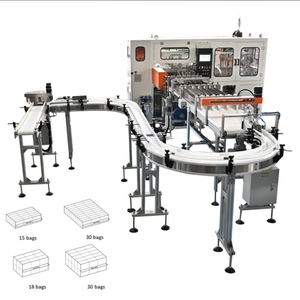
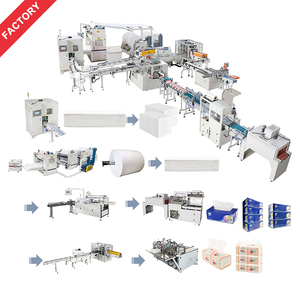
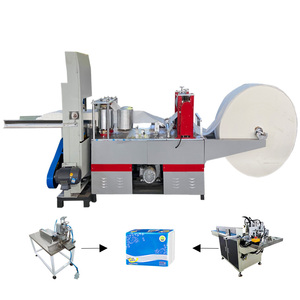
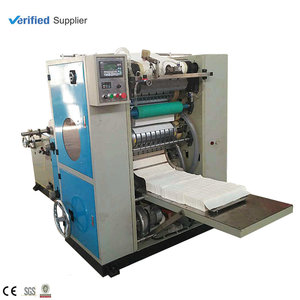
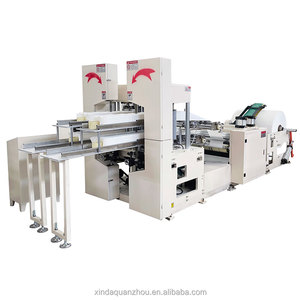
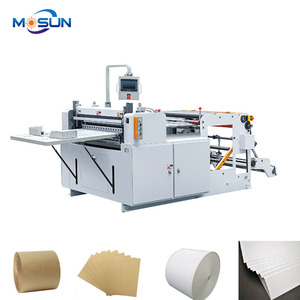
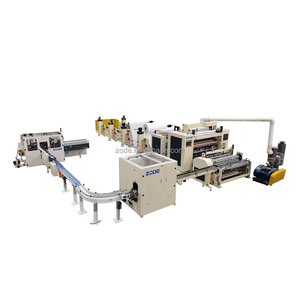
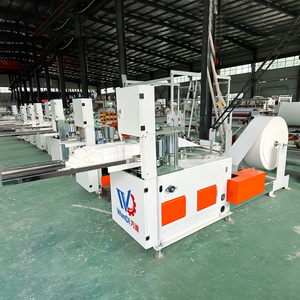
Engineering Architecture of Next-Generation Facial Tissue Production Lines
Modern tissue converting operations operate in a high-velocity environment where raw material yield, Overall Equipment Effectiveness (OEE), and continuous web tension control determine commercial viability. As a premier custom OEM manufacturer and turn-key systems engineering partner, we specialize in high-speed, fully automatic facial tissue production lines. Our systems seamlessly integrate parent jumbo roll unwinding, pneumatic web tensioning, steel-to-steel/steel-to-rubber embossing, rotary vacuum interfolding (V-Fold / Interfold), high-speed orbital log saw slitting, and fully synchronized primary and secondary packaging automation.
Key Information Gain: The OEM Modular Servo Control Advantage
Unlike legacy mechanical line drives connected via complex main-shaft gearboxes, our modern custom OEM production lines utilize multi-axis independent servo drive architectures (Siemens SIMOTION / Mitsubishi iQ-R series). Each folding cylinder, feed roller, and cut-off blade is driven by its own dedicated servo motor, achieving sub-millimeter registration accuracy at web speeds exceeding 250 meters per minute (up to 1,500 draws/min per lane).
Complete Systems Workflow: From Jumbo Roll to Palletized Product
Building a high-margin tissue converting facility requires a granular understanding of the mechanical and electronic stages involved in converting virgin pulp or recycled tissue stock into retail-ready soft-packs or cartoned facial tissues. Below is the technical breakdown of our complete production line architecture:
1. Jumbo Roll Unwinding & Tension Control
Dual or triple backstands equipped with pneumatic wide-belt driven unwinding systems. Electronic Edge Web Correction (EPC/LPC) ensures real-time alignment with ±0.5mm precision, preventing web breaks during rapid deceleration or acceleration cycles.
2. Precision Embossing & Calendering
Custom micro-embossing and border-embossing units utilizing CNC-engraved steel-to-steel or steel-to-rubber rollers. Pneumatic gap adjustment allows converters to dial in exact paper softness, ply bonding, and bulk thickness without damaging fiber integrity.
3. Vacuum Interfolding (V-Fold / Z-Fold)
High-precision helical folding rollers manufactured from aviation-grade aluminum or heavy-duty forged steel. Utilizing high-pressure negative vacuum suction, tissue sheets are folded cleanly in an continuous interlocked V-fold structure, delivering smooth sheet-by-sheet dispensing.
4. Servo Log Saw Slitting
Double-lane or quad-lane orbital log saws equipped with continuous circular blade grinding systems and laser-guided cut depth sensors. Operates up to 200 cuts/minute with zero squashing or ply separation on tissue log edges.
5. Primary Packaging (Soft Pack / Box Cartoning)
Seamless transfer of folded tissue stacks directly into individual film wrapping machines (soft packs) or continuous motion cartoning machinery (cardboard boxes). Synchronized servo pushers prevent stack deformation during high-speed entry.
6. End-of-Line Bundling & Palletizing
Secondary over-wrapping machines bundle individual soft-packs into multi-pack PE bags or master corrugated cases. Fully integrated collaborative robot palletizers (Cobots) or high-payload industrial articulated arms complete end-of-line automation.
Custom OEM Technical Capabilities & Engineering Matrix
As a custom OEM supplier, we configure machine parameters based on tissue basis weight (GSM), local operating standards, factory layouts, and target production volume. Below is an overview of our standard high-speed line specifications:
| Performance Parameter | Standard OEM Specification | High-Speed Industrial Specification |
|---|---|---|
| Raw Material (Jumbo Roll) Width | 1200 mm – 1800 mm | 2000 mm – 2800 mm (Customable) |
| Jumbo Roll Maximum Diameter | Φ1500 mm | Φ2200 mm |
| Basis Weight (GSM Range) | 13 – 20 g/m² (2-ply / 3-ply) | 11 – 22 g/m² (1-ply / 2-ply / 3-ply / 4-ply) |
| Design Machine Speed | 800 – 1,000 draws/min/lane | 1,200 – 1,600 draws/min/lane |
| Unwind Backstand Count | 2 Shaftless Unwind Stands | 3 or 4 Shaftless Stands with Auto-Splicing |
| Embossing Configuration | Steel-to-Rubber (Micro / Border) | Steel-to-Steel Point-to-Point / Nested 3D |
| Cut-off System | Single-Lane Log Saw (150 cuts/min) | Quad-Lane Orbital Log Saw (220 cuts/min) |
| Primary Packaging Type | Soft-pack Flow Wrapper (80 packs/min) | High-Speed Multi-Format Wrapping Line (150+ packs/min) |
| Control Architecture | PLC + HMI Touchscreen (Schneider/Delta) | Multi-axis Motion Controller (Siemens S7-1500 T-CPU) |
| Power Requirement | 380V / 50Hz / 3-Phase (35 kW - 55 kW) | Custom Voltage (e.g., 415V/480V 60Hz, 75 kW - 160 kW) |
Future Procurement Trends in Automatic Facial Tissue Machinery
Global procurement teams evaluating facial tissue machinery face evolving regulatory, environmental, and operational benchmarks. Navigating machinery investments requires anticipating tech shifts over a 10-to-15-year equipment lifecycle. Below are key macro trends driving procurement decisions globally:
1. Transition to Eco-Friendly & Plastic-Free Packaging Materials
Consumer pressure and stringent government packaging waste directives (such as the EU Single-Use Plastics Directive) are forcing paper converters to transition from conventional Polyethylene (PE) soft-pack films to biodegradable films, paper-based outer wrapping, and 100% recyclable mono-materials. Custom OEM equipment suppliers must engineer heat-sealing jaws and roll-film feeding mechanisms capable of handling delicate bio-based films without tearing, burn-through, or seal degradation.
2. Energy Efficiency & Carbon Footprint Reduction
Tissue converting processes are energy-intensive, primarily due to vacuum exhaust pumps and heavy electrical heating elements in embossing or drying zones. Next-generation tissue lines feature variable frequency drive (VFD) vacuum turbines that dynamic adjust air suction according to web weight, reducing kilowatt consumption by up to 30%. In addition, regenerative brake motor systems store deceleration energy and feed it back into the plant power grid.
3. Smart Industry 4.0 Connectivity & AI Defect Inspection
Modern tissue manufacturers are replacing manual quality control sampling with inline optical camera systems. High-resolution CCD vision sensors monitor tissue web alignment, spot sheet discoloration, detect pinholes, and measure embossing depth uniformity in real-time. Paired with OPC-UA network protocols, production data is transmitted directly to enterprise ERP systems for live OEE metric tracking, predictive maintenance alerts, and automated raw material batch tracing.
4. Rapid Format Changeover & Modular Machine Architecture
The rise of e-commerce and private-label tissue brands has increased SKU diversity (varying sheet counts from 50 to 200 sheets per pack, pocket tissues, cube box cartons, and standard retail soft-packs). Sourcing managers prioritize modular lines equipped with servo-adjusted guide rails and tool-less format changeovers, cutting product changeover downtime from hours to under 15 minutes.
Industrial Development Trends in Tissue Converting Technology
The mechanical engineering landscape for tissue paper machinery is shifting toward higher speeds, reduced maintenance footprints, and advanced material science. Modern industrial developments include:
- Non-Contact Vacuum Transfer Folding: Eliminating mechanical gripper fingers reduces physical paper pinch marks and mechanical wear, allowing stable operation even when converting fragile 11-12 GSM virgin pulp stock.
- Direct-Drive Torque Motors: Replacing traditional belt-and-pulley drives with direct-drive permanent magnet synchronous motors eliminates mechanical backlash, reduces noise levels below 75 dB, and significantly reduces lubrication requirements in cleanroom tissue environments.
- Carbon Fiber Composite Shafts & Rollers: Lightweight carbon fiber idle rollers cut rotational inertia by over 60%, preventing web slipping and tissue friction burns during ultra-fast acceleration cycles.
- Automatic Closed-Loop Ply Bonding: Ultrasonic ply bonding modules continuously gauge ply separation force and adjust mechanical anvil pressure dynamically, replacing chemical adhesive spraying and lowering consumable costs.
Why Partner with Our Custom OEM Manufacturing Facility?
With over 14 years of dedicated manufacturing experience, EuroFlow / Euro Tissue Machinery stands at the forefront of hygiene paper equipment design. Operating out of a state-of-the-art 20,000 m² facility equipped with multi-axis CNC machining centers, precision cylindrical grinders, and automated quality testing bays, we deliver machinery built to European engineering standards.
Stringent Quality & CE Certification
All machinery conforms strictly to EU Machinery Directive 2006/42/EC and ISO9001 quality management standards. High-grade electrical components are sourced exclusively from global leaders (Siemens, Schneider, Omron, SMC, Festo).
Full OEM & ODM Customization
We build production lines tailored precisely to your factory floor constraints, target paper grades, pack sizes, and electrical standards (200V to 480V). Custom embossing roller engravings are developed directly from your CAD samples.
Global Field Support & Remote Assistance
Our dedicated multilingual service engineers provide on-site installation, commissioning, and staff training worldwide. Integrated IoT VPN gateways allow our engineers to perform remote diagnostics and software upgrades instantly.
Frequently Asked Questions for B2B Machinery Buyers
- Target finished pack dimensions (Length × Width × Height / Sheet Count per pack).
- Jumbo roll specification (Maximum width, diameter, core size, GSM basis weight, ply count).
- Preferred packaging style (Soft-pack film wrapping, cardboard box cartoning, or dual-capability).
- Desired line speed or output capacity per hour/shift.
- Local factory power supply (Voltage, Frequency, Phase e.g., 380V/50Hz/3P or 480V/60Hz/3P).