Featured Tissue & Napkin Packing Machinery
Direct from OEM certified manufacturing facilities. Engineered for high OEE, speed, and continuous multi-shift production.
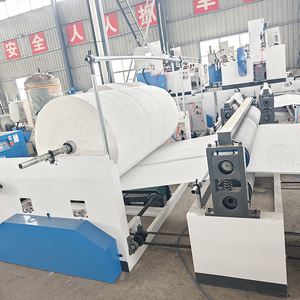
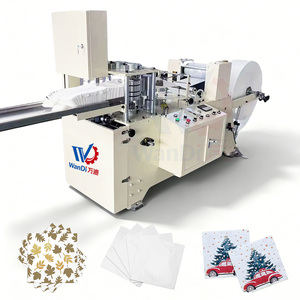
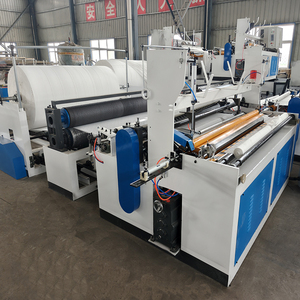
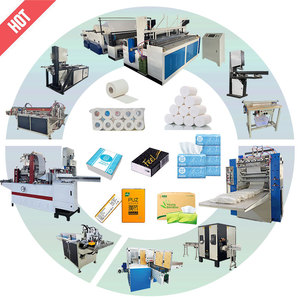
Engineering Excellence & Custom OEM Capabilities
Unlocking information gain in tissue converting through advanced kinematic design, precise heat-sealing dynamics, and industrial IoT integration.
Full Multi-Servo Motion Synchronization
Eliminates mechanical backlash through multi-axis motion control controllers, delivering consistent film tension, perfect seal registration, and minimal material scrap rates during high-speed runs.
CE & ISO Technical Compliance
Fully certified build standards matching European safety requirements, emergency stop architectures, optical light curtain guards, and industrial electromagnetic compatibility (EMC).
Modular Format Quick-Changeover
Rapid tooling replacement assemblies allow plant operators to switch between lunch napkins, cocktail napkins, soft-pack tissue, and box cartoning formats in under 30 minutes.
Technical Whitepaper: Industrial Napkin & Tissue Packaging Engineering
In the contemporary fast-moving consumer goods (FMCG) packaging ecosystem, the automated napkin packing machine represents a critical technological nexus between paper converting efficiency and final retail presentation. Global tissue manufacturers, OEM brand owners, and tissue conversion factories are facing escalating operational challenges: rising raw paper pulp prices, stringent environmental regulations governing single-use plastics, and a structural shortage of skilled industrial labor. Achieving optimal Overall Equipment Effectiveness (OEE) while lowering Total Cost of Ownership (TCO) demands an intimate technical understanding of fully automated napkin wrapping, interfolding, cartoning, and bundling systems.
Key Engineering Insight: Modern high-speed napkin packaging lines must balance delicate mechanical handling of low-gsm creped paper with rigid, gas-tight, high-speed thermal sealing of bio-based film substrates at speeds exceeding 1,200 pieces per minute.
1. Kinematic Mechanics & Motion Control Architectures
Traditional mechanical tissue wrapping equipment relied heavily on complex line-shafts, physical cams, and chain drives. While mechanically robust, these legacy systems suffered from severe cumulative wear, harmonic vibration at high speeds, prolonged changeover downtime, and high noise pollution exceeding 85 dB. Modern OEM customized automatic napkin packing machines manufactured by EuroFlow integrate full servo-driven motion control architectures (typically utilizing Siemens, Schneider, or Omron PLC platforms).
In a servo-synchronized napkin packaging line, each operational stage—infeed conveyor, vacuum stack pushers, rotary film cutters, folding tuckers, side-seal belts, and discharge stackers—is driven by independent permanent-magnet brushless AC servo motors. These motors report feedback to a centralized motion controller via high-resolution optical absolute encoders over EtherCAT or PROFINET real-time fieldbus networks. This architecture enables millisecond-level kinematic adjustment, compensating dynamically for variance in napkin stack density, paper moisture content, or minor film stretching.
2. Material Compatibility: Substrates, Bio-Films & Paper Laminates
As global retail channels shift towards circular economy commitments, tissue packaging machinery must exhibit extreme substrate versatility. OEM napkin packing factories now engineer wrapping channels capable of handling traditional Polypropylene (OPP/CPP), Low-Density Polyethylene (LDPE), fully biodegradable PLA films, and heat-sealable barrier paper packaging materials without requiring costly structural rebuilds.
| Packaging Substrate Type | Sealing Temperature Window | Ideal Machine Configuration | Key Operational Benefit |
|---|---|---|---|
| BOPP / CPP Co-Extruded Film | 110°C – 135°C | Standard Continuous Belt Sealer | High optical clarity, cost-effective, high tensile strength. |
| Bio-Based PLA / PBAT Compostable | 95°C – 115°C | Precision PID Digital Thermal Control | 100% eco-friendly, compliant with European single-use plastic directives. |
| Recyclable LDPE Soft Film | 120°C – 145°C | Impulse Cooling & Teflon-Coated Jaw | Excellent puncture resistance for multi-pack napkin bundling. |
| Barrier Coating Kraft Paper | 140°C – 175°C | High-Pressure Rotary Mechanical Jaws | Premium eco-branding, plastic-free kerbside recyclable packaging. |
Future Procurement Trends in Napkin & Tissue Packaging Technology (2025–2030)
For B2B machinery wholesalers, commercial importers, and tissue mill procurement directors, staying ahead of technical development cycles is vital. Analyzing global market data reveals four major procurement shifts defining the next decade of napkin packaging automation:
A. Transition from Standalone Units to Integrated Turnkey Lines
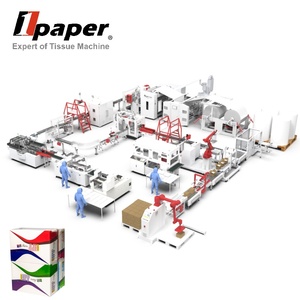
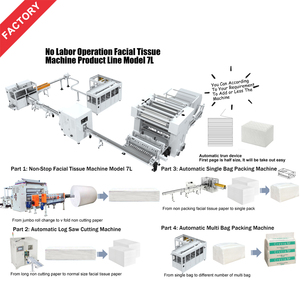
Procurement teams are moving away from sourcing isolated tissue interfolding machines and separate manual wrapping tables. Industry standard practice dictates purchasing fully integrated end-to-end converting lines: Jumbo Roll Unwinding → Embossing & Printing → High-Speed Folding → Automatic Rotary Log Saw Cutting → Primary Soft-Pack Wrapping or Box Cartoning → Secondary Multi-Pack Bundling → Robotic Arm Palletizing. Turnkey procurement eliminates vendor finger-pointing, guarantees unified PLC protocol integration, and lowers total factory installation timelines by over 40%.
B. Industrial IoT (IIoT) & Predictive Maintenance Capabilities
Next-generation OEM automatic napkin packing machines come standard with edge-computing industrial gateways and cloud telemetry. Plant managers can track real-time OEE, monitor heater band resistance wear, detect servo motor vibration anomalies, and receive automated diagnostic alerts via mobile web dashboards. Remote VPN telemetry allows our engineering team in Shantou to conduct online firmware updates, sensor recalibrations, and troubleshooting across time zones, drastically reducing field engineer dispatch costs.
C. Energy-Efficiency Standards & Carbon Footprint Reduction
With industrial electricity tariffs climbing globally, machine power consumption has become a key evaluation matrix. Modern napkin packing equipment incorporates regenerative servo drives that feed braking energy back into the electrical bus, variable-frequency drive (VFD) vacuum pumps, and lightweight carbon-fiber composite pusher arms. These engineering refinements reduce overall kilowatt-hour consumption by 18% to 28% compared to decade-old equipment designs.
Industry Development Trends: Innovations in Napkin Converting & Packaging
The global napkin market is bifurcating into two distinct high-growth segments: premium embossed/printed dinner napkins for HoReCa (Hotel, Restaurant, Catering) and compact soft-pack facial/napkin tissues for retail channels. Machinery designers are innovating rapidly to serve both segments:
1. High-Speed Multi-Color Flexographic Printing Integration
Commercial clients increasingly demand customized logo printing and seasonal graphic designs directly on lunch and cocktail napkins. OEM factories are integrating inline 2-color to 6-color flexographic printing modules directly prior to the interfolding section. Equipped with infrared (IR) or UV curing lamps, these units ensure quick-drying non-toxic ink application that will not bleed or transfer during high-speed folding and wrapping.
2. Smart Vision Inspection & Automatic Defect Rejection
To meet zero-defect mandates enforced by tier-1 global retail chains, advanced napkin packaging machines incorporate high-resolution CCD machine vision cameras. Operating at full line speeds, these vision systems inspect each napkin stack for dimensions, fold alignment, surface contamination, oil spots, and print registration defects. Flawed packs are pneumatically ejected from the stream into a recycle bin without interrupting line momentum.
OEM/ODM Customization Process: How EuroFlow Engineers Your Line
Unlike off-the-shelf machinery distributors, EuroFlow operates as a dedicated original equipment manufacturer and custom engineering center. Every packaging line project undergoes a rigorous engineering validation process:
Clients submit target napkin tissue samples, tissue GSM specs, pack dimensions, and wrapping film rolls for empirical lab testing.
Engineers draft full 3D plant layouts, accounting for available floor space, power drops, pneumatic lines, and operator walkways.
Machining of custom format parts, CNC frame fabrication, electrical wiring, and multi-shift continuous FAT (Factory Acceptance Testing).
On-site or remote video-guided installation, electrical commissioning, operator maintenance training, and spare parts supply.
Enterprise Strengths & Manufacturing Capabilities
EuroFlow Tissue Machinery Co., Ltd. (Euro Tissue Machine) has established itself as an authoritative global leader in tissue packaging automation since 2011. Operating from a modern 20,000 square meter manufacturing base in Shantou, Guangdong, China, our facility houses high-precision CNC machining centers, automated laser cutting systems, specialized electrical assembly bays, and dedicated line testing halls.
Our core competitive advantages rooted in verifiable experience, technical expertise, and operational reliability include:
- Proprietary Intellectual Property: Over 80 utility model and invention patents covering servo folder synchronization, high-speed continuous bundling jaws, and low-waste film feeding mechanisms.
- International Quality Certifications: Fully certified under ISO 9001 quality management systems and European CE Directive compliance (Machinery Directive 2006/42/EC and Low Voltage Directive 2014/35/EU).
- Global Market Footprint: Successfully exported to over 100 countries and regions across North America, South America, Europe, the Middle East, Southeast Asia, and Africa, serving more than 1,000 converting clients worldwide.
- World-Class Component Supply Chain: Built using premium global components including Siemens/Schneider PLCs, Sick photoelectric sensors, SMC pneumatics, NSK bearings, and Schneider electrical controls ensuring international spare parts availability.
- Strategic OEM Partner: Trusted equipment provider for industry conglomerates including APP (Asia Pulp & Paper), Unicharm, Hengan Group, Yashi Paper, and Hygienix.