Machinery Catalog
Featured Tissue Manufacturing & Packaging Lines
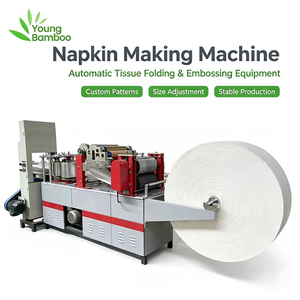
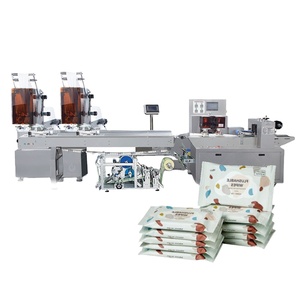
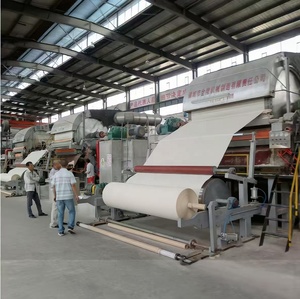
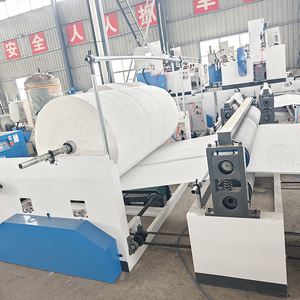
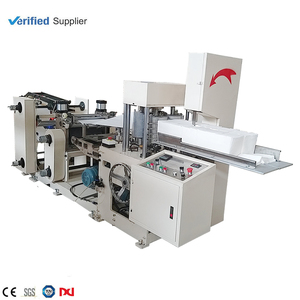
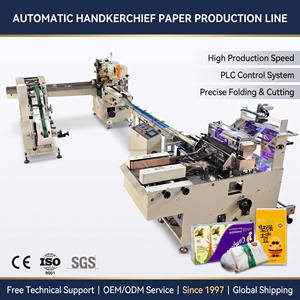
High-speed converting, folding, wrapping, and bundling machinery designed for facial tissue, toilet paper rolls, paper napkins, wet wipes, and commercial towels.
OEM Factory Capabilities
Engineering Excellence in Tissue Converting & Packaging Automation
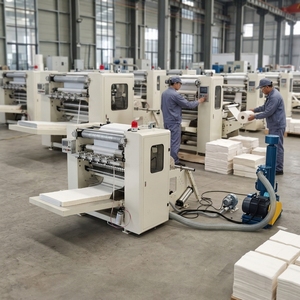
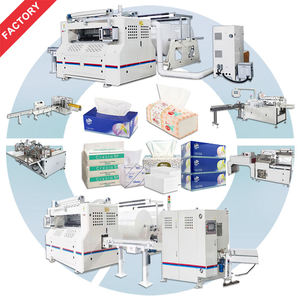
EuroFlow Machinery Co., Ltd. operates a 20,000 m² state-of-the-art manufacturing facility dedicated to building turn-key converting and end-of-line packaging infrastructure for global tissue converters since 2011.
CE & ISO 9001 Compliance
All automated machinery lines meet strict European Union CE safety standards and ISO 9001 quality management benchmarks, featuring multi-layered safety interlocks and Siemens PLC architectures.
Full OEM / ODM Customization
From custom web widths (1200mm to 3500mm) and specific embossing cylinder profiles (nested vs point-to-point) to unique voltage adaptations (380V/480V 60Hz), every unit is engineered around your site requirements.
High-Speed Servo Synchronisation
Multi-axis motion controllers enable millisecond-level synchronization between log saw feeding, pushers, flow wrapping, and bundling units to guarantee 99.4% OEE production uptime.
The Next Era of Tissue Manufacturing: Procurement Trends & Engineering Outlook (2025–2030)
The global tissue paper converting and packaging equipment market is undergoing a structural paradigm shift driven by rising raw material costs, labor scarcity, stringent sustainability mandates, and the market demand for ultra-flexible product formats. For commercial directors, plant managers, and procurement leaders, acquiring custom Original Equipment Manufacturer (OEM) tissue machinery requires a holistic total-cost-of-ownership (TCO) methodology rather than a simple capital expenditure evaluation.
Key Industry Insight:
Modern tissue converters must transition from single-purpose, rigid machinery lines to modular servo-driven platforms capable of switching between virgin pulp, recycled fiber, bamboo substrates, and non-woven cotton within minimal changeover windows.
1. Multi-Substrate Converting Versatility (Virgin, Recycled, Bamboo & Non-Woven)
Raw material volatility has forced convertors to diversify their furnish recipes. Premium virgin pulp options are increasingly supplemented by bamboo fibers, agricultural residues, and recycled post-consumer waste (RCW). Equipment suppliers must integrate active web-tension control systems with closed-loop load cells to handle low-tensile recycled sheets without web breaks. Furthermore, the rapid growth of premium personal care wipes and non-woven cotton face towels requires converting machinery capable of applying wet-strength additives and gentle calendering without degrading sheet softness.
2. Ultra-High-Speed Motion Control and Motion-Profile Flexibility
Legacy mechanical-cam drives are rapidly being retired in favor of multi-axis, direct-drive servo architectures (e.g., Schneider PacDrive, Siemens S7-1500 Motion, AB Kinetix). By replacing mechanical linkages with electronic camming, modern OEM tissue wrapping machines can achieve speeds exceeding 200 packs/min for toilet paper rolls and up to 600 pcs/min for folded serviettes. Electronic changeovers enable operators to modify pack configurations (e.g., switching a tissue bundler from a 2x3 matrix to a 2x5 matrix) directly from the HMI screen in under 15 minutes, drastically reducing changeover downtime.
Technical Benchmark Comparison: Standard vs. Advanced OEM Lines
| Performance Parameter | Legacy Mechanical Line | Standard Automatic Line | Advanced Custom OEM Line (EuroFlow) |
|---|---|---|---|
| Facial Tissue Folding Output | 120–180 m/min | 200–250 m/min | 300–350 m/min (8-12 Lanes) |
| Single Roll Toilet Paper Wrapping | 60–80 packs/min | 120–150 packs/min | Up to 200–220 packs/min |
| Embossing Technology | Single Steel-to-Rubber | Point-to-Point Mechanical | Nested / DERL Point-to-Flat Pneumatic |
| Changeover Time (Matrix Shift) | 120–240 Minutes | 45–60 Minutes | 10–15 Minutes (Tool-less HMI Select) |
| Primary Packaging Compatibility | PE Film Only | PE / CPP Films | Recyclable Paper, Bio-Films & Thin PE |
| Energy Consumption per Ton | 180 kWh | 135 kWh | < 95 kWh (Regenerative Servo Drives) |
3. Transition to Plastic-Free & Sustainable Biodegradable Packaging
Regulatory frameworks like the EU Single-Use Plastics Directive and US state-level EPR laws are compelling tissue paper brands to ditch traditional polyethylene (PE) outer bundling. Advanced custom OEM tissue packaging machines now integrate temperature-precise sealing jaws capable of running barrier-coated paper wraps, PLA bio-films, and ultra-thin 12-micron bio-degradable polymers. Maintaining heat sealing integrity on heat-sensitive bio-films requires impulse sealing coils paired with IR thermal cameras that monitor seal-jaw equilibrium in real-time.
4. Industry 4.0 Smart SCADA Integration & Predictive Maintenance
Unplanned downtime on a tissue converting line can incur losses exceeding $5,000 per hour. Modern OEM suppliers install IoT edge gateways and vibration/temperature sensors on critical bearing blocks, log saw blades, and cutting drives. By transmitting operational telemetry via MQTT protocols to centralized SCADA or cloud-based maintenance suites, machine algorithms can detect bearing wear weeks before catastrophic mechanical failure, enabling scheduled off-shift replacement.
Strategic RFQ & Procurement Engineering Checklist
Before placing an OEM order, procurement teams should confirm the following technical data points with the engineering factory:
- Target Parent Roll Specifications: Confirm parent roll diameter (up to 2500mm), width (mm), core ID (76mm or 152mm), GSM range (13 to 42 g/m²), and ply count (1-ply, 2-ply, 3-ply, or 4-ply).
- Pack Format Matrices & Output Speeds: Define single-pack dimensions (L×W×H), multi-roll bundle orientation (e.g., 2×2, 2×3, 3×4), and required continuous production speed per minute.
- Packaging Film & Paper Specifications: State film substrate material (PE, CPP, BOPP, PLA, or Barrier Paper), thickness (microns or GSM), roll core diameter, and print registration mark tolerance.
- Electrical & Pneumatic Utility Match: Verify regional plant standards (e.g., 380V 50Hz 3-Phase, 460V 60Hz 3-Phase, air compressor bar pressure, and plant temperature/humidity conditions).
Buyer Knowledge Base
Frequently Asked Questions for Tissue Equipment Procurement
Clear, engineering-backed answers to essential queries raised by global buyers during equipment evaluation.
What is the average lead time for custom OEM tissue manufacturing and packaging lines?
Standard stand-alone tissue packaging or napkin machines held in base stock can ship within 20 working days following FAT (Factory Acceptance Testing). Customized OEM converting lines, complete with non-standard web widths, custom embossing cylinders, and integrated robotic palletizers, typically carry a manufacturing cycle of 60 to 90 days depending on project complexity and component availability.
Are your machines certified for installation in Europe, North America, and regulated markets?
Yes. All tissue converting and packaging machines manufactured by EuroFlow comply fully with European Union CE directives (including MD 2006/42/EC Safety of Machinery and EMC 2014/30/EU). Electrical controls can be customized with UL/CSA certified components (including Allen-Bradley PLCs, Eaton switchgear, and Sick safety light curtains) for compliance in North American industrial plants.
How does an automated packaging line integrate with existing converting equipment?
Our automated primary packaging machines, flow wrappers, and bundlers utilize modular timing belts, variable speed lane dividers, and smart photoelectric tracking sensors. This allows seamless inline coupling with third-party log saws, rewinding units, or facial tissue folders (e.g., Gambini, Fabio Perini, Fosber, or local Chinese rewinders) using standard Ethernet/IP or Profinet communications protocols.
Can one single packaging machine handle both core and coreless toilet paper rolls?
Yes. Models like our high-speed TP-R220 toilet paper roll wrapper are engineered with adaptable pusher grippers and adjustable side guide rails. They accommodate both core-type toilet rolls and coreless solid tissue rolls across lengths of 80mm to 220mm and roll diameters ranging from 80mm to 130mm, requiring only minimal format part changes.
What after-sales, installation, and spare parts support is provided to overseas buyers?
We provide comprehensive installation engineering options: 1) On-site dispatch of experienced commissioning engineers for machine setup, calibration, and staff training; 2) AR-assisted remote commissioning for rapid startup; and 3) A guaranteed 5-year stock availability on critical mechanical parts, paired with globally accessible electrical components (Siemens, Schneider, Omron, SMC Pneumatics).
Request a Custom OEM Machinery Engineering Proposal
Partner with an experienced tissue machinery direct factory. Send your product dimensions, target production output, and floorplan layout to receive a detailed engineering proposal and competitive direct-factory quotation.