Featured Industrial Machinery
High-Performance OEM Tissue Converting & Packaging Systems
Direct from turnkey manufacturing factories: CE & ISO certified machinery configured for toilet tissue, facial tissue, napkin folding, and industrial log processing.
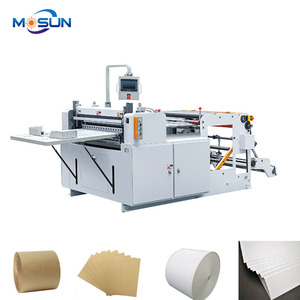
MSHQJ-1100B Normal Type PLC Control Napkin Paper Tissue Cutting Machine Cut White
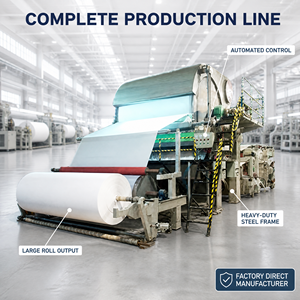
Eco Friendly Bamboo Tissue Paper Making Machine Price
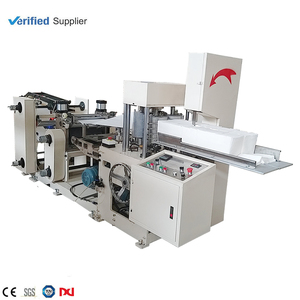
Mini Machines for Small Business Napkin Paper Making Machine Napkin Tissue Paper Making Machine
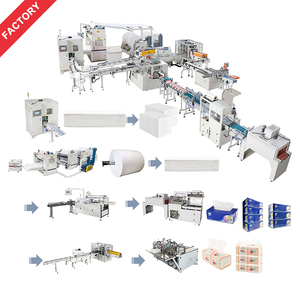
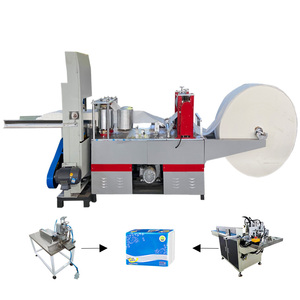
Full Automatic Facial Tissue Machine Facial Tissue Paper Folding Line (Dual Packing)
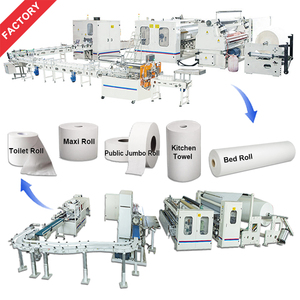
Toilet Paper Punching and Rewinding Machine Converting Line
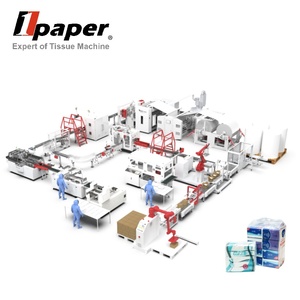
PLC Boxed & Soft Facial Tissue Production Line (4-6 Ton/Day)
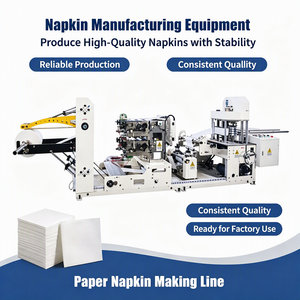
1/4 Folding Type Table Napkin Folding & Interfolding Machine
Executive Technical Report
OEM Tissue Processing Machine Factory Architecture & Engineering Whitepaper
An in-depth industrial manual covering mechanical converting mechanics, OEM customization protocols, servo synchronization, and plant design for tissue roll and folded towel converters.
1. Technical Engineering Principles of OEM Tissue Converting Machinery
In modern industrial paper converting, evaluating custom OEM tissue processing machine factories requires understanding the mechanical engineering principles that govern high-speed web handling. Parent roll rewinding, ply bonding, embossing, slitting, and folding demand absolute mechanical precision to minimize web breakages and maximize Overall Equipment Effectiveness (OEE).
The tissue processing line operates across four continuous mechanical phases: unwinding and constant tension control, multi-pattern embossing and lamination, high-speed rotary slitting and perforating, and servo-synchronized folding or log rewinding. Maintaining web tension between 150 N/m and 450 N/m across variable GSM ranges (from 11 g/m² ultra-soft facial tissue up to 45 g/m² commercial towel stock) requires multi-loop closed feedback sensors linked to magnetic particle brakes and vector inverter drives.
Key Engineering Metric: High-speed OEM rewinding machinery achieving log surface speeds of 250 to 600 meters per minute utilizes pneumatic web-edge alignment sensors coupled with hydraulic actuators to maintain web offset tolerances under ±0.5 mm during continuous parent roll roll-changes.
Furthermore, steel-to-rubber or steel-to-steel embossing units utilize micro-machined dynamic roll crowns to prevent center deflection under nip pressures exceeding 30 to 80 N/mm. Custom OEM machine builders design modular embossing cassettes allowing rapid roll swaps for micro-embossing, nested embossing, or point-to-point lamination, preserving bulkiness and water absorption efficiency while optimizing raw paper density.
PLC Multi-Axis Servo Control
Integrated motion controllers (Siemens S7-1500 / Mitsubishi iQ-R) managing up to 16-axis electronic gearing for zero-backlash blade registration and log saw cut-off precision within ±0.2 mm.
Helical Orbital Log Saws
Continuous dual-blade orbital cutting head with automatic disc sharpening, CBN diamond wheel dressing, and vacuum dust extraction ensuring clean end-cut surfaces without ply compression.
Safety & Compliance Standards
Built to EU CE Machinery Directive 2006/42/EC and ISO 13849-1 Safety Level Performance Level d (PLd), featuring light curtain guards and safety interlock switches.
2. OEM Machinery Performance Benchmarks & Technical Matrix
When sourcing custom tissue processing machinery from OEM factories, procurement directors must evaluate technical baseline parameters against target factory throughput. The table below illustrates standard vs. custom enterprise-grade converting machinery configurations.
| Technical Parameter | Standard Entry-Level Line | Custom OEM Industrial Line | Enterprise Production Line |
|---|---|---|---|
| Design Operating Speed | 120 - 200 m/min | 250 - 450 m/min | 500 - 800 m/min |
| Raw Material Compatibility | Virgin Wood Pulp (13-22 g/m²) | Virgin, Recycled, Bamboo Fiber | All Non-Wood & Synthetic Blends |
| Perforation Pitch Range | Fixed (100 - 150 mm) | PLC Servo Variable (90 - 220 mm) | Infinitely Variable Electronic Cam |
| Embossing Configuration | Single Rubber-to-Steel | Quick-Change Modular Cassette | Nested 3D Point-to-Point Lamination |
| Log Saw Cutting Speed | 60 - 100 cuts/min | 140 - 200 cuts/min | Up to 250 cuts/min (Multi-clamp) |
| Air Consumption & Pressure | 0.6 m³/min @ 0.6 MPa | 1.2 m³/min @ 0.8 MPa | 2.5 m³/min @ 0.8 MPa (Closed Loop) |
| Automated Packaging Interface | Manual / Semi-Auto Bagging | Automatic Flow Wrap & Bundling | Turnkey Robot Arm Palletizing |
Strategic Market Vision
Future Procurement Trends in Tissue Processing Machinery (2025–2035)
Key operational shifts, technological innovations, and sustainability imperatives driving global enterprise equipment purchases.
Trend 1: Eco-Friendly Non-Wood Fiber Processing
Global environmental regulations and pulp price volatility are accelerating the adoption of alternative fibers such as bamboo, bagasse, wheat straw, and recycled post-consumer waste. Custom OEM tissue machine factories are redesigning unwinding tension control systems and slitters to accommodate fiber bundles with shorter staple lengths and varying tensile strength moduli without tearing.
Trend 2: AI-Powered Predictive Maintenance & SCADA Integration
Modern tissue converting plants require zero unscheduled downtime. Next-generation OEM equipment incorporates IoT vibration sensors on main drive gearboxes, thermal imaging monitoring on log saw bearings, and cloud-connected PLC analytics. Remote diagnostics allow machine builders to diagnose web drift or servo timing errors via secure VPN protocols before catastrophic mechanical failure.
Trend 3: High-Efficiency Energy & Vacuum Trim Recovery
With industrial electricity tariffs rising globally, energy efficiency has become a critical procurement factor. OEM factories are replacing legacy AC induction motors with IE4/IE5 ultra-premium efficiency permanent magnet synchronous motors. Closed-loop regenerative drive systems capture kinetic energy during log saw deceleration, reducing factory kilowatt consumption by 18% to 27%.
Trend 4: Fully Automated End-of-Line Integration
The boundary between tissue converting and tissue packaging is disappearing. B2B buyers now mandate seamlessly connected production lines where log rewinding feeds directly into high-speed orbital wrapping, individual bagging, bundling, and automated robotic palletizing cells (using cobots or 6-axis articulation) to reduce shop floor labor headcount by up to 70%.
Turnkey Engineering Execution
How OEM Factories Custom-Build Tissue Machinery Lines
From initial paper sample testing to full-scale site acceptance testing (SAT), our standardized engineering lifecycle guarantees zero-defect equipment deployment.
01
Paper Sample Analysis
Verification of parent roll basis weight (GSM), tensile strength, elongation ratio, and core inner diameter to calculate exact machine drive torque requirements.
02
3D SolidWorks CAD Design
Customizing roller face widths, embossing patterns, perforation knife pitch, and frame structure using Finite Element Analysis (FEA) for structural vibration damping.
03
Precision CNC Machining
In-house turning of embossing cylinders, dynamic balancing of rewinding shafts up to 2000 RPM, and precision grinding of log saw blade guides.
04
FAT & On-Site Commissioning
Factory Acceptance Testing (FAT) using customer-supplied raw paper stock, followed by international engineer dispatch for complete line installation and training.
Global Manufacturing Strength
Why Partner with Our Custom OEM Tissue Machinery Factory
Combining over 14 years of dedicated converting research, state-of-the-art facility infrastructure, and a global service footprint.
2011
Established Year
20,000+
Square Meter Factory
80+
National Machine Patents
100+
Export Destination Countries

Long-Term Strategic Partnership
We work alongside tissue converters from initial startup capacity to full multi-line factory expansion, offering continuous modular upgrades and format tooling replacement.

Fast Technical Response
24/7 online technical assistance and remote PLC engineering diagnostics across global time zones, ensuring your converting line operates with absolute minimal downtime.
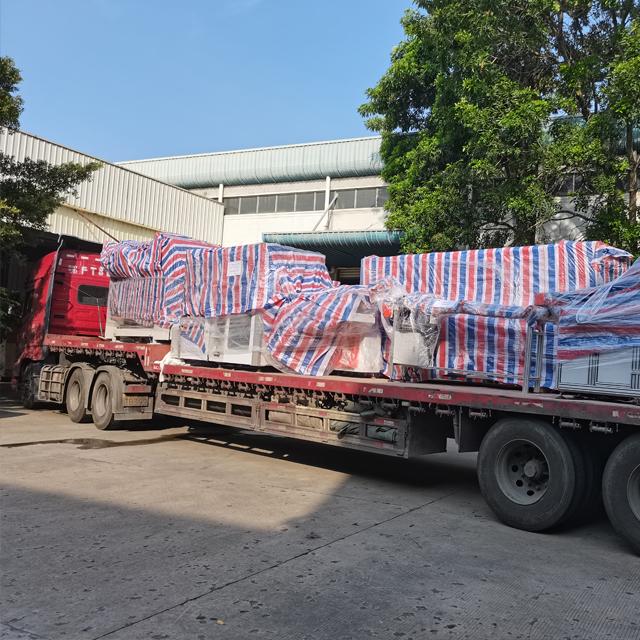
Streamlined Production & Quick Delivery
Standard core units available in stock ship within 20 days; fully tailored OEM lines are delivered in approximately 60 to 90 days following strict FAT sign-off.
Lower Cost Per Pack Efficiency
High-speed automation and precise slitting reduce raw paper waste to under 0.8%, lowering total manufacturing cost per pack to give clients a decisive market price advantage.
Procurement Knowledge Base
Frequently Asked Questions (FAQ) for OEM Machine Buyers
Answers to critical engineering, customization, shipping, and operational questions asked by plant managers and procurement executives.
1. What technical details must we provide to receive a custom OEM tissue machine proposal?
To configure an accurate OEM converting machinery line, our engineering team requires: (1) Parent roll paper specifications (Basis weight in GSM, maximum roll width, maximum outer diameter, core diameter); (2) Target finished product formats (Toilet roll diameter/length, facial tissue folded sheet dimensions, sheet ply count); (3) Target output per shift/minute; (4) Available factory footprint and ceiling height; and (5) Local electrical voltage/frequency (e.g., 380V 50Hz 3-Phase vs. 415V 60Hz).
2. Can a single OEM tissue converting machine process both virgin wood pulp and bamboo fiber?
Yes. Our custom OEM tissue processing machines can be engineered with dual-mode tension control systems and adjustable slitting blade angles. Bamboo pulp fibers possess different tensile moduli and stiffness compared to softwood virgin fibers; our PLC system allows operators to switch tension curve profiles at the HMI screen with a single touch, preventing web tearing and ensuring consistent rewinding density.
3. What is the standard lead time for OEM machine manufacturing, testing, and shipping?
Standard standalone equipment (such as core rewinding or single-napkin folders) held in stock can be dispatched within 20 business days. Fully customized OEM multi-machine production lines (including log saws, bundlers, and wrapping automation) typically take 60 days for fabrication and assembly, followed by 7-10 days of intensive Factory Acceptance Testing (FAT).
4. Are international safety certifications (CE, ISO, UL) included with factory shipments?
Absolutely. All machinery manufactured in our factory strictly complies with European Union Machinery Directive 2006/42/EC and carries valid CE certification. Electrical panels incorporate CE-marked components (Siemens, Schneider, ABB), and factories operating under ISO 9001:2015 quality management ensure all structural components undergo non-destructive weld testing and dynamic balancing.
5. How does your factory handle installation, commissioning, and operator training abroad?
We deploy senior commissioning engineers to the buyer's site to oversee mechanical positioning, electrical wiring, pneumatic connections, and line synchronization. Our field engineers conduct complete hands-on training for your operating crew, covering HMI recipe setup, blade sharpening, embossing cassette replacement, preventive maintenance schedules, and basic troubleshooting.
6. What is the expected mechanical service life of your custom tissue machinery?
Our heavy-duty machine frames are stress-relieved and fabricated from solid 25-40 mm steel plate stock. Critical wear components—such as chrome-plated embossing rolls, hardened alloy anvil rolls, and SKF/NSK bearings—are engineered for a continuous 24/7 operational lifespan exceeding 10 to 15 years with routine maintenance.
7. Can we request custom branded embossing patterns or proprietary logo engraving?
Yes. Our in-house laser engraving center creates custom 3D computer-generated embossing rollers featuring your brand logo, custom geometric patterns, or functional absorption textures. We provide 3D digital renderings and physical paper embossing mockups for client sign-off prior to roller machining.
8. How do your machines prevent static electricity build-up during high-speed paper folding?
High-speed paper friction generates static charges that cause web misalignment and dust buildup. Our converting machinery features integrated active ionizer bars along the paper web path, grounded carbon-fiber anti-static brushes, and option-ready humidification nozzles to maintain stable static neutralizing environments during 500+ m/min operation.
Ready to Build Your Custom OEM Tissue Processing Line?
Consult directly with our engineering sales director. Receive tailored machinery layouts, preliminary CAD drawings, and factory-direct price estimates within 24 hours.