High-Performance Facial Tissue & Converting Equipment
Explore our engineering-grade tissue paper manufacturing machines, featuring advanced PLC controls, precision slitting, multi-lane interfolding, and automated packing modules.
The Strategic Engineering Landscape of OEM/ODM Facial Tissue Manufacturing
In the contemporary fast-moving consumer goods (FMCG) and personal care sectors, the demand for soft-pack facial tissues, box tissues, pocket handkerchiefs, and premium cotton facial towels has experienced unprecedented growth worldwide. As global pulp markets fluctuate and retail channels demand higher sheet softness, multi-ply dimensional stability, and eco-friendly packaging, tissue paper converters require manufacturing systems that deliver high Overall Equipment Effectiveness (OEE), minimal raw material waste, and rapid format adaptability.
As a premier OEM/ODM facial tissue production machine manufacturer and exporter, EuroFlow Tissue Machinery Co., Ltd. integrates decades of precision mechanical engineering with state-of-the-art servo-motion technologies. Designing a high-yield tissue line is no longer merely about mechanical rotation; it requires advanced kinematic control, closed-loop tension regulation, vacuum-assisted folding kinematics, and seamless integration with downstream primary packaging (wrapping, bundling, cartoning) and robotic palletizing.
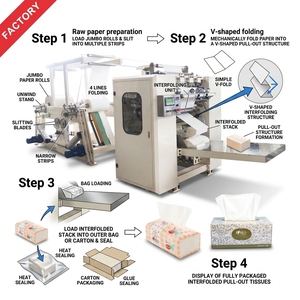
Anatomy of a High-Capacity Facial Tissue Converting Line
A complete OEM/ODM production facility consists of four synchronized mechanical stages designed to handle jumbo paper reels (13–22 gsm virgin wood pulp or recycled fiber) and transform them into market-ready retail products:
- Parent Roll Unwinding & Tension Control: Heavy-duty pneumatic unwinding stands equipped with flat belt transmission, automatic web alignment sensors (EPC/EOP), and dynamic magnetic powder brake tension loops prevent web snapping during rapid acceleration up to 200 m/min.
- Embossing & Calendering Units: Precision steel-to-rubber or steel-to-steel embossing rollers impart aesthetic textures (e.g., edge embossing, full-surface flower patterns) while enhancing sheet bulk, tactile hand-feel, and inter-ply cohesion without weakening tensile strength.
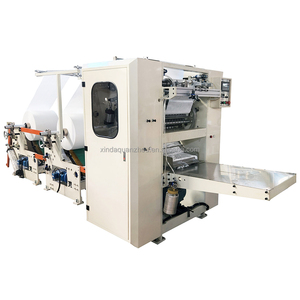
- Rotary Slitting & Interfolding Mechanism: Slitting shear knives split the wide web into individual lanes. The tissue strips pass into vacuum-assisted interfolding cylinders (utilizing V-fold/interfold geometry), where alternate folding claws perform continuous high-speed mechanical interleaving.
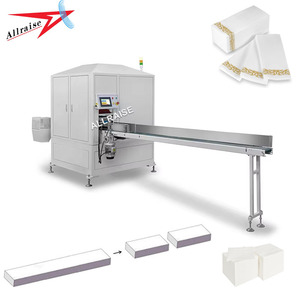
- High-Speed Log Saw Cutting & Transfer: Interfolded tissue logs are conveyed into automatic single-channel or double-channel orbital log saws equipped with servo-driven circular knives, automatic grinding units, and optical sensors to ensure clean, burr-free cut faces.
Technical Specification Benchmarks Across Machine Series
To assist procurement directors and production managers in sizing equipment according to plant floor footprint and target volumetric output, the table below provides technical benchmarks across key machinery classes:
| Machine Category | Operating Output | Folding / Product Format | Drive System | Power Consumption | Best Application |
|---|---|---|---|---|---|
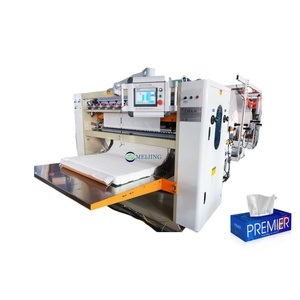
| Multi-Line Facial Tissue Machine (6-10 Lines) | 800 – 1,200 sheets/min/lane | V-Fold (Interfolded) / Soft Pack & Box | Full Servo Motors & PLC (Siemens/Mitsubishi) | 18 – 45 kW | Industrial high-volume converting facilities targeting mass retail. |
| Automatic Pocket Tissue Handkerchief Plant | 500 – 800 packs/min | Mini Z-Fold / Pocket Handkerchief | Gearbox & Servo Kinematics | 12 – 22 kW | Compact portable tissue products, travel wipes, promotional packs. |
| Single Channel Orbital Log Saw Cutter | 120 – 200 cuts/min | Precision Circular Knife Log Cutting | Independent Servo Drive with Auto-Grinding | 7.5 – 15 kW | In-line cut separation for napkins, facial logs, and hand towels. |
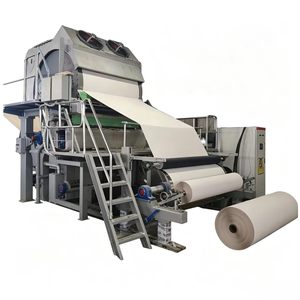
| High-Speed Tissue Parent Paper Line | Up to 60 Tons/Day | Jumbo Roll Processing & Converting | Heavy-Duty Industrial Engine & Drives | 75 – 120 kW | Integrated paper mill operations and large-scale tissue converters. |
Future Procurement Trends in Tissue Machinery Procurement
Procurement strategies within the tissue converting sector are shifting from basic capital expenditure (CAPEX) evaluations to comprehensive Total Cost of Ownership (TCO) models. Global tissue converters, brand owners, and OEM partners are re-engineering their equipment acquisition criteria based on three emerging industry drivers:
1. Adaptation to Non-Wood and Sustainable Pulp Substrates
With environmental regulations tightening across Europe, North America, and East Asia, brand owners are transitioning toward sustainable fiber sources, including bamboo pulp, bagasse, agricultural residues, and high-content recycled fibers. Non-wood fibers often possess varied tensile elongation curves and higher dust generation rates compared to 100% virgin softwood pulp. Modern OEM/ODM machines must incorporate specialized air-suction dust extraction systems, anti-static bar assemblies, and adaptive belt tensioners to process diverse pulp formulations without frequent web breaks.
2. Energy Recovery & High-Efficiency Servo Kinematics
Energy tariffs represent a substantial component of daily operational expenses in paper converting. Traditional line designs relied on centralized induction motors connected through long mechanical drive shafts, universal joints, and complex gear trains—resulting in friction loss and mechanical backlash. Next-generation tissue machines utilize multi-axis direct-drive servo systems (e.g., Yaskawa, Schneider, or Delta). Each folding cylinder, slitting roller, and web conveyor is independently actuated, reducing mechanical friction losses by up to 25%, while allowing digital micro-adjustments of sheet length via the touchscreen Human-Machine Interface (HMI).
3. Rapid Format Changeover & Modular Machinery Architecture
E-commerce and private-label retailing require tissue converters to run multiple Stock Keeping Units (SKUs)—varying from 80-sheet budget packs to 300-sheet family boxes, as well as multi-ply hotel towels—on the same production line. Procurement teams now prioritize modular OEM/ODM platform designs. Modular architecture allows format parts (such as folding heads, slitters, and packaging pushers) to be swapped out in under 45 minutes using quick-release mechanical fixtures, significantly mitigating costly line downtime.
Strategic Technological Development Trends (2025–2030)
The convergence of industrial automation, smart sensor networks, and edge computing is reshaping the tissue manufacturing equipment sector. Key technological benchmarks being integrated into EuroFlow OEM/ODM machinery include:
- IoT Telemetry & Remote Predictive Maintenance: Integrated Ethernet/IP communication modules allow cloud-based diagnostic monitoring. Factory supervisors receive real-time telemetry on bearing vibration, motor temperature, and blade wear, enabling preventative maintenance before catastrophic failures occur.
- Automatic Web Splicing & Continuous Unwinding: Zero-speed and high-speed flying lap splicers enable seamless parent roll changeovers at full line speed, eliminating line stops and maximizing daily yield output.
- Machine Vision Quality Inspection: In-line camera systems inspect 100% of interfolded tissue faces, automatically detecting sheet deformation, oil spots, or raw edge tears, triggering pneumatic reject gates downstream without slowing main line momentum.
- Automated End-of-Line Integration: The line connection between log saws, individual soft-pack wrappers, multi-pack bundlers, cartoning units, and collaborative robot (cobot) palletizers is now standardized via centralized PLC motion protocols.
Enterprise Advantage: Why EuroFlow is the Preferred Global OEM/ODM Partner
Selecting the right machinery manufacturer is a strategic commitment that directly impacts plant productivity, product market competitiveness, and return on investment. EuroFlow Tissue Machinery Co., Ltd. has established itself as an authoritative global manufacturer through relentless engineering rigor and comprehensive service infrastructure.
20,000 m² Integrated Facility
Equipped with advanced CNC machining centers, precision cylindrical grinders, laser cutting systems, and specialized dynamic balance testing rigs for high-speed rollers.
80+ Proprietary Patents
Pioneering mechanical innovations in vacuum interfolding dynamics, high-stability log saw cutting shafts, and low-noise tissue bundling mechanisms certified under rigorous R&D standards.
CE & ISO 9001 Compliance
Every tissue converting and packaging machine is built to meet international electrical safety (CE directive) and quality management standards, ensuring smooth customs clearance globally.
100+ Export Destinations
Over 1,000 converting lines successfully installed and commissioned across North America, Latin America, the Middle East, Southeast Asia, Africa, and Europe.
Tailored OEM/ODM Customization
Full engineering capability to customize working widths (from 1,200mm to 2,800mm), lane counts (2 to 10 lines), voltage frequencies (380V/415V/480V), and brand component preferences (Siemens, Festo, Sick, Omron).
Lifetime Field & Remote Support
Dedicated multilingual service engineers offer remote PLC troubleshooting, spare parts dispatch within 24 hours, and complete on-site installation and operator training support.
Frequently Asked Questions (Procurement & Technical FAQ)
Below are authoritative answers to common engineering and procurement inquiries raised by tissue paper converters, factory owners, and technical directors when sourcing OEM/ODM tissue making machinery:
What is the typical lead time for an OEM/ODM custom facial tissue production line?
Standard standalone converting machines held in stock or modular assemblies can be dispatched within 20 to 30 days. For fully customized multi-lane OEM/ODM lines (including custom embossing rollers, specific voltage retrofits, and integrated downstream wrapping systems), the standard manufacturing, assembly, and factory acceptance testing (FAT) lead time is approximately 60 to 90 days, depending on project complexity.
How does the vacuum interfolding mechanism handle varying paper grammages?
EuroFlow facial tissue folding machines utilize a dual-chamber adjustable vacuum system. The air suction volume and vacuum timing can be fine-tuned via pneumatic control valves to match tissue paper basis weights ranging from 13 gsm to 22 gsm per ply (for 2-ply or 3-ply configurations). This prevents sheet slippage or tearing during high-speed folding cycles.
Can one facial tissue machine produce both V-Fold and Z-Fold products?
Folding geometry (V-fold, Z-fold, or C-fold) is primarily dictated by the mechanical configuration of the vacuum folding cylinders and transfer arms. While dedicated V-fold or Z-fold heads deliver maximum operational speeds, EuroFlow offers specialized modular heads or dual-folding platforms designed for partial re-configuration when multi-product versatility is required by the buyer.
What technical parameter requirements must be provided for a formal quotation?
To receive an accurate engineering proposal, buyers should provide: (1) Parent roll width, diameter, core size, and GSM; (2) Finished sheet dimensions (unfolded length/width and folded width); (3) Target output in sheets per minute or tons per day; (4) Preferred packaging type (soft pack PE bag or cardboard box); and (5) Local factory electrical supply (e.g., 380V 50Hz 3-phase).
How are spare parts, blade sharpenings, and routine wear components handled?
All high-wear components—such as log saw circular blades, slitting shears, perforation blades, suction belts, and pneumatic seals—are manufactured from premium alloy steels or sourced from standard global suppliers (e.g., SKF bearings, Festo pneumatics). Machines feature automatic blade sharpening units integrated directly on the log saw assembly. Spare replacement kits are included in standard sea-freight packing crates.
What factory space and infrastructure preparations are required before installation?
A standard 6-line facial tissue line requires a minimum clean, level concrete floor area of approximately 18 meters (length) by 4 meters (width), with a ceiling height clearance of at least 3.5 meters to accommodate parent roll cranes. Industrial electrical supply, dry compressed air connections (0.6–0.8 MPa), and central vacuum piping must be pre-installed according to EuroFlow layout drawings prior to commissioning engineers arriving on site.
Partner with a World-Class Tissue Machinery Manufacturer
Whether you are establishing a new tissue converting plant, expanding line capacity, or replacing outdated mechanical lines, EuroFlow provides complete engineering design, custom machine manufacturing, and global turn-key installation support.