The global tissue paper converting market is undergoing a seismic operational shift. Driven by surging post-pandemic hygiene demand, rising raw pulp volatility, and structural labor shortages across North America, Europe, and Asia-Pacific, tissue mill operators are transitioning rapidly from semi-automated standalone machinery toward integrated, high-lane, fully automatic facial tissue production lines.
Modern tissue procurement is no longer evaluated solely on initial machinery acquisition cost. Today’s Senior Procurement Officers, Operations Directors, and Plant Engineers evaluate machinery suppliers based on Overall Equipment Effectiveness (OEE), multi-gsm pulp versatility, servo-driven tension stability, and automated downstream packaging sync speeds. This whitepaper provides engineering-level benchmarks, technology evaluations, and supplier sourcing criteria to assist commercial buyers in selecting top-tier facial tissue production lines.
Featured High-Performance Facial Tissue Machinery
Explore eight industry-proven facial tissue converting, folding, and packaging lines configured for small startups, mid-tier processors, and large-scale industrial tissue mills.
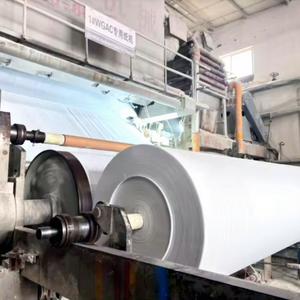
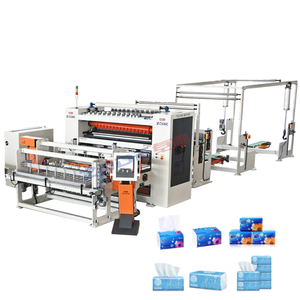
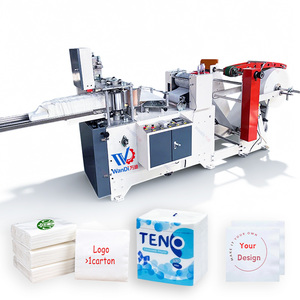
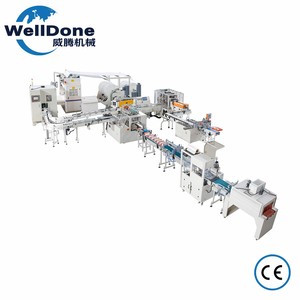
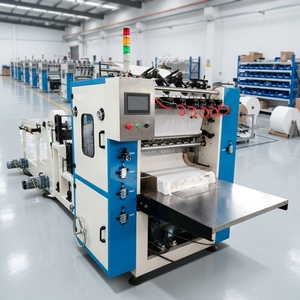
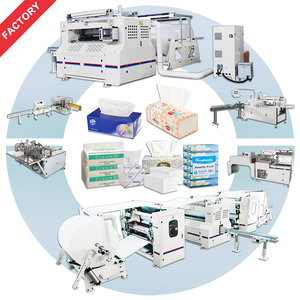

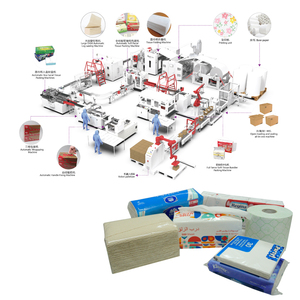
Facial Tissue Machinery: Key Technological Innovations (2025 Standard)
Facial tissue converting is an intricate mechanical process that transforms large jumbo parent paper rolls (typically 13–22 gsm, 2-ply or 3-ply) into cleanly folded, cut, bundled, and packaged consumer units. The latest generation of high-efficiency tissue manufacturing lines integrates several major technological breakthroughs:
Replacing traditional mechanical gearboxes with multi-axis Siemens/Mitsubishi servo systems allows mill operators to perform digital sheet-length adjustments without changing physical gears, dramatically reducing format changeover downtime from 4 hours to under 20 minutes.
High-speed air vacuum adsorption folding cylinders guarantee crisp, precise V-fold or Z-fold interleaved tissue separation at web speeds exceeding 200 meters per minute, completely eliminating paper jams caused by static electricity or paper dust accumulation.
Integrated electronic transfer channels automatically balance tissue log distribution between soft-pack poly wrapping machines and rigid carton box sealing lines. Dual-packaging lines maximize factory agility based on fluctuating channel demand.
Full Conversion Process Workflow: Parent Roll to Pallet
To maintain consistent product bulk, tactile softness, and perforation strength, leading global machinery manufacturers design their production lines along a standardized six-stage automated pipeline:
- Jumbo Roll Unwinding: Pneumatic heavy-duty unwinding stands equipped with flat belt tension control to prevent tissue web snapping.
- Embossing & Calendering (Optional): Steel-to-rubber or steel-to-steel micro-embossing units that enhance ply bonding, visual texture, and hand feel.
- Longitudinal Slitting & Interfolding: High-hardness tungsten alloy circular blades slit the wide web into target lanes (2, 4, 6, 8, or 10 lanes), followed by vacuum interfolding into continuous logs.
- High-Speed Log Saw Cutting: Automatic orbital log saws cut tissue logs into precise retail sheet widths (e.g., 100mm–210mm) with continuous blade grinding and stone sharpening.
- Individual & Bundle Wrapping: Servo-driven single soft-pack film wrappers or carton box erectors, followed by multi-pack bundle wrapping.
- Case Packing & Palletization: Final secondary shipping case packing and collaborative robotic arm palletizing.
Future Procurement Trends in Tissue Converting (2025–2030)
When evaluating facial tissue production line suppliers, procurement teams must align their capital expenditure (CapEx) strategies with long-term macroeconomic and sustainability developments. Key trends reshaping procurement specifications include:
Facial Tissue Production Line Sourcing & Specification Matrix
Use this engineering evaluation grid during supplier RFP (Request for Proposal) reviews to benchmark equipment configurations according to target production scale:
| Evaluation Factor | Entry-Level Line (2-4 Lanes) | Mid-Tier Line (6-8 Lanes) | Industrial Line (10+ Lanes) |
|---|---|---|---|
| Target Daily Output | 2.5 – 5 Tons / 8 Hours | 6 – 12 Tons / 8 Hours | 15 – 25+ Tons / 8 Hours |
| Designed Converting Speed | 80 – 120 m/min | 140 – 180 m/min | 200 – 250+ m/min |
| Unwind Stand Count | 1 - 2 Shaftless Stands | 2 - 4 Shaftless Stands | Heavy Duty Auto-Splicing Stands |
| Drive Technology | Mechanical Transmission / Hybrid | Multi-Servo Drive System | Full-Servo Motion Control (12+ Axes) |
| Packaging Integration | Semi-Auto or Single Soft-Pack | Inline Soft Pack + Bundler | Dual Line (Soft Pack & Box Cartoning) |
| Target Buyer Profile | Startup / Regional Tissue Mill | Commercial Converter | Global Brand Tier-1 Contract Manufacturer |
| Estimated CapEx Investment | $35,000 – $75,000 | $85,000 – $180,000 | $220,000 – $500,000+ |
Ready to Build or Upgrade Your Facial Tissue Factory?
Consult with our lead tissue machinery application engineers to receive custom factory floor layout plans, detailed electrical specs, and a direct FOB/CIF commercial proposal tailored to your tissue GSM specifications.
Get a QuoteSupplier Auditing: Evaluating OEM Experience & E-E-A-T Capabilities
Selecting the right manufacturing partner is crucial to ensuring decades of reliable production. Procurement audits must verify supplier engineering credibility, quality assurance standards, and post-installation field support:
Frequently Asked Questions (Procurement FAQ)
Clear engineering and commercial answers to common sourcing queries submitted by international B2B buyers.
Request Engineering Drawings & Quotation
Connect directly with our technical engineering sales team to evaluate line configurations, calculate ROI for your local market, or schedule a virtual live factory acceptance demo.