Featured Automatic Tissue Production Lines
Select from our top engineered conversion systems built for small businesses to high-capacity industrial tissue converting plants.
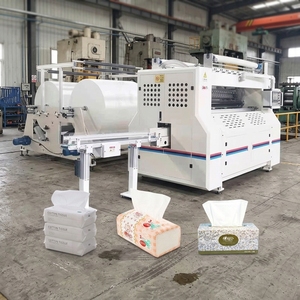
Factory Direct Automatic Paper Napkin Machine Tissue Napkin Production Line for Small Business
View Specifications →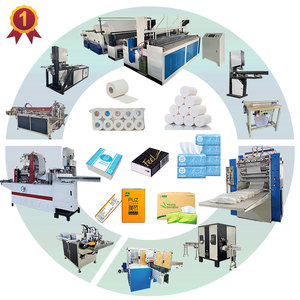
Automatic Tissue Paper Making Machine Napkin Making Machine Toilet Paper Roll Complete Production Line
View Specifications →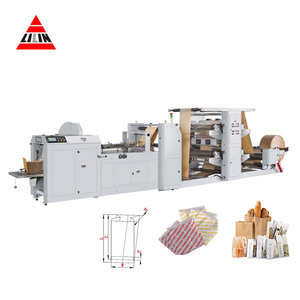
Toilet Tissue Paper Making Machine Paper Product Machinery V-Fold Tissue Production Line
View Specifications →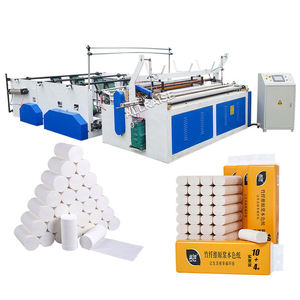
Automatic Toilet Tissue Paper Rewinding Perforating Production Line Kitchen Towel Machinery
View Specifications →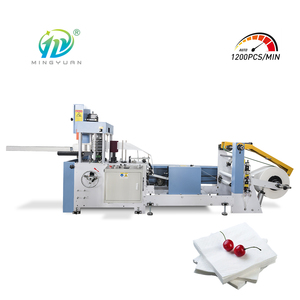
New Design 1200pcs/min High Speed Tissue Paper Making Machine Automatic Production Line
View Specifications →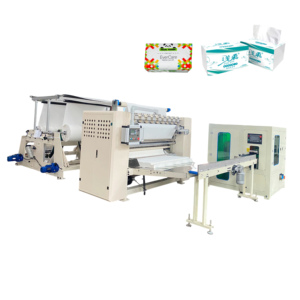
Full Automatic 7 Line Facial Tissue Paper Interfolder Line with Log Saw Cutting Machine
View Specifications →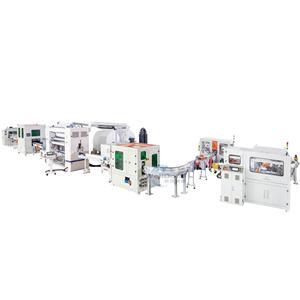
Full-Automatic Facial Tissue Line Tissue Box Packing & Cutting System for Tissue Making
View Specifications →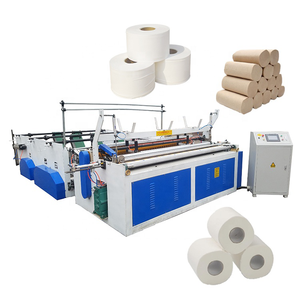
Intelligent Toilet Tissue Paper Manufacturing System with Fully Automated Packaging
View Specifications →Chapter 1: Technical Standards & Machinery Evaluation
Understanding the engineering mechanics behind high-efficiency converting machinery is paramount to optimizing Overall Equipment Effectiveness (OEE) and minimizing operational downtime.
Full Servo Motor Synchronization
Modern tissue lines utilize independent motion control for unwinding, slitting, interfolding, and log saw cutting. By replacing traditional mechanical gearboxes with multi-axis Siemens or Mitsubishi servo drives, converters reduce mechanical friction, lower maintenance costs, and achieve precise web tension control during high-speed acceleration.
Dual-Turbine Vacuum Interfolding
High-speed facial tissue interfolding relies on controlled vacuum suction rather than mechanical clawing. Advanced 7-line and 9-line interfolders incorporate dual-stage high-pressure blowers with dynamic air regulation, enabling continuous V-fold and N-fold output speeds up to 1,200 sheets per minute per lane without paper tearing.
High-Precision Orbital Log Sawing
The cutting station represents a frequent bottleneck in rewinding lines. High-speed orbital log saws feature servo-driven double-blade orbital arms, continuous auto-sharpening systems, and pneumatic clamps. This guarantees burr-free perpendicular cuts across toilet paper rolls and facial tissue logs at speeds exceeding 220 cuts per minute.
To assist procurement directors and technical teams in shortlisting equipment, the following table compares operational parameters across primary tissue machinery configurations exported from China.
| Machine Category | Design Speed | Parent Roll Width | Interfold / Roll Format | Power Requirement | Ideal Applications |
|---|---|---|---|---|---|
| High-Speed Facial Interfolder | 800 – 1,200 pcs/min/lane | 1,200 – 2,800 mm | V-Fold / Z-Fold / Interfolded | 18 kW – 45 kW | Commercial facial tissue, soft-pack tissue, box facial tissue |
| Non-Stop Toilet Roll Rewinder | 180 – 250 m/min | 1,750 – 2,800 mm | Core & Coreless Perforated Rolls | 22 kW – 55 kW | Retail toilet rolls, institutional jumbo toilet tissue |
| High-Speed Napkin Line | 600 – 1,000 pcs/min | 230 – 400 mm | 1/4 Fold, 1/8 Fold, Custom Embossed | 7.5 kW – 18 kW | HoReCa, restaurant napkin, customized logo dinner napkins |
| Kitchen Towel Rewinder Line | 150 – 200 m/min | 1,750 – 2,200 mm | Point-to-Point Embossed Rolls | 30 kW – 60 kW | High-absorbency kitchen towels, industrial wipe rolls |
| Flushable Wet Wipe Machine | 400 – 800 packs/min | 400 – 1,000 mm | Cross-Fold / Z-Fold Wet Substrates | 25 kW – 50 kW | Personal care wipes, feminine wet wipes, medical wipes |
Chapter 2: Enterprise Advantages & OEM Competencies
Evaluating supplier credibility, manufacturing scale, quality assurance protocols, and global engineering support infrastructure.
14+ Years of Precision Engineering
Since 2011, our production facilities have pioneered converting technology. Operating out of a state-of-the-art 20,000 square meter industrial park, our engineering department houses high-precision CNC machining centers, dynamic balancing rigs, and laser-guided assembly stations to ensure sub-millimeter tolerances on every machine frame.
80+ National Machine Patents
Innovation is embedded in our corporate ethos. Holding over 80 patents across web tension feedback loops, continuous rewinding mandrels, automatic core loading systems, and eco-wrapping sealers, our R&D team continuously redefines performance ceilings while cutting operating energy consumption by up to 22%.
Global Deployment in 100+ Countries
With over 1,000 successful line installations spanning North America, Europe, the Middle East, Southeast Asia, and Latin America, our export operations provide full customs compliance documentation, international electrical standard alignment (380V/60Hz, 415V/50Hz, 220V/60Hz), and remote IoT tele-diagnostics.
To guarantee seamless installation and minimize startup waste, every tissue production line follows a rigorous 5-stage manufacturing and verification lifecycle before dispatch.
Sample & Film Audit
Laboratory testing of customer jumbo roll paper GSM, tensile strength, and target poly-wrapping film specifications.
Line Configuration
3D CAD layout engineering tailored to customer factory floor plan, electric power drops, and air supply positioning.
Precision Assembly
Integration of heavy-duty wallboards, CNC steel rollers, Siemens PLCs, and high-frequency servo drives.
72-Hour Full Test
Continuous high-speed dry and wet operational testing using actual paper raw materials prior to export packing.
Global Start-Up
On-site or remote video-guided commissioning, operator training, format changeover drills, and spare parts kit delivery.
Chapter 3: Future Technology & Manufacturing Trends
Key technological innovations transforming tissue paper manufacturing, converting, and packaging over the next decade.
1. Transition to 100% Recyclable & Kraft Packaging
Global plastic reduction mandates are pushing tissue converters away from traditional Polyethylene (PE) soft packs. Modern wrapping machines are now engineered with multi-zone temperature controls and friction-reducing feeding belts capable of running ultra-thin bio-degradable PLA films, paper-based outer wrapping, and kraft bundle packaging without thermal burn-through.
2. AI-Driven Predictive Maintenance & Cloud IoT
Next-generation automatic tissue lines incorporate vibration sensors, thermal imaging on motor drives, and real-time tension monitors connected to cloud dashboards. Operators receive automated alerts regarding blade dullness on log saws, bearing wear, or pneumatic pressure drops before catastrophic line failure occurs, driving OEE metrics beyond 92%.
3. Modular Multi-SKU Quick Changeover Design
Retail demand requires tissue converters to switch between single rolls, 4-packs, 12-packs, and jumbo institutional packs on a single line. Modern Chinese machinery exporters lead the market in tool-less changeover design, utilizing servo-driven positioning units that adjust guide rails, seal bars, and stackers in under 15 minutes.
4. High-Absorbency Point-to-Point Embossing
Consumer preferences favor softer, bulkier tissues without increasing fiber basis weight. Advanced steel-to-rubber and steel-to-steel embossing units utilize micro-nested patterns and glue-lamination technology. This yields a 30% increase in sheet thickness and absorbency while preserving raw material fiber pulp costs.
Chapter 4: Global Procurement Trends & Sourcing Framework
Strategic considerations for international tissue paper converters when procuring machinery from China.
Procuring industrial capital equipment requires a comprehensive total cost of ownership (TCO) evaluation rather than focusing solely on initial purchase price (CapEx). International buyers are increasingly adopting formal decision frameworks to balance performance against long-term maintenance costs.
- Electrical Component Standardization: Ensure the manufacturer utilizes internationally available electrical components (e.g., Schneider electrics, Siemens PLCs, Sick sensors, SMC pneumatics). This guarantees that replacement parts can be sourced locally in emergencies without relying on long-distance air freight.
- Containerization & Export Packaging: High-precision machinery must endure ocean shipping conditions. Top Chinese suppliers utilize vacuum-sealed rust-inhibitor wrapping, shock-absorbing wooden crates, and custom steel skid bases designed for standard 40ft HQ container loading.
- Parent Roll Compatibility: Verify that unwind stands accommodate local jumbo roll specifications—including maximum diameter (up to 1,500 mm), core inner diameter (76 mm / 3 inch standard), and paper basis weights ranging from 13 g/m² virgin pulp to 45 g/m² recycled stock.
- Format Flexibility & Spare Parts Availability: Prioritize machine lines that include modular format parts (e.g., additional folding plates, wrapping jaws, and perforation gears) to accommodate future SKU product line expansions without requiring full machine replacements.
Chapter 5: Procurement FAQ
Addressing common technical, logistical, and operational queries from global buyers.
What is the standard production lead time for an automatic tissue machine?
How do Chinese tissue machinery suppliers ensure local electrical compliance?
What raw material paper parameters are required for high-speed operation?
Can one automatic machine line handle both core and coreless toilet paper rolls?
What after-sales service and installation support are provided overseas?
How do automated lines lower the overall cost per finished tissue bundle?
What spare parts should be included in initial capital machinery orders?
Partner with China's Premier Tissue Machinery Exporter
Whether you are establishing a new tissue converting venture or upgrading existing high-speed production capacity, our engineering team provides full factory layout design, ROI analysis, and customized machinery manufacturing.