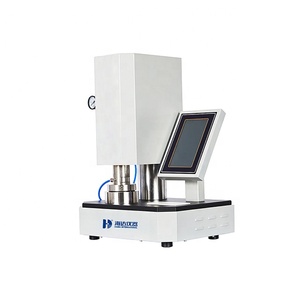
Tissue Paper Thickness Tester Toilet Paper Test Machine
High-accuracy digital micrometer designed for measuring paper caliper, density, and ply thickness under ISO 12625 standards.
Popular: tissue packing machinetoilet roll wrapping machinefacial tissue machinediaper bagging machine
Explore high-speed rewinding lines, automatic tissue folders, packaging machinery, and laboratory precision thickness testers engineered for global converting plants.
High-accuracy digital micrometer designed for measuring paper caliper, density, and ply thickness under ISO 12625 standards.
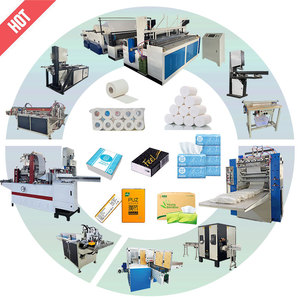
Compact rewinding and slitting setup built for start-up tissue converting ventures, offering easy operation and low power consumption.
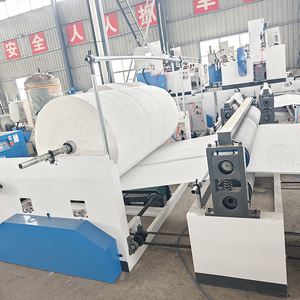
High-capacity semi-automated roll rewinder equipped with pneumatic log loading, embossing unit, and variable frequency speed control.
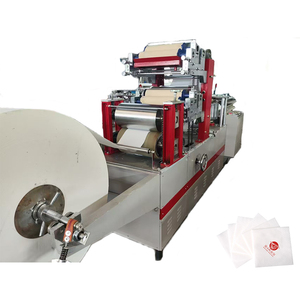
High-speed napkin folding machine integrated with color printing unit, embossing station, and automatic electronic counting module.
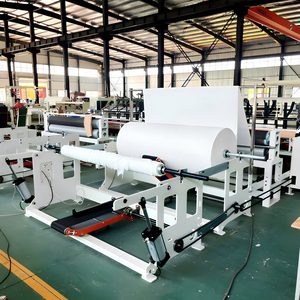
Turnkey tissue converting production line linking high-speed rewinder, automatic log saw cutter, and primary roll wrapping machinery.
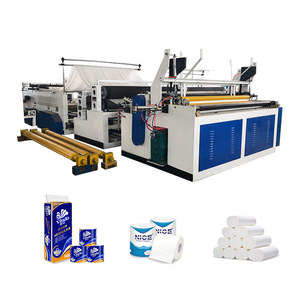
Streamlined toilet roll converter engineered with automatic core feeding, tail gluing, edge trimming, and tension control.
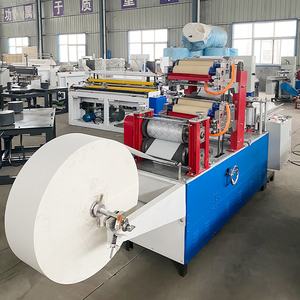
CE-compliant napkin folder delivering stable square-folding, precise web tensioning, and low-noise operational performance.
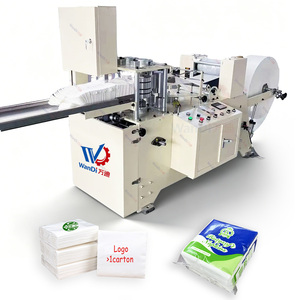
Industrial-grade napkin tissue production unit featuring ultra-precise steel-to-rubber embossing rollers and servo motor driving.
An in-depth structural analysis of raw material processing, servo synchronization, OEE optimization, and supplier selection for international tissue paper manufacturers.
China has firmly established itself as the global epicenter for household paper converting machinery engineering. Concentrated across key industrial clusters in Guangdong (Shantou, Foshan), Fujian, and Zhejiang, leading Chinese original equipment manufacturers (OEMs) have shifted from basic mechanical copying to sophisticated multi-axis servo synchronization, custom pneumatic tensioning systems, and Industry 4.0 IoT integration.
For international buyers—spanning commercial tissue paper wholesalers, private-label converters, and regional distributors—sourcing directly from Chinese factories yields a **35% to 55% Total Cost of Ownership (TCO) advantage** over traditional European machinery vendors without sacrificing mechanical accuracy or operational longevity.
Modern tissue converting plants demand high operational flexibility. Machines must dynamically adapt to varying raw parent roll GSM (ranging from 13 g/m² virgin pulp to 28 g/m² recycled paper stocks), varying core diameters, and eco-friendly packaging materials.
Maximizing **Overall Equipment Effectiveness (OEE)** requires robust mechanical framing (to absorb high-speed vibration up to 250 m/min rewinding speed), intelligent PLC edge-computing for tension management, and modular format parts that allow quick changeovers between facial tissue soft packs, toilet paper rolls, and folded kitchen towels.
| Equipment Category | Primary Product Focus | Typical Speed Range | Control Architecture | Target Buyer Profile |
|---|---|---|---|---|
| Manual / Semi-Auto Rewinders | Toilet Rolls, Kitchen Towels | 80 – 120 m/min | Inverter + Frequency Motor | Startups & Small Local Plants |
| Fully Automatic Roll Lines | Core & Coreless Toilet Rolls | 180 – 250 m/min | Multi-Axis PLC Servo (Siemens/Mitsubishi) | Medium Industrial Manufacturers |
| High-Speed Tissue Folders | Facial Tissues, Hand Towels, Napkins | 800 – 1500 sheets/min | Vacuum Absorption + Servo Folder | High-Volume Commercial Wholesalers |
| End-of-Line Packaging Units | Soft Packs, Bundles, Cartons | 20 – 200 packs/min | Rotary Sealer + Motion Controller | Integrated Converting Operations |
Combining 14+ years of specialized R&D, rigorous quality assurance, and comprehensive international engineering service for converted paper producers.
Our complete equipment range—including high-speed rewinding lines, log saw cutters, and secondary bundle packers—adheres strictly to European CE safety directives and ISO 9001:2015 quality control benchmarks. Electrical systems comply with international low-voltage and electromagnetic compatibility standards.
To eliminate unscheduled line stoppage, key electrical and pneumatic subsystems are sourced from tier-one global providers: **Siemens PLC processors, Schneider relays, Sick optical detection sensors, Festo pneumatic cylinders, and NSK bearings**.
Every equipment assembly undergoes a minimum **72-hour continuous test-run** using customer-supplied parent roll samples. We verify perforation clarity, embossing depth, log cutting squareness, and wrapping seam seal integrity prior to export packing.
Anticipate structural market shifts, sustainability mandates, and next-generation automation features when planning capital expenditure in tissue paper machinery.
Environmental regulations across North America, Europe, and Latin America are forcing tissue paper brands to migrate from traditional Polyethylene (PE) shrink wrap to kraft paper wrapping, PLA compostable films, and bio-based plastics. Modern tissue packaging machinery must incorporate **dual-mode heating elements and precise temperature controllers** capable of forming hermetic seals on paper-based films without tearing or scorched edges.
Forward-thinking buyers should prioritize machines equipped with dynamic heat compensation algorithms that prevent seal burnout during intermittent machine stop-start cycles.
The post-pandemic supply chain landscape prioritizes rapid deployment and remote operational visibility. Leading Chinese factories now install cloud-connected PLC gateway modules, enabling factory technicians to perform real-time code updates, sensor calibration, and fault diagnosis remotely.
Furthermore, integrated vibration sensors on main cutter shafts provide **predictive maintenance alerts** prior to bearing failure, significantly lowering long-term maintenance overhead for international factories lacking specialized local technicians.
Global demand for coreless toilet paper rolls is accelerating due to reduced shipping weight, zero core waste, and higher paper meters per roll. Sourcing equipment capable of switching between coreless winding and standard cardboard tube winding via HMI screen selection—without mechanical dismantling—gives converting plants a distinct market advantage.
Advanced pneumatic web tensioners guarantee uniform roll firmness from the inner core zone to the outer tail edge.
With industrial electricity tariffs fluctuating globally, energy efficiency has evolved from a secondary consideration to a core capital expenditure decision. Sourcing machinery utilizing **IE4 premium efficiency motors** and regenerative braking drives can cut power consumption by up to 22% annually.
Simultaneously, integrated trim suction fans immediately recycle paper edge waste directly into pulping or briquetting systems, minimizing material waste.
A technical walkthrough of essential mechanical modules responsible for speed stability, embossing clarity, and precise cutting.
Equipped with independent pneumatic flat belt driving, raw paper tension is continuously measured via floating dancer arms. This prevents web snapping when handling light GSM tissue stock during high-speed acceleration.
Custom micro-embossing or point-to-point embossing rolls increase tissue bulkiness and absorption capacity. CNC laser-engraved steel rolls combined with heavy-duty pneumatic pressure cylinders deliver sharp embossing patterns across millions of cycles.
Utilizing orbital rotary circular blades with automated blade grinding and lubrication units. Servo drives ensure clean, square cuts on toilet paper logs up to 220mm diameter without crushing roll end profiles.
Detailed engineering and commercial answers to help overseas procurement managers evaluate tissue paper production lines.
Standard standalone machines kept in partial assembly stock (such as semi-automatic toilet roll rewinders or single-line napkin folders) typically ship within 20 to 25 calendar days. Fully customized automatic tissue converting lines—including custom embossing roller engraving, integrated packaging automation, and specific voltage configurations—require 50 to 70 days for complete manufacturing, debugging, and factory acceptance testing (FAT).
The decision hinges on local labor costs, target daily output, and targeted retail channels. Semi-automatic machinery (requiring manual log transfer and manual bag loading) features lower upfront capital investment, making it ideal for startups or regions with low labor rates. Fully automatic lines (linking rewinding, log saw cutting, soft-packing, and bundle bagging via conveyor systems) dramatically lower labor overhead, eliminate human touch points for sanitary compliance, and produce consistent pack aesthetics required by supermarket chains.
Yes. While standard domestic Chinese factory power supply is 380V/50Hz/3Phase, all export machinery electrical cabinets are built to match destination specifications—such as 220V/60Hz/3Phase (common in parts of South America), 415V/50Hz (UK/Australia), or 460V/60Hz (North America). Electrical components, motors, and inverter parameters are pre-configured prior to bench testing.
To provide an accurate technical configuration, engineers require: 1) Parent roll diameter, width, and inner core diameter; 2) Paper basis weight (GSM range, ply count, virgin or recycled source); 3) Target finished roll/pack dimensions; and 4) Desired production capacity in metric tons per 8-hour shift or rolls per minute.
Equipment orders include a standard 12-month mechanical and electrical warranty along with a wearable spare parts kit (perforation blades, sealing belts, heating strips, and pneumatic tubing). Remote commissioning support is available via video guidance, while overseas dispatch of certified installation engineers can be arranged for full line startup, mechanical leveling, and operator training.
Request comprehensive technical specifications, customized plant layout proposals, and factory-direct pricing from our engineering team today.