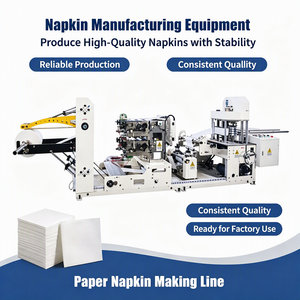
1/4 Folding Type Table Napkin Folding Machine Automatic Interfold Facial Tissue Paper Machine for Restaurant
Engineered for dual-output versatility handling napkin 1/4 embossing and V-fold interfold facial tissues with precise vacuum folding jaws.
Popular: tissue packing machinetoilet roll wrapping machinefacial tissue machinediaper bagging machine
Verified industrial tissue paper making, interfolding, rewinding, and automated packaging production line equipment engineered for high OEE and low operational cost.
Engineered for dual-output versatility handling napkin 1/4 embossing and V-fold interfold facial tissues with precise vacuum folding jaws.
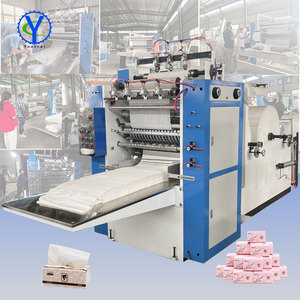
Compact footprint converting rig ideal for expanding tissue converters. Fully automatic sizing logic supporting variable sheet widths and ply counts.
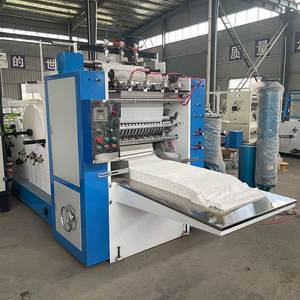
Complete turn-key production line featuring high-speed log slitting, automated transfer unit, and pneumatic tension-controlled parent roll stands.
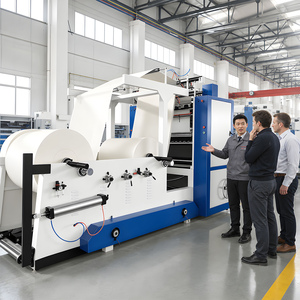
Integrated processing cell combining tissue folding, orbit log sawing, and continuous flow-wrap bundling for diverse market formats.
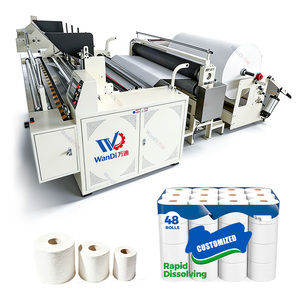
Heavy-duty industrial rewinder featuring steel-to-rubber embossing, automatic tail gluing, and high-frequency servo perforation control.
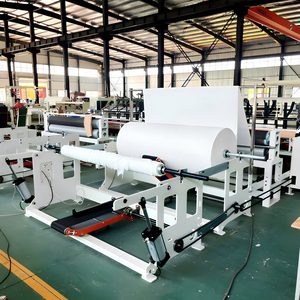
Complete end-to-end tissue plant configuration with robotic pack collation, roll wrapping, and high-density bundle film sealing units.
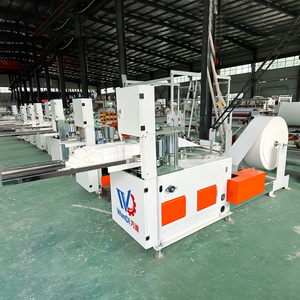
Ultra-rigid solid steel plate chassis eliminates vibration at speeds up to 220 m/min. Includes automatic inline film wrapping and side sealing.
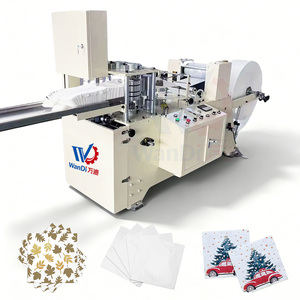
High-ROI production line designed for multi-SKU tissue plants. Supports quick-changeover tooling between napkin, toilet roll, and soft facial packs.
Operating from a state-of-the-art 20,000 m² specialized facility, we deliver CE and ISO-certified tissue converting and packaging automation engineered for continuous industrial duty.
Our Shantou manufacturing hub houses precision CNC machining centers, heavy-plate welding bays, electrical assembly suites, and pre-shipment dry-testing tracks ensuring zero-defect delivery.
In-house mechanical and software R&D team driving innovations in high-speed interfolding vacuum control, multi-axis servo synchronization, and anti-static film feeding systems.
Trusted by over 1,000 converters globally across North America, Europe, South America, Southeast Asia, Africa, and the Middle East with comprehensive multi-lingual field support.
A deep technical breakdown of interfolding technologies, energy-efficiency metrics, OEE parameters, and sourcing strategies for tissue converting and packaging automation.
The global tissue paper converting market is undergoing a seismic paradigm shift driven by surging consumer demand for premium soft-pack facial tissues, eco-friendly virgin and recycled substrates, and automated secondary packaging. Modern tissue converting factories can no longer rely on semi-automatic standalone folding units or legacy mechanical cam-driven machinery. To remain competitive in an environment marked by fluctuating pulp prices and rising labor overhead, industrial converters require fully automated, high-speed facial tissue making lines that integrate raw material unwinding, edge embossing, longitudinal slitting, vacuum interfolding, high-speed log sawing, and robotic primary/secondary packaging into a seamless cyber-physical system.
Choosing the right facial tissue machine manufacturer is a capital-intensive decision that impacts plant OEE (Overall Equipment Effectiveness), power consumption per ton, substrate yield, and SKU flexibility for decades. This comprehensive technical guide analyzes the core architectural components, procurement trends, and engineering criteria necessary to evaluate OEM equipment manufacturers and wholesale machinery vendors.
Traditional mechanical folding jaws suffer from high mechanical wear and speed bottlenecks when running light-grammage tissues (12–13.5 GSM per ply). Modern high-speed interfolding machines utilize multi-chamber vacuum suction cylinders equipped with proportional servo valves. This allows precise sheet separation and overlap control at web speeds exceeding 200 m/min without paper breakages or dust generation.
When evaluating factory quotations and technical specification sheets, enterprise buyers must scrutinize parameters beyond basic linear line speed. The table below outlines standard technical baselines across three tiers of facial tissue production equipment:
| Performance Metric | Entry-Level / Small Business | Mid-Tier High Flexibility | Industrial Enterprise Line |
|---|---|---|---|
| Design Line Speed | 80–120 m/min (approx. 800–1,200 sheets/min) | 140–180 m/min (approx. 1,800–2,500 sheets/min) | 200–250+ m/min (up to 4,000+ sheets/min) |
| Parent Roll Width | 420 mm – 840 mm (2–4 lanes) | 1,260 mm – 1,680 mm (6–8 lanes) | 2,100 mm – 2,800+ mm (10–14 lanes) |
| Folding Format | V-Fold (Interfolded) / 1/4 Napkin | V-Fold / Z-Fold / W-Fold Convertible | High-Speed V-Fold Interfold |
| Control System | Microprocessor / Step Motor | PLC (Siemens / Omron) + Servo Drives | Full Servo Motion (12–24 Axis) + EtherCAT |
| Embossing Unit | Steel to Rubber / Steel to Paper | Point-to-Point / Micro-Embossing | Nested / Edge Embossing with Auto-Pneumatic Nip |
| Web Tension Control | Manual Mechanical Brake | Pneumatic Dancer Roll + Load Cells | Closed-Loop Servo Unwind with Ultrasonic Sensing |
| Primary Packaging | Semi-Auto Manual Bagging | Auto Soft-Pack Flow Wrapper (60–100 packs/min) | High-Speed Soft Packer / Cartoner (120–200 packs/min) |
Forward-thinking purchasing managers and plant directors must ensure their machine investments align with coming technological and environmental mandates. Key engineering developments defining next-generation tissue lines include:
Globally, market demand is shifting rapidly from rigid paperboard boxes to soft-pack PE/CPP film packaging. Soft-pack facial tissues offer lower raw material costs, reduced shipping volume, and superior moisture resistance. Advanced packaging machinery now integrates ultra-thin bio-based film handling capabilities, dynamic heat-sealing jaws, and automatic side-gusseting modules that maintain pack squareness without distorting delicate tissue stacks.
Unplanned downtime on a tissue line costs thousands of dollars per hour. Leading machinery factories now integrate IoT vibration sensors on log saw orbital heads, thermal monitoring on vacuum pump bearings, and real-time web tension tracking via cloud-connected edge gateways. Predictive alerts notify operators of blade dulling, vacuum pressure drops, or servo misalignment before product defects occur.
Shorter SKU lifecycles and private-label retail contracts require tissue converters to switch between sheet counts (e.g., 80s, 100s, 150s, 200s) and sheet dimensions seamlessly. Modern lines incorporate multi-servo log cutters and electronic gearing, enabling format changeovers in under 15 minutes via HMI touch-screen presets, eliminating tedious mechanical gearing adjustments.
Vacuum pumps traditionally account for up to 35% of a tissue line's electrical power consumption. Modern enterprise lines utilize high-efficiency frequency-controlled roots blowers or turbine exhausters paired with energy-recovery heat exchangers, cutting kilowatt-hour consumption per thousand packs by 20% to 30% compared to legacy designs.
Our senior application engineers review your target tissue GSM, sheet dimensions, plant layout, and target daily output to configure an optimized plant setup.
Send an InquiryIn the industrial machinery sector, Google's Search Quality Rater Guidelines highlight Experience, Expertise, Authoritativeness, and Trustworthiness (E-E-A-T) as vital signals. For machinery buyers, evaluating an OEM vendor requires rigorous verification across these four pillars:
Understanding the physical workflow of a high-efficiency tissue line aids buyers in optimizing floor space, electrical drops, and compressed air infrastructure:
Step 1: Parent Roll Unwinding & Edge Embossing
Raw tissue parent rolls (typically 13.5–18 GSM, 2-ply or 3-ply) are loaded onto heavy-duty unwind stands equipped with pneumatic belt drives and automatic tension regulation. The web passes through edge embossing rollers to lock plies together cleanly along the borders without stiffening the central tissue area.
Step 2: High-Speed Vacuum Interfolding
The continuous paper webs pass through slitting knives to establish strip widths (e.g., 190mm to 200mm) before reaching counter-rotating vacuum folding cylinders. Suction ports create precise interlocking V-folds, outputting a continuous interfolded tissue log.
Step 3: Continuous Orbital Log Sawing
The interfolded log is transferred automatically into a single or dual-lane log saw cutter. An orbital circular blade rotating at high speeds slices the continuous log into precise finished clip lengths (e.g., 100mm to 210mm). Integrated sharpening stones automatically grind the blade at programmed stroke intervals to ensure clean cut edges without paper fuzz.
Step 4: Automatic Primary Flow-Wrapping or Cartoning
Divided tissue stacks are metered by servo-driven indexing chains into the primary packaging unit. For soft packs, roll film is drawn, wrapped around the tissue stack, heat-sealed along the bottom fin, and side-folded with neat end seals. For boxed tissues, clips are pushed into pre-glued paperboard cartons.
Step 5: Bundle Wrapping & End-of-Line Palletizing
Individual soft packs (e.g., 5-in-1 or 10-in-1 arrangements) are collated and pushed into a multi-pack bundle wrapping machine. Packed bundles proceed to an automated cobot or industrial robot palletizing cell, ready for stretch wrapping and distribution warehouse storage.
Clear, authoritative engineering answers to common technical, logistics, and operational questions regarding facial tissue machine procurement.
Standard standalone folding or single wrapping units maintained in stock can be dry-tested and shipped within 20 to 30 days. Full customized production lines—incorporating multi-lane vacuum interfolders, automatic transfer units, log saws, soft-pack bundlers, and custom embossing rollers—typically require 60 to 90 days. Lead times depend heavily on voltage configurations (e.g., 380V 50Hz vs 480V 60Hz) and custom cylinder engraving requirements.
Yes. However, recycled paper rolls generally exhibit lower tensile strength, higher dust levels, and greater GSM variation than 100% virgin pulp. To reliably process recycled paper, your line must be equipped with closed-loop tension dancer rolls, variable-frequency dust extraction hoods above the slitting section, and hardened chrome vacuum suction cylinders to prevent premature wear from recycled fibers.
A standard industrial facial tissue line requires a 3-phase power supply (customized to your local grid, such as 380V/50Hz, 220V/60Hz, or 480V/60Hz) with total installed power ranging from 18 kW for compact lines to 45+ kW for high-speed multi-lane setups. Compressed air requirements mandate a steady 0.6–0.8 MPa supply with an inline refrigerated air dryer to prevent moisture contamination in pneumatic valves and cylinder actuators.
On modern full-servo lines, changing the sheet count per clip is executed digitally via the main HMI touchscreen. The electronic gearing instantly adjusts the counting finger separation mechanism without requiring mechanical gear swaps. Physical size changes (e.g., altering sheet width or folded length) require changing the slitting blade spacing and adjusting the primary packaging machine's guide rails, which takes approximately 15 to 30 minutes for trained operators.
All featured machinery lines carry full CE compliance and ISO 9001 quality management certification. Safety protocols include transparent polycarbonate safety enclosures with magnetic interlock switches (machine halts immediately if doors are opened during operation), emergency stop buttons at all operator stations, low-voltage 24V DC control circuits, and overload clutch protection on main servo drives.
We provide comprehensive lifecycle support including overseas engineer dispatch for on-site commissioning, electrical grounding verification, operator training, and local maintenance routine setup. Additionally, all machines are equipped with secure VPN remote-access PLC modules, allowing our software engineers to diagnose sensors, update motion parameters, and troubleshoot PLC logic online in real-time. Emergency wearable spare parts (knives, suction belts, heating elements) ship within 48 hours.
Connect with our technical team today to receive a complete machinery brochure, factory direct pricing, ROI feasibility report, and customized equipment proposal.