Engineering Equipment Machinery Catalog
Explore our high-speed, fully automatic tissue and paper napkin folding, cutting, and packaging line solutions engineered for global tissue converters.
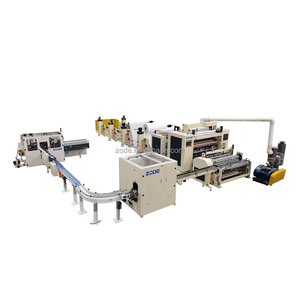
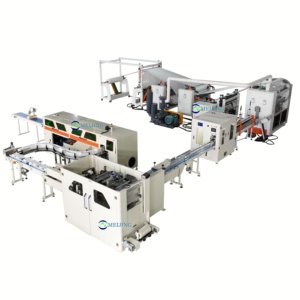
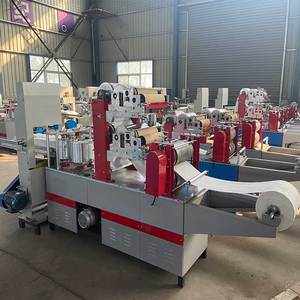
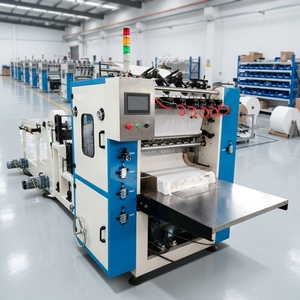
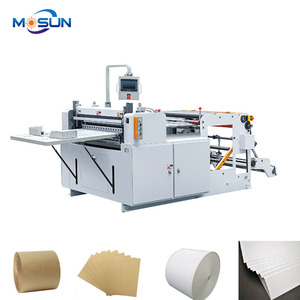
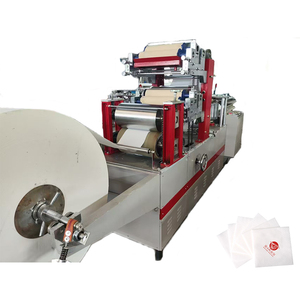
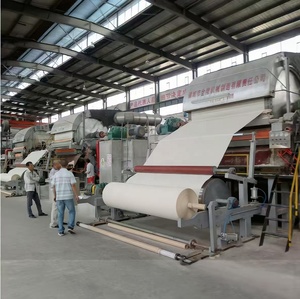
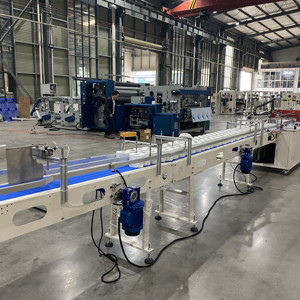
Executive Technical Summary: Modern Napkin Machinery Architecture
In the contemporary paper converting industry, selecting a top trusted paper napkin making machine exporter & wholesaler requires understanding the convergence of high-speed mechanical folding, micro-embossing precision, closed-loop tension control, and automated flexographic printing. Modern paper napkin converting is no longer a simple mechanical process; it is a synchronized mechatronic discipline demanding extreme reliability, minimal linear web tension variance, and low maintenance overhead.
Industrial napkin making equipment converts jumbo tissue rolls (ranging from 13 gsm to 28 gsm across 1-ply, 2-ply, and 3-ply configurations) into precisely folded, embossed, and counted soft napkins at operating linear speeds exceeding 600 to 1,000 meters per minute (up to 3,500 pieces per minute depending on line lane configurations). Engineering high-output equipment necessitates mitigating common production failure modes including paper web breakages, embossing cylinder misalignment, heat generation during continuous shear slitting, and structural vibration during high-speed vacuum suction folding.
Core Subsystem Breakdown of Commercial Napkin Lines
- Jumbo Roll Unwinding Unit: Utilizes dual synchronous pneumatic flat belts with stepless tension adjustment systems to maintain constant web tension regardless of jumbo roll diameter reduction. Equipped with automatic axial web alignment and edge-guide tracking sensors.
- Embossing Station (Point-to-Point & Steel-to-Rubber): Features micro-adjusted pneumatic pressure cylinders with hardened laser-engraved steel rollers paired with high-durometer rubber or wool-paper rolls, guaranteeing crisp border or full-surface embossing without tearing fragile fibers.
- Flexographic Color Printing Unit: Modular 1-color to 4-color flexographic printing modules equipped with ceramic anilox rollers, chamber doctor blades, and fast-drying infrared or hot-air drying chambers using food-grade water-based inks.
- Precision Rotary Slitting & Folding Head: Employs tungsten carbide rotary shear knives paired with vacuum-assisted folding cylinders capable of executing 1/4 fold, 1/8 fold, M-fold, N-fold, and book-fold geometries with millimeter-level squareness tolerance.
- Electronic Counting & Automatic Transfer Conveyor: Infrared sensor counters linked to PLC servo drivers organize napkins into precise stack counts (e.g., 50, 100, or 250 counts per pack) and automatically transfer stacks into downstream flow-wrapping or bundling machines.
Strategic B2B Procurement Trends in Tissue Napkin Machinery (2025–2030)
Global tissue converters and commercial paper wholesalers are navigating significant market shifts driven by raw material price volatility, stringent ESG (Environmental, Social, and Governance) regulations, labor shortages, and evolving consumer demand for premium textured sanitary paper products. Below is an exhaustive breakdown of the dominant procurement trends shaping purchasing decisions through 2030.
1. Migration to Full-Servo Drive Architectures
Traditional line-shaft mechanical napkin machines relying on complex gear trains and chain drives suffer from cumulative mechanical backlash, higher friction loss, and long format changeover times. Leading converters now demand full-servo driven architectures (incorporating 6 to 12 independent motion-axis drives from Siemens or Schneider). Servo control enables independent speed profiling, dynamic web tension correction, and digital recipe recall, reducing SKU changeover times from hours to under 15 minutes while cutting energy consumption by up to 22%.
2. Eco-Fiber Adaptability (Bamboo & Bagasse)
With environmental mandates penalizing virgin wood pulp usage, commercial napkin producers are pivoting toward non-wood agricultural residues such as bamboo, sugarcane bagasse, and wheat straw pulps. However, alternative fibers feature shorter fiber lengths, higher dust generation, and altered tensile characteristics. B2B buyers now mandate that modern napkin machinery incorporate specialized dust extraction systems, anti-static ionizers, and low-friction chrome-plated guiding rollers capable of running 100% bamboo or recycled kraft tissue without tearing.
3. Micro-Embossing & Point-to-Point (P2P) Innovation
Consumer preferences in HoReCa (Hotel, Restaurant, Catering) channels are demanding ultra-soft, highly absorbent 2-ply and 3-ply napkins that mimic cloth linens (airlaid napkins). Procurement budgets are increasingly allocated toward machine configurations equipped with Point-to-Point (P2P) or Point-to-Flat embossing systems with glue-lamination units. P2P lamination creates air pockets between tissue plies, boosting bulk and absorption by up to 35% while allowing converters to reduce paper basis weight (GSM) without compromising tactile quality.
Quantitative Machine Performance Benchmarking Matrix
To assist wholesale buyers and plant managers in conducting ROI and engineering feasibility evaluations, the following matrix compares standard entry-level mechanical napkin machines against advanced fully automatic servo-driven napkin production lines:
| Performance Metric | Entry-Level Mechanical Line | Mid-Tier Semi-Automatic Line | Full-Servo High-Speed Line |
|---|---|---|---|
| Operating Speed (Pcs/Min) | 500 – 800 pcs/min | 1,200 – 2,000 pcs/min | 2,500 – 3,500+ pcs/min |
| Drive Mechanism | Line-Shaft & Chain Gears | Hybrid (Motor + Mechanical) | Multi-Axis Full Servo Motor |
| GSM Range Compatibility | 16 – 22 gsm (Standard Pulp) | 14 – 25 gsm (Multi-Ply) | 13 – 28 gsm (Wood, Bamboo, Bagasse) |
| Format Changeover Time | 120 – 180 Minutes | 45 – 60 Minutes | 10 – 15 Minutes (Digital Memory) |
| Scrap & Waste Rate | > 3.5% | 1.8% – 2.5% | < 0.8% – 1.2% |
| Overall Equipment Effectiveness (OEE) | 65% – 72% | 78% – 84% | 92% – 96.5% |
Future Industry Development Trends in Paper Converting Machinery
Looking forward toward 2030, paper napkin manufacturing equipment is undergoing a technological revolution powered by Industry 4.0 digitisation, artificial intelligence vision inspection, and fully automated end-of-line integration.
A. AI-Powered Visual Defect Inspection Systems
High-speed production lines running at 3,000 pieces per minute exceed human visual inspection capabilities. Modern exporters are embedding high-resolution CCD camera vision modules right after the rotary cutting station. These AI-driven vision systems continuously scan 100% of folded napkins for defect modes including printing specks, pinhole tears, embossing distortion, or oil stains. Defective products are flagged in real-time and rejected via high-pressure air jets without slowing down the primary converting line.
B. Smart IoT Telematics & Predictive Maintenance
Unexpected machine downtime costs large-scale paper converters thousands of dollars per hour. Next-generation napkin making machines are outfitted with edge-computing IoT gateway modules that monitor real-time vibration signatures of cutter bearings, temperature gradients on embossing journals, and pneumatic pressure fluctuations. Data is streamed securely to cloud dashboards, alerting maintenance engineers to replace wearing blades or lubricate gears days before a catastrophic failure occurs.
C. Turnkey End-of-Line Integration (Folding to Robot Palletizing)
Standalone napkin folding machines are rapidly being replaced by complete, fully integrated production ecosystems. A modern high-volume paper factory setup links the napkin folder directly to an automatic soft-pack wrapping or cartoning machine, followed by automatic bundlers and collaborative robot (Cobot) palletizers (such as the RP-10 series). Eliminating manual touchpoints ensures compliance with strict international food-contact hygiene standards (HACCP / FDA) while drastically reducing plant labor costs.
Global Field Installation Highlights
Our napkin making machines and tissue converting lines are actively deployed in over 100 countries, delivering operational excellence across diverse climate and raw material conditions:
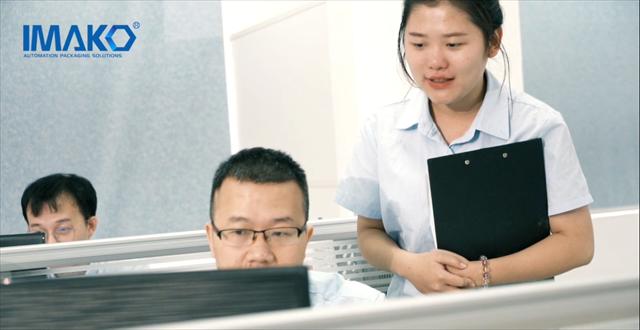
Engineering Support Team

Precision Assembly Workshop
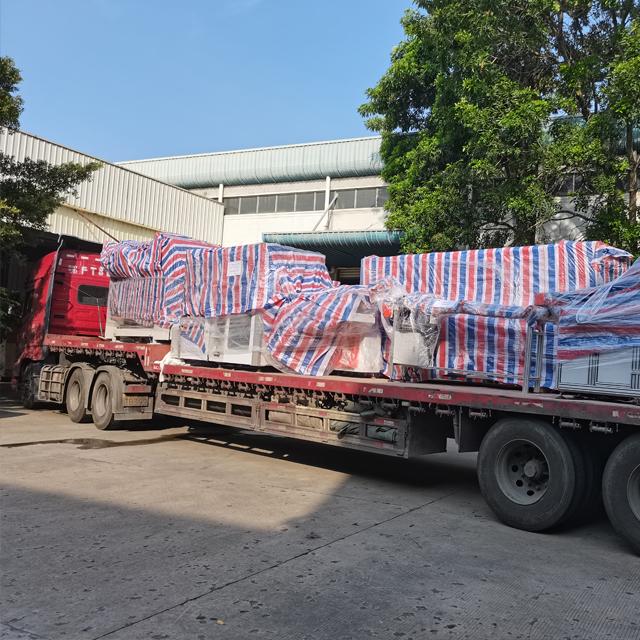
Global Export Packaging
High-Speed Line Testing
Comprehensive Technical & Procurement FAQ (Buyer's Guide)
Navigating the technical procurement process for paper napkin making machinery requires detailed clarity on mechanical, electrical, and commercial parameters. Below are expert answers to the most critical technical questions asked by international buyers.
1. What specific parameters determine the maximum output capacity of a paper napkin making machine?
The practical output capacity of a napkin machine depends on four core engineering variables:
- Number of Lanes (Webs): Machines are designed in single-lane, dual-lane, 4-lane, or 8-lane output configurations. A 4-lane machine running at 800 mechanical cycles/min generates 3,200 napkins per minute.
- Paper Basis Weight (GSM) and Ply Count: Running 1-ply 18 gsm tissue permits higher linear web speeds than 3-ply 13 gsm tissue, which requires careful tension balancing to avoid inter-ply slippage.
- Folding Type Complexity: Standard 1/4 fold mechanical plates allow faster speeds than complex vacuum-assisted 1/8 fold or dispenser M-fold setups.
- Raw Material Tensile Strength: High-quality long-fiber virgin pulp allows maximum line acceleration, whereas low-tensile recycled paper requires reduced operational speed to prevent web breaks.
2. How do I choose between Steel-to-Rubber, Steel-to-Steel, and Steel-to-Paper embossing rolls?
Selecting the correct embossing cylinder configuration depends entirely on your targeted product SKU market positioning:
- Steel-to-Rubber: The most common commercial setup. Ideal for standard border or logo embossing on 1-ply and 2-ply napkins. Offers low tooling cost, excellent durability, and forgiving pressure adjustment tolerances.
- Steel-to-Paper (Wool Paper Roll): Delivers crisp, deep, high-definition decorative embossing patterns. Recommended for premium dinner napkins and cocktail napkins where sharp structural definition is desired.
- Steel-to-Steel (Matched Micro-Embossing): Required for point-to-point (P2P) or nested micro-embossing without destroying paper bulk. Perfect for heavy 2-ply or 3-ply napkins seeking a linen-like tactile softness.
3. What electrical, pneumatic, and spatial requirements are necessary for factory installation?
Standard industrial installation parameters for a medium-to-high speed napkin line include:
- Electrical Power: 3-Phase 380V/415V/480V, 50/60Hz. Installed power ranges from 7.5 kW for basic single-lane folding units up to 35 kW for multi-lane lines with integrated heating drying chambers and vacuum pumps.
- Compressed Air Supply: Stable operational pressure of 0.6 – 0.8 MPa (6 – 8 bar) with an air consumption rate between 400 to 1,200 Liters/min. Air must pass through an inline refrigerated dryer and oil-water filter.
- Floor Space & Foundation: Minimum footprint of 6m (L) × 2.5m (W) × 2.2m (H) for standalone folders; integrated packaging lines require 15m to 25m total line length on a reinforced concrete floor (minimum 150mm depth) to dampen high-frequency vibration.
4. Can one single machine make multiple napkin sizes (e.g., 23x23cm, 30x30cm, 40x40cm)?
Napkin folding machines utilize fixed-diameter folding cylinders that dictate the open un-folded length of the napkin. Therefore, the open length (e.g., 30cm) is fixed per folding cylinder set. However, the width can be adjusted by changing the slitting knife positions on the unwinding web. To change the open length (e.g., switching from 30x30cm to 40x40cm), converters must either purchase a machine with interchangeable folding heads or invest in a multi-size modular folding system.
5. How does flexographic printing unit integration affect ink drying and food-contact compliance?
When producing printed cocktail, logo, or party napkins, food safety and smudge prevention are critical. Our flexographic printing units utilize eco-friendly, non-toxic, water-based flexo inks compliant with FDA 21 CFR and EU 1935/2004 food-contact directives. Ceramic anilox rollers precisely meter ink film thickness, while high-efficiency infrared drying lamps dry the printed web instantly before it enters the embossing and folding section, preventing ink bleeding or offsetting at maximum production speeds.
6. What international machinery safety standards and certifications are guaranteed upon export?
All exported equipment undergoes stringent Quality Assurance testing under ISO 9001:2015 manufacturing workflows. Machinery shipped to European or American markets is fully compliant with CE Machinery Directive 2006/42/EC and Low Voltage Directive 2014/35/EU, featuring emergency stop circuits, safety light curtains, interlocking guard doors, low-noise acoustic enclosures (< 78 dB), and branded electrical components (Siemens, Schneider, Omron, SMC pneumatic fittings).
Why Partner with Us: Enterprise Manufacturer Advantage
As a leading specialized exporter and wholesaler of tissue converting and packaging machinery, our company operates a state-of-the-art manufacturing complex spanning over 20,000 square meters equipped with multi-axis CNC machining centers, dynamic balancing rigs, and precision laser measuring systems.
In-House Precision Machining
We do not outsource critical mechanical components. From folding cylinders and knife shafts to heavy cast-iron side frames, all parts are CNC machined in-house to tight tolerances, ensuring minimal vibration, ultra-low wear rates, and decades of operational lifespan.
Factory Acceptance Testing (FAT)
Every napkin making machine undergoes a mandatory 72-hour continuous trial run using the customer's specific tissue paper jumbo roll samples and packaging film prior to shipment. Detailed video documentation and FAT inspection reports are provided for complete peace of mind.
Global On-Site Commissioning & Service
Our multilingual field service engineering team provides overseas installation, electrical wiring, parameter tuning, and operator training. Remote AR support and spare parts dispatch within 24 hours ensure uninterrupted factory uptime worldwide.
Procurement Evaluation Checklist for Machine Buyers
Before requesting a formal quotation from engineering sales team, we recommend compiling the following project specifications to accelerate technical layout customisation and line sizing:
- Finished Product Specifications: Open napkin size (e.g., 300mm × 300mm), folded size (150mm × 150mm), ply count (1-ply, 2-ply, or 3-ply), and folding geometry (1/4 fold, 1/8 fold, dispenser fold).
- Raw Material Parameters: Paper basis weight (GSM range), jumbo roll width, outer diameter (e.g., max 1200mm or 1500mm), core inner diameter (76mm standard), and fiber composition (virgin pulp, recycled, bamboo).
- Printing & Embossing Requirements: Plain unprinted, 1-color logo, or 2/4-color artwork; requirement for border embossing, full-surface embossing, or point-to-point glue lamination.
- Target Capacity & Packaging Integration: Desired output per 8-hour shift; requirement for manual stack packing or direct coupling to automatic soft-pack film wrappers, cartoning machines, or bundling equipment.
Ready to Upgrade Your Tissue Napkin Production Capabilities?
Contact our senior engineering team today to receive a comprehensive technical proposal, factory layout design, and competitive wholesale pricing tailored to your production goals.
Inquire Now