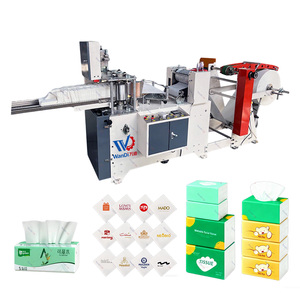
Featured Tissue Paper Converting Equipment
Select from our certified industrial tissue paper converting machinery, engineered for maximum Overall Equipment Effectiveness (OEE), precise tension control, and flexible format customization.
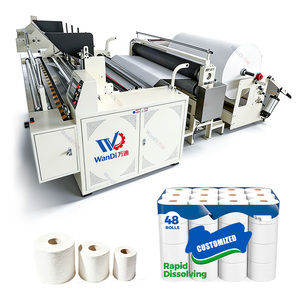
High Speed Toilet Tissue Paper Rewinding Line Machine
View Technical Specs →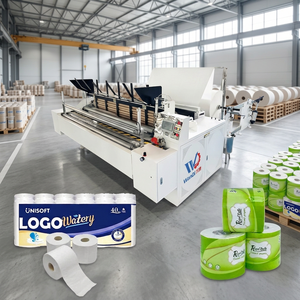
Semi Automatic Toilet Tissue Paper Rewinding Complete Line
View Technical Specs →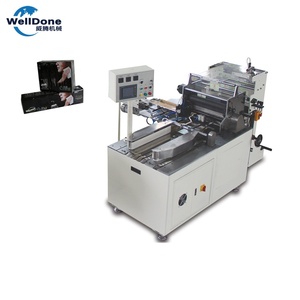
Portable Bamboo Tissue & Handkerchief Converting Machine
View Technical Specs →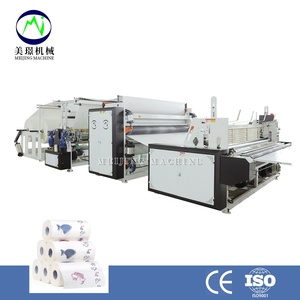
Siemens Control Toilet Paper & Kitchen Towel Glue Lamination Machine
View Technical Specs →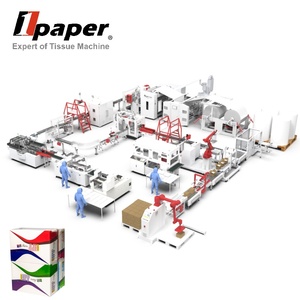
Automatic Box Facial Tissue Interfolding Line Machinery
View Technical Specs →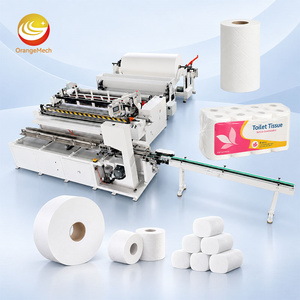
Industrial Tissue Paper Converting Manufacturing Plant Line
View Technical Specs →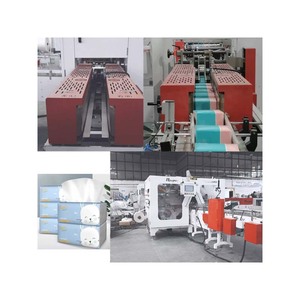
Full Facial Tissue Paper Converting & High Speed Packing Production Line
View Technical Specs →14+
Years Engineering Excellence
80+
National Converting Patents
100+
Countries Exported Worldwide
20,000 m²
Modern Manufacturing Facility
Tissue Paper Converting Engineering: Technical Operating Principles & Kinematics
Tissue paper converting represents a sophisticated mechanical and pneumatic process wherein large-diameter, low-GSM jumbo parent rolls (typically 13 to 22 g/m² per ply) are transformed into finished consumer hygiene products such as toilet paper rolls, facial tissue soft-packs, pocket handkerchiefs, industrial hand towels, and folded table napkins. Modern tissue converting lines require absolute synchronization across unwinding, web-tension regulation, embossing, perforation, slitting, interfolding, and end-of-line packaging.
Information Gain Insight: The efficiency of modern high-speed tissue converting is directly proportional to web-tension stability. A deviation of just 5% in pneumatic brake tension at line speeds exceeding 200 m/min can induce web breaks, causing up to 18% loss in daily Overall Equipment Effectiveness (OEE).
1. Jumbo Roll Unwinding & Closed-Loop Tension Control
The converting process initiates at the unwinding stand. High-capacity converters utilize dual or triple parent roll stands equipped with synchronized flat belt drives and load-cell sensor feedback. As the jumbo roll decreases in diameter, the PLC automatically recalibrates motor torque to maintain constant web tension, eliminating paper stretch, micro-tears, or wrinkles prior to embossing.
2. Embossing & Laminating Systems: Point-to-Point vs. Nested
Embossing enhances bulk, absorbency, tactile softness, and visual aesthetics. Modern machinery integrates two primary embossing architectures:
- Nested Embossing: The steel-to-rubber or steel-to-steel embossing steel pins mesh between each other. This yields maximum sheet caliper and structural rigidity, ideal for commercial hand towels and kitchen rolls.
- Point-to-Point Glue Lamination: Micro-embossed pin tips meet head-on. A precision Anilox roller applies micro-dots of water-soluble adhesive (polyvinyl alcohol or starch-based) precisely to the raised plies, creating super-absorbent air pockets critical for premium 3-ply and 4-ply toilet tissue and kitchen towels.
3. High-Precision Perforation & Log Rewinding Physics
For toilet rolls and kitchen towels, the embossed web passes through a high-speed rotating perforation cylinder fitted with carbide steel blades. Perforation pitch is digitally controlled via servo motor adjustment (ranging from 90mm to 220mm sheet lengths). In automatic rewinding units, core feeding, tail gluing, log winding, and log ejecting occur seamlessly within 1.2 to 1.8 seconds per cycle, achieving production speeds of up to 300 to 600 meters per minute.
Converting Equipment Class Comparison Matrix
| Equipment Category | Typical Drive System | Max Web Speed | Paper Material Compatibility | Automation Level | Primary Target SKU |
|---|---|---|---|---|---|
| Automatic Rewinding Lines | Multi-axis Siemens Servo | 200 – 280 m/min | Virgin Wood Pulp, Bamboo, De-inked | Full Automated (Core to Log Saw) | Toilet Paper, Kitchen Towels |
| Facial Tissue Interfolders | PLC + Inverter Drive | 120 – 180 m/min | 100% Virgin Pulp (13-18 GSM) | Automatic Vacuum Interfolding | Softpack & Box Facial Tissue |
| Napkin Folding Machines | Synchronized Mechanical Gear | 600 – 1000 sheets/min | Virgin & Recycled Paper | 2-Color Printing + Folding | L-Fold, 1/4 Fold Table Napkins |
| Handkerchief Pocket Lines | Servo Motor Drive | 500 – 800 sheets/min | Bamboo & Wood Pulp | Integrated Outer Wrap Unit | Mini Pocket Handkerchief Pack |
Future B2B Procurement & Technology Trends (2025–2030)
Global tissue converters must adapt to changing raw material dynamics, strict ESG regulations, and shifting consumer preferences. Key technological vectors shaping machinery procurement include:
Eco-Fiber & Bamboo Compatibility
With virgin wood pulp prices fluctuating globally, tissue converters are pivoting to rapidly renewable non-wood fibers, notably 100% organic bamboo pulp, sugarcane bagasse, and straw fiber. Next-gen machinery features specialized rubber embossing hardness and modified blade angles to handle bamboo’s higher tensile stiffness without tearing.
Industry 4.0 & Smart Diagnostics
Modern B2B buyers demand full IoT connectivity. Our Siemens and Mitsubishi PLC architectures support cloud-based remote telemetry, real-time vibration analysis on log saw bearings, automated lubrication alerts, and predictive maintenance protocols that prevent unscheduled plant downtime.
Energy Recovery Drive Systems
Energy costs account for up to 28% of total converting mill operational expenditure. The integration of regenerative servo braking systems feeds kinetic energy generated during emergency stops or deceleration back into the plant's electrical grid, reducing power draw by up to 15% annually.
Why Global Tissue Converters Trust Our Manufacturing Ecosystem
As a premier OEM/ODM manufacturer headquartered in Shantou, Guangdong, China, EuroFlow Tissue Machinery Co., Ltd. operates a 20,000+ square meter state-of-the-art production complex. Over the past 14+ years, our engineering team has secured more than 80 national patents spanning high-speed interfolding mechanisms, glue-lamination nip control, and robotic end-of-line palletizing cells.
Rigorous 5-Stage Machine Customization & Quality Assurance Workflow
01
Paper Sample Audit
Detailed laboratory evaluation of GSM, stretch ratio, tensile strength, and target pack specs.
02
CAD Layout Engineering
Custom layout design mapping line speed, electrical drop points, and pneumatic routing.
03
Precision CNC Machining
In-house machining of steel embossing rollers, blade shafts, and vacuum manifold plates.
04
72-Hour Continuous Run
Full speed trial run using client-supplied jumbo rolls to verify OEE, sheet count, and seal integrity.
05
Global On-Site Service
Export packing, CE/ISO documentation, engineer dispatch, and live remote troubleshooting.
Tissue Converting Procurement FAQ
In-depth answers to critical technical, financial, and operational questions asked by tissue converting mill purchasing managers.
What is the estimated Return on Investment (ROI) timeline for an automatic tissue converting line?
For most medium-to-large converters operating 2 to 3 shifts daily, payback is typically achieved within 10 to 18 months. Automated lines drastically cut manual labor requirements (reducing staffing from 6 operators down to 1 or 2 per line), lower film waste below 1.5%, and eliminate trim loss through precise log saw cutting.
How does the machine maintain stable tension when running low-GSM tissue paper?
Low-GSM virgin tissue paper (13–15 g/m²) has delicate tensile thresholds. Our machinery utilizes high-sensitivity load-cell feedback sensors combined with multi-stage pneumatic dancer arms and individual Siemens servo drives on each unwind stand. This closed-loop control dynamically adjusts web tension within ±1.5% accuracy during acceleration and deceleration.
What is the difference between point-to-point and point-to-flat glue lamination?
Point-to-point lamination matches embossing steel pins tip-to-tip, creating hollow air chambers between plies for maximum liquid absorption (ideal for kitchen towels). Point-to-flat laminates the embossed top ply onto a smooth bottom ply, providing a silky smooth outer feel suitable for premium multi-ply toilet paper.
Can electrical components be customized to meet my local country grid standards?
Yes, all electrical panels, motors, transformers, and PLC units are fully configured to match destination grid parameters, including 380V 50Hz, 220V 60Hz 3-Phase, 415V 50Hz, or 480V 60Hz. All wiring complies with CE, UL, and ISO electrical safety standards.
How long does a format changeover take on your automatic facial tissue interfolders?
Thanks to modular quick-change tooling and digital recipe storage on the Siemens HMI touch screen, changing cut lengths or pack stack counts takes under 30 minutes. Mechanical width adjustments are facilitated via digital handwheels with precision counters.
What spare parts should I keep in stock for preventative maintenance?
We supply a 2-year recommended spare parts kit with every line order, including circular log saw blades, grinding stones, pneumatic solenoid valves, perforation blade inserts, timing belts, and heater strips for packaging sealing jaws.
Request a Customized Converting Line Quote & Factory Layout Plan
Send your target product specifications, preferred line speed, and raw material details to our application engineering team. We deliver complete engineering proposals within 24 business hours.
Send an Inquiry